
The Axes of Difference is a space for authors who wish to analyse law and policy through an intersectional lens. We wish to publish work that approaches the law through a critical perspective, be it gender, sex, caste, race, colonial, class, disability, religion and aim for inclusivity within academia.
The University of the Pastos and Quillasingas Peoples: Indigenizing Legal Education from the Global South

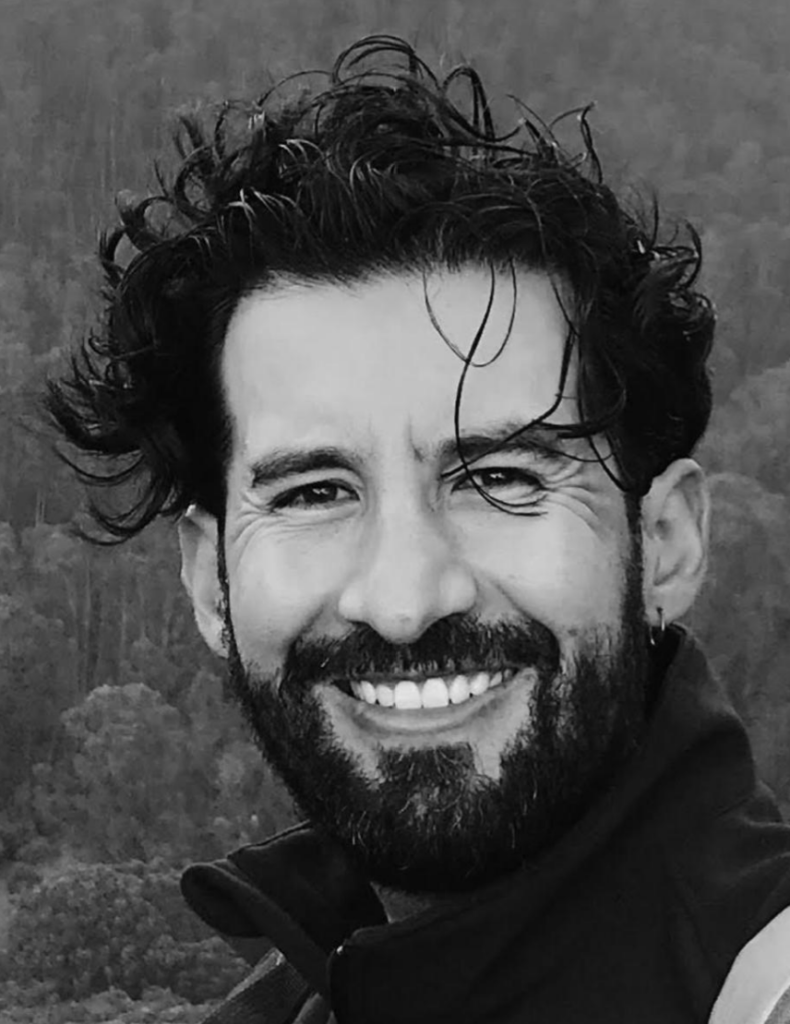
Deputy Director of the Center for the Study of Law, Justice and Society (Dejusticia) based in Bogota, Colombia. Paulo studies Indigenous cosmologies of the Andes and the Amazon to promote environmental justice. He has written academic books, school textbooks, intercultural guides, and journalistic chronicles using field diaries. He is currently completing Indigenizing International Law, an ethnography on the climate crisis and justice beyond the human.
Science, State and Procreative Conundrums: A Transgender Perspective
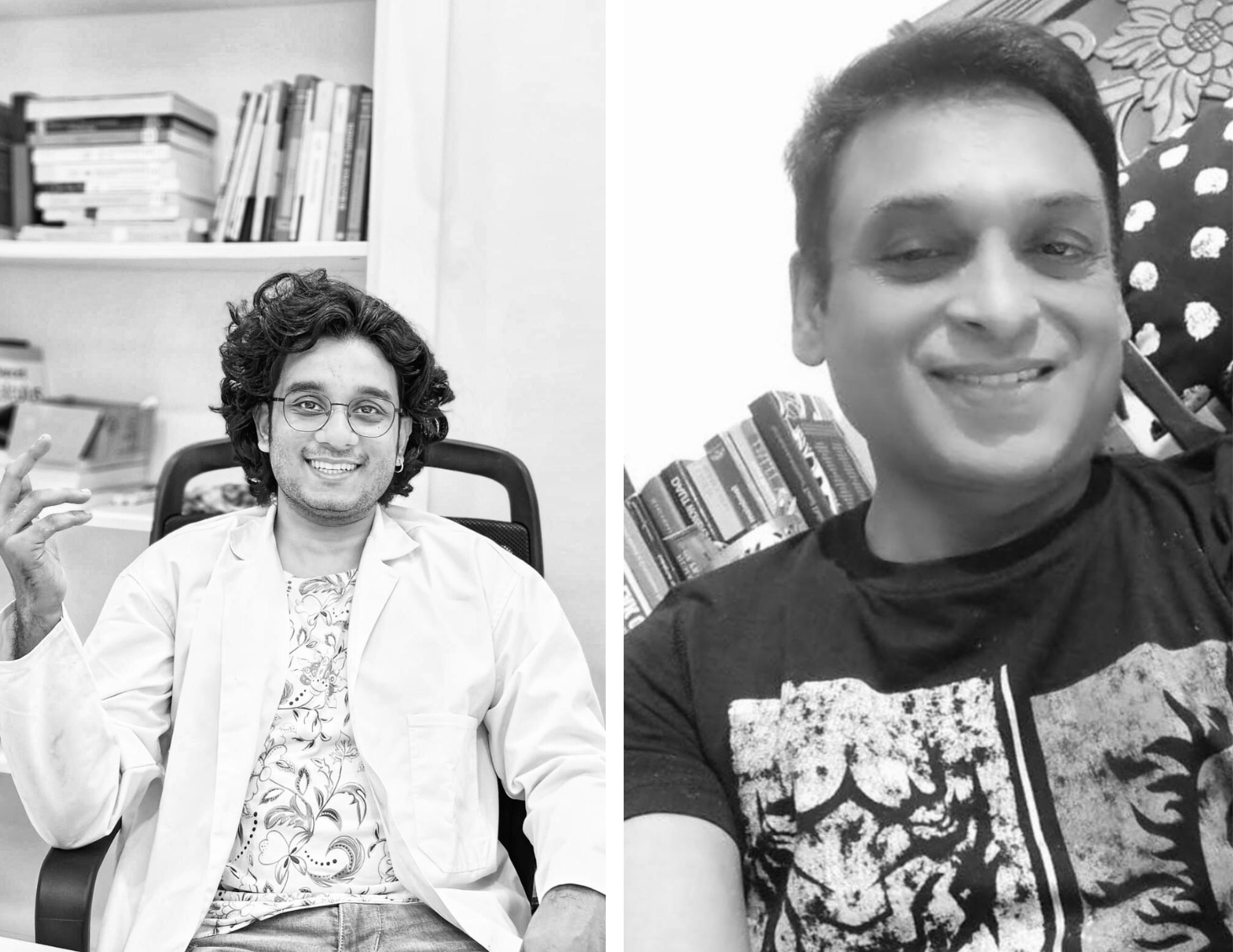
Sayantan Datta & Pushpesh Kumar
Sayantan Datta (they/them) is an independent journalist writing at the intersections of science, gender, sexuality, health and caste. They are currently a faculty member at the Centre for Writing and Pedagogy, Krea University.
Pushpesh Kumar teaches sociology at the University of Hyderabad. He has edited the book, Sexuality, Abjection, and Queer Existence in Contemporary India (Routledge). He serves on the international advisory Board of the Community Development Journal published from OUP, UK and Ireland. He also serves on the editorial committee of the Sociological Bulletin, published by Sage. He was a British Academy Visiting Fellow in the Department of Anthropology, London School of Economics and Political Science, London.
Realising the promise of legal inclusion of transgender persons in NALSA
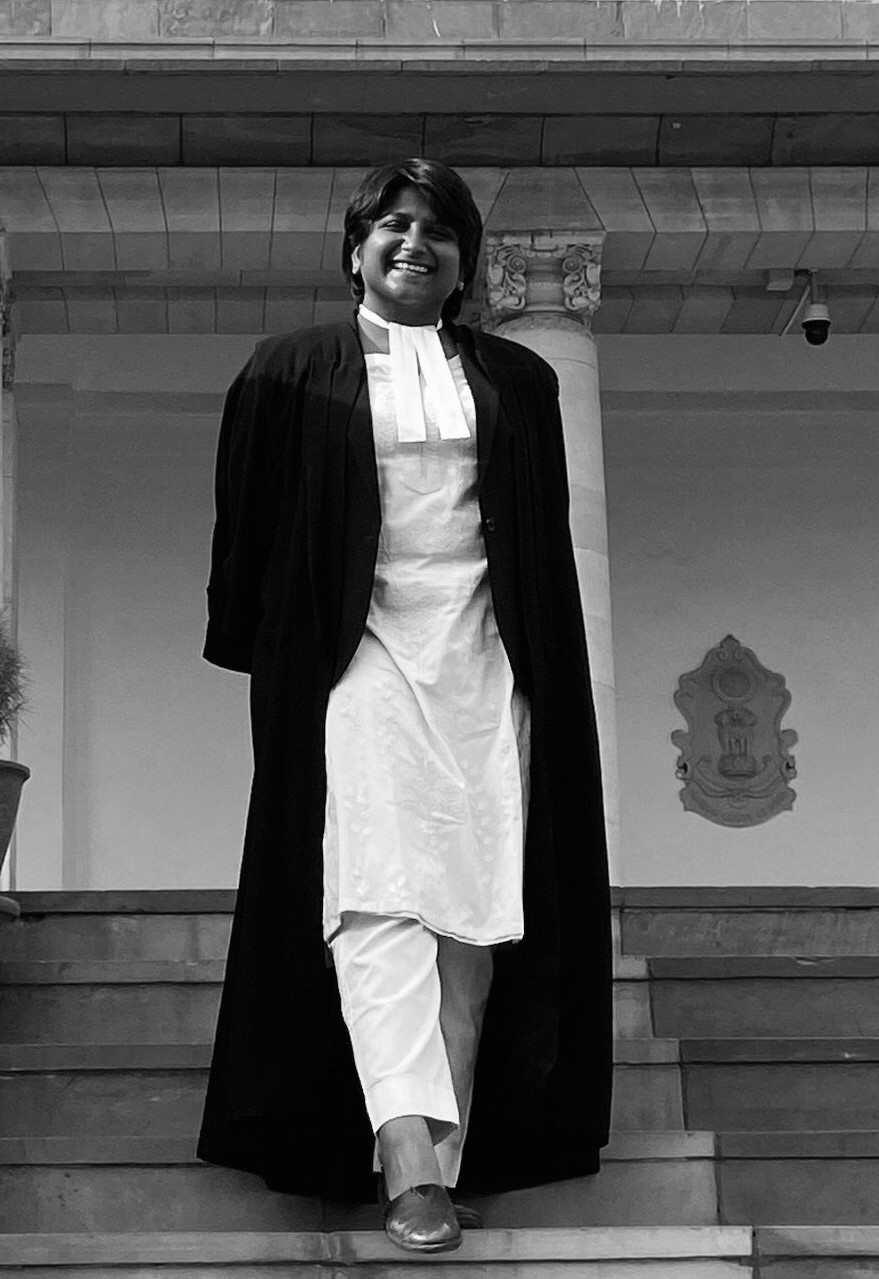
Mx. Muskan Tibrewala
Muskan is an advocate at the Supreme Court of India and an associate at the Chambers of Advocate Karuna Nundy. The author was part of the marriage equality hearings before the Supreme Court of India.
Indian Queer Lives: Socio-Legal Politics of Violence, Struggle and Inclusion

Ajay Maherchandani
Ajay Maherchandani is a Senior Research Fellow, Jindal Global Law School and Research Associate, Centre For Women’s Rights, JGU.
Queer and Religious Alliances in India and Beyond

Jeffrey A. Redding
Professor Jeffrey A. Redding is a Senior Fellow at Melbourne Law School and the recent co-editor, along with Dr. Nausica Palazzo, of Queer and Religious Alliances in Family Law Politics and Beyond. He is also the recent author of the monograph A Secular Need: Islamic Law and State Governance in Contemporary India.
Some Thoughts on Marriage Equality, the Uniform Civil Code and Queering Indian Family Law
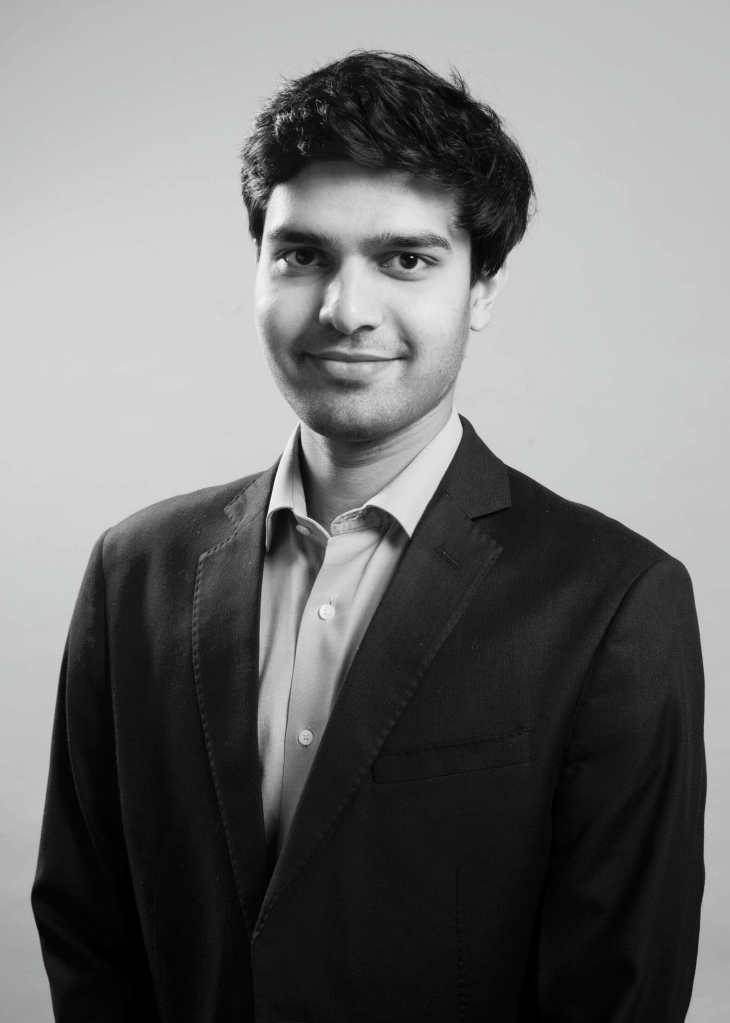
Akshat Agarwal is a J.S.D. candidate and Tutor in Law at Yale Law School, where he obtained his LL.M. degree in 2022. He was one of the founders of the NLS Queer Alliance and completed his B.A., LL.B. (Hons.) from NLSIU in 2017. In his time at NLSIU, he was the Chief Editor of NLSIR from 2014-16. He was also a Research Fellow at Vidhi. He has advised on projects relating to the regulation of the digital economy, privacy, federalism and healthare. His areas of research interest included constitutional law, gender and sexuality, family law and public health.
Transgender Politics of Liberation: Paradoxes and Possibilities

Transform 2022 took place on 9 December 2022 and the theme was ‘Transforming Rights: How Law Shapes Transgender Lives, Identity and Community in India’. The speakers included Dr. Svati Shah, Kalki Subramaniam, Santa Khurai and the discussion was moderated by Jayana Kothari (Director, CLPR). This is the second piece in a two-part series, engaging with arguments and insights emerging from the panel discussion.
Vibha Swaminathan is currently pursuing an LL.B (Hons) from the National Law School of India University, Bangalore. Prior to this, she has completed a B.A (Hons) in Political Science from Lady Shri Ram College, Delhi University. She is interested in the intersections of political and legal theory, specifically those emerging from the marginalities of the Global South.
Book Review: Free to Be Ruth Bader Ginsburg: The Story of Women and Law by Teri Kanefield

Ruth Bader Ginsberg has been described by the American Civil Liberties Union as a “pioneer for women’s rights”- and rightly so. Born in 1933 to a Jewish family of immigrants facing persecution in the erstwhile Russian empire, Ruth Bader Ginsberg experienced sex discrimination throughout her life. And while her sex may have put her on an unequal footing in her career compared to men, it also provided her with a unique vantage point to see the world- one that ultimately paved the way for progressive legal change for countless women and men in America. In this book review, Kanav analyzes Teri Kanefield’s telling of Ruth Bader Ginsberg’s life story by highlighting its relevance today, as well as suggesting a few topics for further examination.
Kanav Narayan Sahgal is, as of January 2023, Communications Manager at Nyaaya, Vidhi Centre for Legal Policy. He holds a Master’s degree in Development from Azim Premji University, Bengaluru, and frequently writes about gender and sexuality politics and the law. Reach out to him at sahgalkanav@gmail.com and @kanavsahgal (Twitter).
Transgender Lives, Identity, and Community in India: A Report on TransForm 2022

This piece is a report on Transform 2022 prepared by Sarthak Virdi (Editor, LSPR) and Oorja Newatia (Observer, LSPR). It is the first post of a two-part series. The second piece will engage with the contents of the arguments presented at the event, while this piece seeks to describe the views presented by the panelists.
Beyond the Letter of the Law: Queer Policymaking From the Margins

Anish Gawande
Anish Gawande is a Rhodes Scholar and the founder of Pink List India, the first country-wide archive of queer friendly politicians. He is also the director of the Dara Shikoh fellowship which focuses on global creative dialogue around Jammu, Kashmir, and Ladakh, with an emphasis on intersectional conversations that put gender, sexuality, and caste in conversation with each other and with the political dynamics of the region.
Queering The Right to Health: Marginalisation, Equal Citizenship and Social Determinants of Healthcare

Rohin Bhatt & Sarthak Virdi
Rohin Bhatt graduated from Gujarat National Law University in 2021 with a B.Sc. LL.B. (Hons.) and with a Master of Bioethics at Harvard Medical School, where he was the class speaker, and is a co-founder of the Indian Bioethics Project. He is a regular contributor to The Leaflet. Most of his work focuses on constitutional law, bioethics (with a particular focus on feminist and queer approaches to bioethics), and the effects fascism has on human rights and their intersections. It has appeared in both public and academic platforms.
Sarthak Virdi is a student of National Law School of India University, Bangalore.
This piece aims to analyze how accessible healthcare is to queer individuals and locates itself within personal accounts. It presents access to healthcare as a function of one’s socio-economic standing and showcases queer exclusion through examples of practices such as conversion therapy. It historically contextualizes the queer movement in India in the demand for contraceptives from the MSM community in the Tihar Jail in the 1990s and shows how queer identity still remains tied to notions of disease and is sexualized and stigmatized. Finally, it proposes queer bioethics as the counter to undo the assumption of heteronormativity within healthcare.
Podcast Interviews

The discussion explores the postcolonial constitutional framework, and the influence of revolutionary ideals alongside tensions between legal continuity and radical transformation. The hosts analyze Dasgupta’s arguments on the role of the state, law, and political power in shaping independent India and present questions on the nuances of the book.
In this podcast discussion, Sarthak Virdi and Laavanya Tewari sit down with Akshat Agarwal to discuss Supriyo v. Union of India, popularly known as the marriage equality judgement.

Prof. (Dr.) Niharika Banerjea is Professor, Jindal Global Law School and Honorary Visiting Fellow (non-residential) at the School of Geography, Geology and the Environment, University of Leicester. Niharika has held a visiting scholar position at the School of Geography, University College Dublin. She has about twenty years of consolidated undergraduate, graduate, and Ph.D. teaching, supervision, and mentorship experience across the United States and India.
In this podcast discussion, Nidhi Agrawal and Smriti Jaiswal sit down with Prof. (Dr.) Niharika Banerjea to discuss her book ‘Liveable Lives: Living and Surviving LGBTQ Equalities in India and the UK. London’ and queerness through a decolonising perspective.

Madhavi Menon is Professor of English at Ashoka University. She earned her Bachelors and Masters in English from St. Stephen’s College, Delhi University, and her PhD from Tufts University.
Her latest book is titled The Law of Desire (Speaking Tiger, 2021). She is also the author of Infinite Variety: A History of Desire in India (Speaking Tiger, 2018), and several books on queer theory , as well as editor of Shakesqueer: A Queer Companion to the Complete Works of Shakespeare (Duke University Press, 2011).
In this podcast, we sit down with Madhavi Menon to discuss queer desires in India and why Menon uses desire as a category instead of the usual categories of liberty, choice and equality to examine queer rights in India. Further, we also understand how contemporary media and literature impact queer desires and the law.

Sayan is a professor at the Harriet Tubman Department of Women, Gender and Sexuality Studies at the University of Maryland. They have written extensively on queer rights and issues. In this discussion, we discussed the debates around the West Bengal Transgender Persons (Protection of Rights) Rules 2022 and the bureaucratic entanglements concerning the same.
In this podcast, we sat down with Sayan Bhattacharya, we discussed the debates around the West Bengal Transgender Persons (Protection of Rights) Rules 2022 and the bureaucratic entanglements concerning the same.
In this podcast, we sat down with Rohin Bhatt to discuss his recent piece in the LSPR Queer Column. We also discussed other topics including his experience in the legal field as a queer individual, the recent petition for same-sex marriage, healthcare for queer individuals and briefly touched upon Indian queer jurisprudence as well.

Karan Gulati is a Research Fellow at the Vidhi Centre for Legal Policy and a lawyer in Delhi. Previously, Karan held positions at the National Institute of Public Finance and Policy (NIPFP) and the National Council of Applied Economic Research (NCAER), where he worked on regulatory governance and judicial administration. He has been an occasional columnist for the Leap Blog, Indian Express, Times of India, and the Quint. Karan holds degrees in law and management from Symbiosis University.
This podcast explores his piece “Inheritance rights of transgender persons in India” and studies the inheritance rights of transgender persons in India. It examines the legal framework for inheritance and provides an overview of all court decisions between 1950 and 2021 that mention the term transgender (and its analogous terms, i.e., aravani, kinner, etc.).
Simran Shaikh is one of the founding members of Dai Welfare Society; the first community-based organisation for hijras in India. She has served on the governing boards of state and national PLHIV networks and been a consultant to national and international organisations on issues of gender and sexual minorities living with HIV. She is also a former UNAIDS Programme Coordinating Board Member from Asia Pacific region (2015-2016).
Latest from the Blog
India’s Soft Law Approach Towards AI Governance: Strategic Choice or Potential Oversight?
Vrinda Pandey IndiaAI Platform Abstract: India’s soft-law approach to AI governance puts flexibility and innovation on a higher pedestal than binding regulation. This article critically examines whether such an approach is strategic or shortsighted in a high-risk digital ecosystem, highlighting gaps in accountability, enforcement, and rights protection, and drawing comparative lessons from the UK and…
Publicly Available Data under the DPDP Act: The Limits of Exemptions in AI-Driven Processing
Sarrah Darugar and Mustafa Rajkotwala The New York Times Abstract: The Digital Personal Data Protection Act, 2023 excludes publicly available personal data under Section 3(c)(ii) and conditionally exempts research processing under Section 17(2)(b). This article analyses their interaction in hybrid AI workflows, rejects blanket permission for unrestricted AI training, and calls for clearer statutory limits…
Podcast with Harsh Mahaseth: Decriminalisation, Marginalisation, and Human Rights in Asia
*Rachana Prakash and Arya Harishankar In this episode, Professor Harsh Mahaseth joins Rachana and Arya to explore the intersections of law and human rights. They discuss the limits of LGBTQ+ decriminalisation in India and Singapore and transgender marginalisation in prisons. The conversation analyses ASEAN’s legal personality and SAARC’s role regarding internally displaced persons. Additionally, Mahaseth…
 Law School Policy Review