

Sudiksha Jha Source: Freepik Abstract: The Consumer Protection Act, 2019, was enacted to enhance consumer welfare by holdingservice providers accountable for deficiencies in their services. However, in light of theSupreme Court ruling […]
Sudiksha Jha Source: Freepik Abstract: The Consumer Protection Act, 2019, was enacted to enhance consumer welfare by holdingservice providers accountable for deficiencies in their services. However, in light of theSupreme Court ruling […]

Agam Gupta Abstract: Driven by the erasure of trans individuals in disability rights systems, this essay weaves lived experience with Alexandre Baril’s composite theory to propose a ‘Unified Framework of Trans-Debility’. By […]
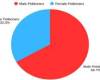
Ritwik Sharma Source: Freepik Abstract: This piece critiques Indian courts’ commercial-rights-centric approach to sexually explicitdeepfake takedown cases, highlighting its gendered consequences. Analysing nine judgmentsthrough pie-charts, it argues that reliance on personality and […]

Sanskriti Verma Abstract: This post examines how the Promotion and Regulation of Online Gaming Act, 2025 fails constitutional scrutiny under the Doctrine of Pith and Substance. Its essential character remains gambling regulation, […]

Sharngan Aravindakshan & Deekshitha Ganesan Abstract: This post examines conservative legal mobilisation in India to resist rights-expanding claims relating to gender and sexuality. While existing scholarship has largely emphasised autocratic legalism, this […]

S.V. Ghopesh & Siddhanth Shamindran Abstract: The primary purpose of this article is to contend the existence of a Constitutional blind spot in the interpretation of the intersection of Articles 21 and […]

Vrinda Pandey IndiaAI Platform Abstract: India’s soft-law approach to AI governance puts flexibility and innovation on a higher pedestal than binding regulation. This article critically examines whether such an approach is strategic […]

Sarrah Darugar and Mustafa Rajkotwala The New York Times Abstract: The Digital Personal Data Protection Act, 2023 excludes publicly available personal data under Section 3(c)(ii) and conditionally exempts research processing under Section […]

Aarushi Lunia The New York Times Abstract: This paper examines the Supreme Court’s deployment of the True Indian rhetoric to critique judicial nationalism and its exclusionary impact on citizenship. By discussing the […]

Mayank Satija and Vineet Kalra Abstract: This article evaluates the intricacies of anti-enforcement injunctions as an equitable tool that has only recently marked its footing in the Indian jurisprudential landscape. It employs […]
 Law School Policy Review