
Garima Bageria, Kshitiz Krishna Goyal and Muskaan Wahi
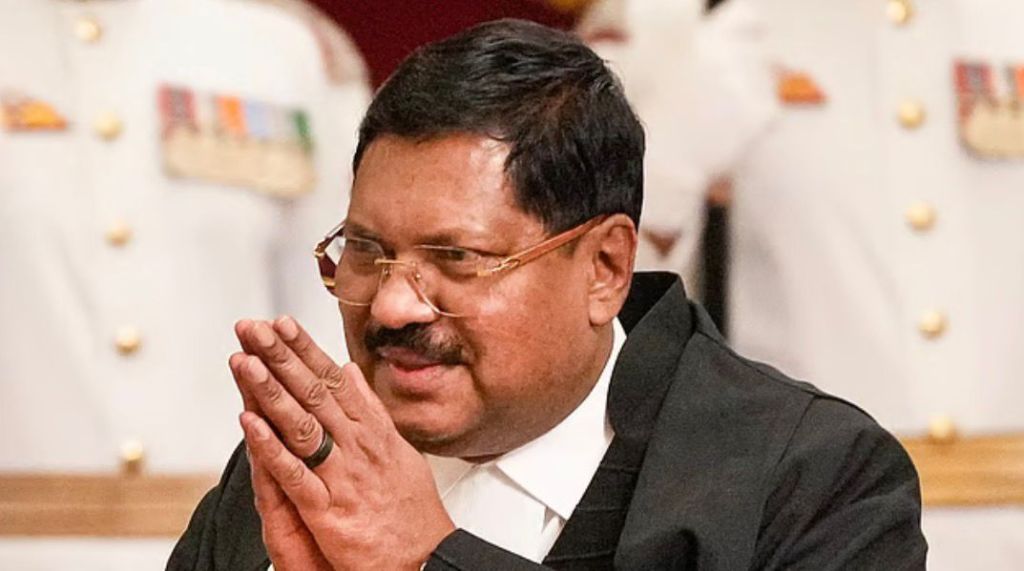
This article critiques former CJI Gavai’s decision to reconstitute the bench in the stray dogs’ case, arguing that bypassing the original bench’s order without any reference, deviated from the procedure mandated under the Supreme Court Rules, 2013. It examines the constitutional limits of roster powers, raises concerns about potential administrative overreach, and cautions that such unchecked authority risks may undermine judicial accountability and setting a dangerous precedent.
The Case as it Progressed
On 28th July, the Supreme Court, through the Pardiwala-Mahadevan Bench took Suo motu cognizance of a newspaper article and registered a writ petition, and on 11th August, directed that all stray dogs in Delhi-NCR should be shifted to shelter homes without release. This order led to a national debate following which several Interlocutory Applications, Special Leave Petitions and writ petitions were filed seeking recall or modification.
On 13th August, it was brought to the notice of CJI Gavai that the interim order passed by the Pardiwala-Mahadevan Bench was in conflict with the ruling of the Maheshwari–Karol Bench, which required municipal laws on stray dogs to comply with the Animal Birth Control (ABC) Rules, 2001 and Prevention of Cruelty to Animals Act, 1960.
Consequently, CJI Gavai referred the matter to a larger bench, which on 22 August, ordered that the sterilized and immunized dogs be released back to their original locations, except those suffering from rabies or displaying aggressive behavior.
Although the decision was supported by the people, this entire process of seeking recall raised questions relating to procedural impropriety, particularly whether the CJI possesses authority to independently review an interlocutory order passed by another bench, and relocate the same to a different bench.
The Rules: Order VI and the Handbook
To begin dissecting the relevant powers of the CJI in this context, one must look at the Supreme Court Rules, 2013. This is crucial since Article 145 provides that “the Supreme Court may from time to time, with the approval of the President, make rules for regulating generally the practice and procedure of the Court”. The mentioned rules are embodied in ‘The Supreme Court Rules, 2013’ and further guidance on implementation is mentioned in ‘The Handbook on Practice and Procedure and Office Procedure’.
Within the Rules, one must focus on Order VI which talks about the ‘Constitution Of Division Courts And Powers Of A Single Judge’ in which the Rule 2states: “Where in the course of the hearing of any cause, appeal or other proceeding, the Bench considers that the matter should be dealt with by a larger Bench, it shall refer the matter to the Chief Justice, who shall thereupon constitute such a Bench for the hearing of it.”. This rule explicitly mentions the requirement of reference by the original bench to the CJI who shall thereupon constitute a larger bench.
A case where this procedure was rightfully followed is the writ petition filed before Justice Hima Kohli and Justice B.V. Nagarathna in the case XYZ v. Union of India and Another, 2023 . Due to a previous controversy, the judges clarified that recall of the previous order is irrelevant in this case. The matter in light of a split verdict regarding a medical termination of an unwanted pregnancy after 24 weeks, was referred to a larger bench. The order by the Bench clearly stated, “the Registry is directed to place the application before Hon’ble the Chief Justice of India for being referred to a larger Bench.” Thus, displaying transparency and adherence to proper procedure, which, unfortunately, was not seen in the stray dog matter.
This Rule has been misinterpreted by scholars, such as V. Venkatesan in his article, ‘Stray dog menace’: Making sense of the Supreme Court’s intervention’. In his article, he discussed the validity of the act due to the ‘Master of the Roster’ powers to relist a pending case before a new Bench. He justifies such powers by quoting the aforementioned rule and arguing that its clarity in the powers it bestowed upon the Chief. However, this misinterpretation disregards a key step wherein the original bench refers the case to the CJI. Bypassing this safeguard and taking matters in one’s own hands in an attempt to ‘deliver justice’ can potentially threaten the foundation of justice– its adherence to procedure.
It should be clarified that the Pardiwala-Mahadevan Bench acted within procedure in taking Suo motu cognizance. The Suo moto writ petition dated July 28, states that it’s the duty of the registry to then register and number the petition in public interest. It would then be placed before the CJI for appropriate orders. It was only thereafter that Pardiwala was allotted this case by CJI Gavai. The judges have the prerogative to decide whether the matter should be heard by a different bench by requesting the Chief. Moreover, as mentioned earlier, it was simply an interim order and no final judgement was made. An interim order allowed the bench to address potential harm until a final judgement is passed. This gives the counsel the ability to address the judgement.
As mentioned in cases like Shanti Bhushan v. Union of India (2018), the Court states, “After assigning a matter to a particular Bench, role of Chief Justice ends there and assignee Bench acquires complete dominion over the case”. It recognized the exclusive prerogative of the CJI to constitute Benches and allocate cases, once allotted, the benches have complete control over their case. In this case, as there was no reference given by the Bench, there was no legal basis for such re-allocation to a completely new bench.
Referral Despite Availability of Judges
The ex-Chief Justice’s assumption that there existed a “conflict” between two benches of the Supreme Court. Justice Sanjay Karol’s reasoning was aimed at harmonizing animal welfare with public safety under the Animal Birth Control Rules, while Justice J.B. Pardiwala’s bench focused more on protecting the citizens from increasing dog-bite incidents.
Based on this assumption, the case was withdrawn from the original bench and referred to a larger three-judge bench. This step, however, has been criticized as procedurally irregular. Even if the petitioners were correct in substance, the procedure is considered irregular as the same bench should have continued; or if a judge was unavailable, CJI Gavai could have, in accordance with the roster powers provided by the Practice Handbook, simply substituted the unavailable judge with another. The alleged conflict appears overstated, since the two sets of cases were substantially different. The ex-CJI’s error, therefore, resulted in an administrative intervention that raised concerns of judicial overreach.
The CJI does have the power to re-allocate cases as mentioned in Chapter VI of the Handbook titled, ‘ROSTER’, authorizing him to constitute benches and assign cases. However, this power is not boundless; it must be exercised in accordance with principles of fairness. As mentioned in the Handbook of the Supreme Court, “The roster shall be prepared by the Registrar (J-I) under the orders of the Chief Justice. It may contain general or special instructions regarding assignment/allocation of work to a Bench and includes allocation of work of a Bench, on account of non-availability, to another Bench.” This point clearly says that in case of extreme scenarios such as non-availability of judges, CJI can direct the registrar to reallocate the case to another bench however in this instance, the case was referred to another bench even when availability was undisputed.
Master of the Roster
Although inPrakash Chand v. State of Rajasthan (1998), it was established that the Chief Justice of the High Court has roster powers, which are exclusive and unquestionable. However, the judges also cautioned “Underlying the submission that the constitution of Benches and the allocation of cases by the Chief Justice must be regulated by a procedure cast in iron is the apprehension that absent such a procedure the power will be exercised arbitrarily”. Extending this judgement to the CJI, the judges in the Campaign for Judicial Accountability v. Union of India (2018), established that he is the master of the roster using the Supreme Court Rules, 2013.
As Justice Abhay Oka mentioned in, ‘Shifting the stray dog case after public criticism sent the wrong signal’(IndiaTimes, Feb 2025), He highlighted the process of transfer of cases between benches noting that if a larger bench is required, the original bench should be expanded instead of completely replacing them. In continuation with the argument provided by Justice Oka, the Pardiwala-Mahadevan Bench followed the procedures required to deal with the stray dog matter.
Then what led CJI Gavai to shift the matter to a completely different larger bench?
Why Article 142 does not apply
In discussions regarding the potential arbitrariness of the CJI’s powers in stray dog judgement, a possible defense for reconstitution of bench without reference might lie under Article 142 of the Indian Constitution, Clause 1, which empowers the supreme court to issue any decree or order necessary to “do complete justice”. However, Supreme Court Bar Association v. Union of India (1998), clarifies that Article 142 is confined to judicial functions: it may be exercised to do complete justice between the parties in a cause or matter. They emphasize that powers conferred under this article must operate within the case before it, not beyond. Thus, this power only deals with judicial decisions and excludes administrative actions like exercising the roster powers.
Different yet Similar troubles: Ritu Chhabaria’s case/Comparative Analysis with a Similar Matter
As mentioned by scholars like Gautam Bhatia and Abhinav Sikri, the decision in Conference for Human Rights (India) (Regd.) vs. Union of India (2024), a similar issue had come up earlier which dealt with the right to default bail under Section 167(2) CrPC. The case itself tried to push back against the practice of filing incomplete charge sheets just to keep people in custody, but the real controversy began afterwards. Instead of filing a review or waiting for another bench to take a different view, the State ‘mentioned’ it to the then Chief Justice. Relying on his powers as “Master of the Roster,” the CJI shifted the matter to a new bench and even asked other courts not to rely on the ruling in the meantime. It effectively allowed the CJI to sit as an appellate authority within the Court itself, an ‘imperium in imperio’.
The concern raised there is echoed in the stray dog matter too: when roster powers are stretched without clear limits, it threatens both the sanctity of precedent and the balance of judicial power. This was also supported by Venkatesan as he mentioned in his article that the CJI’s authority to use his roster powers to constitute a three-judge bench for reconsidering the case is legally sound.
The debate around the stray dog judgement has conveniently only revolved around the substance of the case rather than its administrative legality. This article doesn’t question the administrative powers of the CJI well established by the precedents above but aims to criticize how CJI Gavai was allowed to use his untethered administrative power in this case without judicial reference from the existing bench. This intervention could be considered as ultra vires, i.e., beyond the scope of his power. If left unchecked, such interventions may set troubling precedents for cases where popular morality, not constitutional principle, dictates outcomes.
Garima Bhageria is a first-semester LL.B. student at Jindal Global Law School. She has interned with an Advocate-on-Record at the Supreme Court and is currently gaining courtroom experience under a Public Prosecutor at the Delhi District Court. She has independently filed a consumer case on the e-Jagriti platform, demonstrating initiative and practical legal engagement. Alongside academics, she represents her university in football and continues to build her skills in legal research, drafting, and trial practice.
Kshitiz Krishna Goyal is a first-year law student pursuing LL.B. at Jindal Global Law School, with a background in commerce and insurance studies. His journey combines academics with hands-on experience through moot court activities, student-led initiatives, and volunteering. He has contributed to organizing legal awareness drives, community service programs, and academic events, which strengthened his skills in research, communication, and teamwork. He is eager to gain practical exposure through internships and contribute to areas like corporate law, dispute resolution, and governance.
Muskaan Wahi is a first-year student pursuing an LL.B. Holding an undergraduate degree in Psychology and English, she has transitioned to law with the intention of creating positive change at a systemic level with an interdisciplinary approach. Driven by this vision, she is keen to further explore public policy and international law. She has completed internships with the Harvard Academies and other leading public policy organizations, gaining experience in policy research, governance, and global legal frameworks.
Categories: Legislation and Government Policy
 Law School Policy Review