
Anant Prem Joshi
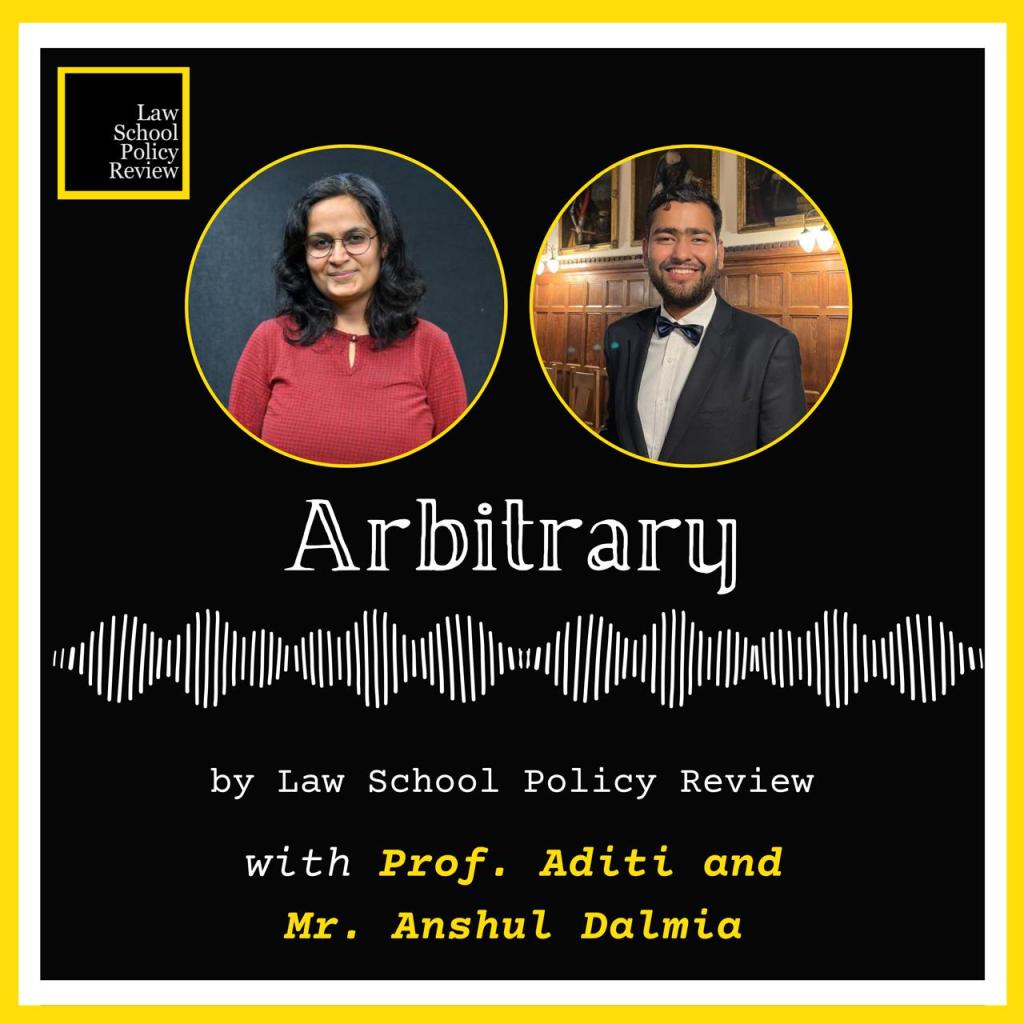
In this episode, Anant Prem Joshi hosts Professor Aditi of JGLS and Anshul Dalmia, Research Fellow at Charka, Vidhi, to discuss the multifaceted issue of delimitation in India. They delve into the legal and political challenges surrounding delimitation, examining its impact on federalism and equitable representation. The conversation further explores the roles of the Election Commission and the judiciary, and potential avenues for reform to achieve a fairer process
LISTEN TO THE PODCAST
Anant
we have with us today, Professor Aditi and Mr Dalmia. Aditi is an associate professor at the Jindal Global Law School. She pursued an LLM from SOAS, University of London. There, she worked extensively on South Asian public laws and politics, graduating in 2015. Professor Aditi has written on the intersection of delimitation and representation in India and reviewed the recent Vidhi report on federal implications of any new delimitation exercise.
Mr Dalmia is a research fellow with the Charkha team at the Vidhi Centre for Legal Policy. He recently graduated in 2024 from the University of Oxford with a Bachelor of Civil Law degree as a KC Mahindra Scholar, wherein he received the Oxford Law Faculty Prize for the course on Constitutionalism in South Asia.
Great to have you here and I’m glad you could take out time in your busy schedules to be here.
Aditi
Thank you. Thank you so much for having us.
Anant
I’ll begin with the first question.
Professor Aditi in section IV of the recent Vidhi report which you reviewed, it outlines various options for constitutional reform, from further postponement to the degressive proportionality and so on. Now, professor, you argued in your work in favour of reform, starting with equalising state representation in the Rajya Sabha and perhaps extending to reorganising larger states to reduce the population disparities, and providing for direct elections to the upper house, somewhat like how they do it in the American Senate. Considering these political realities that we face in India, which of these potential pathways do you find the most promising or the most practically feasible, and why?
Aditi
OK, so in here, first of all it’s interesting to note that federalism and delimitation as questions are intrinsically linked because with delimitation, you know, the freeze was formulated with federalism as an argument to justify that action. But I would also say that the solutions are not as intelligent as we might think.
Because at the current position and why I would say that reforms are a better way to go in that particular instance, is that currently if we are looking at continuation of the postponement and that’s what I think Vidhi’s report also points out that it’s not going to solve either of the questions, ensuring proportionate representation as far as our democratic institutions are concerned. And on the other hand, it’s not really fixing the question of federalism as well. The best that it’s doing is avoiding answering both the questions. So, to that effect, then, yes, I would say that reforms in the direction of increasing representation on one hand, where delimitation proportionately has to be done because that is that is going to have far-reaching effects on the government’s structures as well. The way you know, different resources are distributed among different constituencies, the local democracy and local institutions, how they function, how far are they be able to address the problems of their constituents, depending upon how overburdened they are. Like, that’s a relevant question to address.
But having said that, federalism in itself is also specifically, I mean it’s pivotal that we are having this conversation today when we’re looking at Delhi election results and we know how important the question of federalism was underlying in that discussion. So, I would say that federalism in that sense needs reforms where substantive agency is granted to states no matter what their sizes are or what their population is, so their concerns are heard. In the central government or in, you know, in the general decision making process.
So in here I think a singular structure or a singular example, or just transplanting what is happening in the US to India, might not be able to help. So, we have to, if we are giving equal representation to the states in Rajya Sabha, for example, we also have to simultaneously address the money bills problem that even when we are giving, you know, enough representation to the States in Rajya Sabha, that the central government does not have a decree to bypass that institution completely. If we are making Rajya Sabha the site for federal expression that we have to give enough powers to the States and the institution in itself to make sure that it matters, right? So in that instance, I would say that some difficult decisions have to be made.
Your question talks about feasibility, but I see feasibility here in like 2 different regards, right?
Do you say it’s feasible in order to ensure that there is some substantive agency been granted to the states, or whether it’s like politically feasible or like, you know, whether we can see it happening? So, for the former understanding, yes, I would say that it would be a great idea to think about such solutions and try to implement it depending upon the structural realities of the institutions. But as far as political feasibility is concerned, you and me both have a very less agency to control that reality.
So I would say at this point of time, all we can do is have this conversation and sort of bring this discussion to the forefront so that the reasons or the justifications that were given, say, 3 decades ago to sort of justify it – I think we need to ensure that the government has better answers this time around.
Anant
You’re right, professor, but to you the important bit would be creating room for proportionality in the upper house?
Aditi
I mean, I think honestly, to be very candid, initially when I started researching on this question like 10 years ago, proportionality or federalism was basically a rationality to debunk in the larger question of delimitation. To be very honest with you, I mean I was writing this in like early 2015, the 1st paper that I wrote on this particular issue was early 2015. So at that point of time, federalism per se as a constitutional question had not gathered as much gravity, as it has in the current understanding.
So I would say that initially, delimitation in itself was like the central question. That you know, how do we ensure proportionality exists and if federalism is like a problem in achieving that, then let’s think about how, you know, federalism can also have some room made for it in like some of your reforms or the other. But I no longer would agree with that assessment because right now both of them are equally pressing issues. We have seen how undermining of federalism in different areas in different states has had some real consequences.
Anant
Thank you, professor.
Mr Dalmia, your analysis of Haji Abdul Khan versus Union of India, it raises concerns about the role of the Election Commission and Delimitation. This is a bit of a switch from the abstract nature of the previous question to the more, you know, on ground implementation as it’s happening. You also touch on for example the Assam case where the Election Commission’s role in delimitation led to skewed representation. Could you elaborate on whether these dangers, or maybe new risks, of the Election Commission’s involvement might crop up in the apportionment of seats itself, Jammu and Kashmir?
Anshul Dalmia
Oh, sure. So, my interest kind of piqued when I was reading this case, right? And it was very curious to see that the Act kind of had given provisions for both the Delimitation Commission as well as the Election Commission to reapportion seats in Jammu and Kashmir, right. And sort of, it was kind of obvious that the government chose the Election Commission to do it rather than forming a Delimitation Commission on its own, right, and simultaneously, it formed a delimitation Commission headed by Justice Ranjana Prakash Desai.
But sort of the Election Commission, and particularly importance of the Election Commission, kind of concerned me because there is no sort of legislation governing the role of Election Commission within delimitation, right? When you look at the Delimitation Act and the recent one being from 2002 as well as sort of, you know, past legislation such as that of 1942, 52 and 1972, all of these three legislations kind of nowhere mentioned Election Commission at all to be the body responsible for conducting delimitation, right?
It is the Delimitation Commission which is sort of an independent body created by the government to kind of come ahead and do delimitation right. So I was naturally curious when I came across the Election Commission having the power to do so, and I saw that a couple of states, right, which is Assam in the Northeast as well as Jammu and Kashmir, the Election Commission, particularly through their reorganisation acts, were given the power to do the delimitation in these respective states.
Coming to your question as to what is the problem with the Election Commission doing it, I think the 1st and the most clear answer to that, is the lack of a governing legislation right? When you look at the Delimitation Act, it is multiple sections which provides certain safeguards, the veracity and sort of the feasibility of those safeguards is another question, right? But there are some safeguards that the Delimitation Act has put in. Let’s talk about the first safeguard, which is the role of associate members, right. When we talk about the Delimitation Commission, it’s particularly important.
We’ll go into the independence of the Delimitation Commission a bit after the after I kind of come ahead with the role of associate members, but particularly we see that associate members are members who are sort of in an advisory role, right? They are particularly important.
For the national elections, the state members of Parliament and for the legislative assemblies, the local MLAs right, people from the state who are much more closer to the practical realities, right, and they are kind of in an advisory position to come and speak to the Delimitation Commission regarding any problem that they face within sort of how constituencies are delimited or how they’re drawn. So particularly this was one of the safeguards that we saw that irrespective of a three member Commission sitting in New Delhi kind of deciding how do we redraw states, people and sort of representatives within the state had an opportunity to come to the Commission and raise the grievances which people might be facing.
The second safeguard that we see in the Delimitation Act was the power of the Commission to call on experts right particularly, this could be, say, geographical experts, demographers, statisticians, a bunch of political scientists, sociologists, because, as we see, like delimitation is kind of doing a lot of things. It’s not just sort of coming ahead, looking at the population and redrawing constituencies. We have sort of reservation in the backdrop. We have to reserve seats and particularly now with the women’s reservation bill sort of reservation will be something that we all need to think about, particularly with the limitation. So the second safeguard which the Delimitation Act thought of was the power of the Commission to actually call on to experts right to help them do this exercise much more efficiently, but when we talk about the Election Commission doing this, they won’t be governed by the Delimitation Act quite clearly, right, because nowhere does it mention that this act would be applicable on the Election Commission. So, we see that both of these safeguards are easily wiped out, right? It then becomes sort of a discretion on the Election Commission to kind of refer or ask associate members to join in, as well as essentially the power to call on experts was any ways discretionary, right? So that kind of then becomes redundant because both of these safeguards are kind of now going away right when we talk about the Election Commission and giving an example from the Jammu and Kashmir case, right, the Election Commission probably didn’t call on any experts because there have been certain constituencies which have been redrawn in a manner that on one side of the hill both districts are there right. Which means that for a say for a person to either travel from within their constituencies, say like a politician who is going on campaigning – and I’ve read news reports majorly from politicians who have said that you know, for us to go ahead and canvass our votes and talk to sort of representatives within our constituency, we have to cross a hill in the literal sense and not figuratively, right. So, it becomes sort of a problem when we look at sort of on ground realities with the Election Commission going ahead and doing all of this and we even see the legislative mandate being unclear and sort of my critique to the Supreme Court was they had both these options, right. They had both conflicting provisions in the same statute.
But rather than reading this harmoniously, which they couldn’t do because they are conflicting, the role of the Supreme Court would have been to strike down one provision.
And sort of looking at the absence of safeguards tracking down the power of the Election Commission to do delimitation is something which was important, right. And now let’s look at the other side of the debate. The government gave the response that to just do delimitation in a couple of states, it doesn’t make sense to constitute and compose a Delimitation Commission all together. So you can see that there is lack of a political will to create these so-called independent bodies as well, right?
And now, with my critique of the Election Commission, I do not mean to imply that the Delimitation Commission is a better alternative, right.
We see that the Delimitation Commission, as I also mentioned, has 2 executive nominations and one judicial nomination. If we assume that the retired Supreme Court judge would not be political, right, so, and this 2002 composition of the Delimitation Commission is significantly different from the previous compositions, right? We see the earlier act, which is the 1972 Delimitation Act. It had two judicial nominees and one executive nomination. So we saw that there was in a way like you know, balancing of probably votes towards the judicial side more than the executive side, but kind of when we think about how do we form sort of an independent Delimitation Commission, right, sort of Election Commissioners and executive nominations were added because they thought that it’s important for people on ground doing elections to be a part of these commissions. So, I think we need to take a step back and really look at how do we look at composing these independent bodies. We have the obvious example of the Election Commission we know is not free and fair. We have had the Anoop Baranwal case talk about this and after the passing of the Anoop Baranwal case, we’ve had the Act right, which kind of overruled the case in itself, making again executive nomination a big part of Election Commissions and their appointment.
So my argument then becomes that if the Election Commissioner and the State Election Commissioner, both whom are sort of parts of the Delimitation Commission, their position in itself, is challenged, right. And when you look at Delimitation Commission, again, they become executive appointments. So, on both of these levels, there is a major influence of the executive, right. And considering how delimitation is solely an executive process, right, it’s driven by the executive and sometimes can be used in favour of the executive, we have understood that certain redrawing of the constituencies might favour certain political parties at all points of time, right? That’s going to be inevitable.
But the main point becomes to kind of take a step back and do it in a free and fair manner and kind of ensure that irrespective of the population which we have, it becomes an independent process of redistricting and sort of just one last point that I have is kind of the solution to it. Vidhi has been researching on how do we differently compose the Delimitation Commission, how do we come up with a body which is free and fair and sort of within India’s backdrop where most of the independent guarantor fourth branch institutions, say, like the Vigilance Commission or the Lokpal or the Lokayukta, these are not independent bodies, particularly, right? So what we’ve come up is we’ve looked at sort of comparative research and we’ve kind of looked at what other countries are doing, particularly when it comes to bodies which do delimitation. And the major understanding that foreign countries have is that there needs to be some form of a representative Commission, right, which would be not by the executive, but would have an equal distribution of members, right? So, it could be that the speaker of the Lok Sabha could probably be the chairperson followed by the leader of opposition and sort of members of Parliament’s who’ve been in, who’ve been a part of, you know, previous delimitation commissions or as sort of associate members to understand which way they go. And they said that the governing political party should have lesser members in this representative Commission than the opposition body, so kind of this could be something that we could look at.
But kind of just simply answering your question I think there are real problems when it comes to who should be the authority who’s trying to conduct delimitation, I think both the Election Commission and the Delimitation Commission on both these levels have sort of various problems that we need to probe deeper.
Anant
Thank you so much. While we’re on the subject of the reform that can be done and lessons that can be learned from elsewhere, professor Aditi in your comparative analysis of electoral systems you point out that the EU for example prioritises proportionality to represent diverse political ideologies.
Could India learn something from this approach or perhaps from someone else’s approach, to incorporate representation mechanisms to better reflect the diversity of interests and identities that we have in India, which may be beyond just regional diversity, right?
Aditi
No, I agree. Actually, that is one of the key issues that we need to understand from this dichotomy of delimitation and federalism that we are talking about that when we talk about federalism and some identities, state identities not being well represented in the law making process, then that makes us question about other cleavages as well, other identities, other distinctions that also may seek representation on the same logic, on the same rationale, and what prevents us from not considering those questions if we are considering federalism with such seriousness. So I would say that historically speaking as well, yes, I would, I would agree as much as the next person that first past the post had the post had its utility in the historical context in which it evolved.
But currently the kind of realities that we are seeing, it makes more sense for us to have diverse voices, have a pluralistic understanding of decision making specifically in the legislature because we do see this in the past few years especially – and this is not just an Indian phenomena at this point of time – I would argue that this is a global phenomenon that there is a certain sense of steam rolling of minority ideas or stream rolling of, you know, ideas which may not be co-opted by the majority per say, so it I think that to sort of create an informed discussion to give voices to people who may not be well positioned to sort of you know represent themselves or may not have agency to per say influence decision making processes in that sense I think proportionality would be a really good idea to consider. I think the only problem there is how to achieve realistically that reform?
It creates a lot of burdens for us. I feel that, because in that instance, generally the research shows that a government structure which has come to power through a specific institution is very less likely to change that institution or those institutional rules in the first place. So, I would say specifically in the current atmosphere where the government is not as conducive to pluralism or, uh, you know, diverse voices being heard in that sense.
I’m not sure how this reform can be realistically pushed through, and I think in that sense again, such conversations become relevant. But yes, I would definitely agree with the fact that such a reform for federal identities and as well as for other identities would be a crucial step in that direction.
Anant
And specifically, we’ve discussed the non-implementation of delimitation, which might just get extended again, was formally justified on population control measures and that’s been the justification that has dominated almost all official discourse.
However, the report as well as Professor Aditi’s work questioned this rationale. Beyond this official narrative, Professor Aditi, as well as Mr Dalmia, what would you believe are the underlying social and political factors driving the continued postponement of delimitation in India? I mean, we discussed that there is a sense of preserving the process which leads to the winning party coming to power.
But even so, could they not perhaps work towards implementing a system which increases the chance of staying in power? But what we see is that rather they prefer to freeze the process as it is, and assuming it stays frozen or assuming it gets pushed through but not in a way that is fair and adequately representational, how can this be addressed legally, perhaps by outside actors such as through PILs, given that there is near absolute ouster of judicial review from delimitation matters?
The question is to both of you. So, either one of you can go first.
Aditi
Right.
Well, I’ll just basically start with the fact that as far as socio-political actors are concerned, I’ve addressed this in my work as well. That mostly the decisions that have been taken so far, you know, did turn out to be politically conducive to the interest of the party at power at that point of time. I think the current atmosphere at this on this issue is going to be quite interesting because, on the one hand, the ruling party may expand its seat share because, as the northern states tend to gain a lot if the delimitation process goes through and proportionality is implemented to that effect.
But right now we are again talking about a coalition government and one of the major partners of this coalition does stand to lose a lot and we’re talking about Telangana we’re talking about Andhra Pradesh here. So, in that sense, I’m not sure how it may happen, if at all this decision is implemented, or maybe the freeze is extended. I think that would depend on like how that kind of political equation plays out.
As it is the right now, I think, there is a lot to be said for the central government and how much the party, the BJP party per se, stands to gain from this particular formula and they would definitely want that. They’ve said that before as well as an electoral promise that they would like to go ahead with delimitation now. But what’s interesting here is to look at the coalition formula at this point of time, and how that affects their decision-making process there, and whether the impact of that coalition formula would just be to extend the freeze or to again tackle this particular question in some substantive form or not. So I think that would be interesting as far as the remedies are concerned, I would again because as you mentioned, the judicial input or intervention in any direct sense is not a viable question anymore because of the past decisions that they have given already.
So in here again, the kind of conversation that we can ramp up on this particular issue is important because delimitation per se, it’s been going on for like 3 decades. But I don’t think this issue is discussed on the main stages as much as it should, because most people, most voters, I would go as far as to say most academic circles that are working on elections and ancillary issues are not as aware of this issue and it’s many a times sidelined as being one of the technical aspects of the of the problem and don’t actually gather as much attention as they should.
So I think as we are reaching the towards the end of the deadline in 2026, I think the more this conversation creates awareness about this particular question the better, because in this instance there are some far reaching effects for all voters concerned, no matter whether they belong to the North or the South, and how democracy around them looks like.
So I think creating pressure to that extent from our side is going to be a crucial element that I can rely upon. There’s a very interesting theory that I mentioned in one of my papers, it’s called Pippa Norris’ understanding of electoral reforms where she mentions this particular element. And if you consider the model that she gives, I think we’ve basically, you know there are a lot of different aspects already that have already been written off as far as delimitation is concerned, so I think the one thing that we can rely on right now is to sort of take this question to the forefront and ensure that everyone at least engages with it no matter what final solutions are reached in the process.
Anshul Dalmia
I think Professor Aditi really touched upon the political will part, right, like how do we kind of generate political will? How do we engage with the government to do it right? I’m going to kind of answer this question in a different format and a different way by looking at the legislation, right. We all know that in order to conduct delimitation, they need to conduct the census first, right? That’s sort of extremely important, right.
But now we see that there have been talks about conducting the census about, you know, but there has been no work from the side of the Census Commission or the ministry at all, right, until they start the process, they finish it, we have the population figures, then only can we go ahead with proper delimitation which looks at reservation both of the scheduled castes, schedule tribes as well as of women, right? Particularly my understanding that comes up with this is that I looked at the Census Act and the Census Rules right? And I was looking at that in what way could we challenge the government or push the government to do more? But what I found out was an extremely sort of, sneaky, way of drafting legislation, if I can put it that way.
All of us know that the census has to be conducted every 10 years. But would you know that the Census Act doesn’t mention this at all? It doesn’t mention that the census needs to be conducted in 10 years, so if the government fails to conduct the census in 10 years, we can’t challenge it. There is no way of saying that, or, like bringing them to court and bringing up, oh, you’ve violated this legislative provision. It’s traditionally been happening. It’s a tradition. And they have sort of COVID as a reason in sort of 2021 to not do what they did.
And then when we look at sort of multiple processes after the census, right, there is no timeline on once the census has been conducted. What is the timeline to publish the census data? We at Vidhi reviewed the 2011 census data and we figured out that there was eight years between actually finishing the census and publishing the official census data.
That happened for the 2011 census, which means that due to the lack of a timeline, even if they finish the census, they can take their own sweet time in releasing the census data, correct? The only freeze that has been mentioned and the only timeline is in the Constitution, which is say that by 2026 you need to start delimitation, right? But again, there is no timeline in the Delimitation Act nor the method or the methodology adopted by the Delimitation Commission which can tell us how much time will the delimitation Commission actually take to complete the delimitation.
It can take how many years it wants to. When we looked at sort of, you know, parliamentary debates and you’re wondering why did nobody raise this in the Parliament when the 2002 Delimitation Act was going on and sort of Arun Jaitley, who was the law minister then said that and you know informally made the promise that every delimitation is gonna be done within two years by the Delimitation Commission.
But only this promise was made on the floors in the House of the Parliament and not actually put into the law.
With the Delimitation Commission, it can take its own time by coming up and gathering experts, talking to them, talking to local people and sort of associate members and take their own time for coming up with a delimitation order. Once the delimitation order is also so-called ‘prepared’, there is no timeline with publishing the final order, right. So, when we see that, as Professor Aditi talked about, political will of not doing delimitation is strongly supported by legislations and it’s absolutely kind of mind-boggling when you think about that. No timeline has been mentioned in any way possible, right?
So even if with all of these multiple aberrations or multiple so-called violations, there is no way in which you can challenge the government, right? And as it is that such conversations, you know, such work and putting out scholarship, there is sort of just pushing the government to try to go ahead and actually want them to start delimitation. I think now that the sort of whole idea has been shifted to one nation one election, and it’ll be very exciting to see how delimitation kind of fits into that larger, broader vision of the government to kind of have one election for the entire country.
Coming to the second question on judicial review and judicial response towards delimitation, I think there are two ways in which you look at judicial review when it comes to delimitation. The 1st is sort of what we see is that can delimitation orders be reviewed by the court, right and that also I think like literature is sort of skewed in a way where recently we’ve had Justice Suryakant’s bench say that, and it’s a 2 judge bench, saying that oh, you know, we can review delimitation orders, if it’s manifestly arbitrary or against constitutional values. What is manifest arbitrariness when it comes to delimitation? We don’t know. What are these constitutional values on which delimitation orders can be reviewed? We don’t know.
Particularly, we’ve had sort of Meghraj Kothari, we’ve had state of Goa versus Fouziya Imtiaz Sheikh say that sort of you know Article 239A and sort of judicial review of delimitation orders should try and ensure that elections do not get postponed, right, and the court does not take its own time. So, I think both of these concepts need to be balanced and kind of when the court comes into actually laying concrete jurisprudence, we then come into looking at it and it’s surprising, right because the Supreme Court of India always wants to usurp jurisdiction, but if they try not to do it with judicial review, I think there’s definitely something wrong, right?
So that’s one thing to look at and second is how do we look at judicial intervention when it comes to delimitation when there is a delay, so here when I think about sort of 3 Supreme Court judgments on the top of my mind which is sort of the Suresh Mahajan case, the Vikas Krishan Gavali case and the Fouziya Imtiaz Sheikh case which was all delimitations in local self-governments which was rural local bodies and urban local bodies which could not happen due to COVID, and what had happened was 10 years of these local bodies continuing endlessly because COVID had ensured the delimitation doesn’t happen, and because of delimitation not happening, the constituencies were not being redrawn and elections were not happening right. And sort of these problems were then taken up by the Supreme Court, whether like see, you’re violating an article of the Constitution you need to have continuous elections for these local self-governments and rural self-governments, and then they try to enforce sort of delimitation to happen, right.
But again, we saw that they came up with the whole triple test for reservation, which actually made it more onerous for delimitation to actually happen, right. So, at this point of time, my question is how do we design judicial intervention when it comes to delimitation, right? It can’t be simply that we always think about that. OK, going to the Supreme Court will solve all our problems, right? It’s not necessay that it will happen, right. So, I think what we really need to do is kind of look at other avenues.
Look at other ways and other actors and who can kind of help, and sort of engaging with the government is a bit that we can do as well as the second thing I really think is writing on it, right. We see a dearth of scholarship present on different ways in which you can tackle these constitutional problems which arise from delimitation, right. And I think what we do is we really kind of try to push this through people and ensure that everyone kind of has an idea on delimitation and the massive problems that it will cause. So, I think this is something that all of us can take away from this conversation particularly when it comes to who is responsible for ensuring that delimitation happens, how do we elect our representatives who will take up this point so I think yeah that would that would be my response.
Aditi
Actually to add to Anshul ‘s point here I think, this what he talked about when we were talking about census laws and the legislations and how they are actually you know structured there it actually raises a very interesting point both in terms of federalism and in terms of delimitation and how it’s supposed to happen I think it’s very important for us to look at the distinction and the complementary nature of legislations and statutes on one hand and norms on the other, right. The idea that you know this should happen every 10 years or that like a specific fare procedure should be followed and all of that, this is basically structured in the norms of governmental procedure rather than been written out somewhere in the statute. And another element that we have to look at is that the trust on the process is also going to be dependent on how well you are able to conform with these norms. I understand that even when there is a legal challenge, if there is a legal challenge to how or why, when the limitation happens, the government can very well claim that they’ve not really violated any laws per se or that no statutes have been violated or that you know it’s well within their legal rights or obligations to do or take such actions but whether the state…
Anant
Professor, I believe you’ve muted yourself.
Aditi
I’m sorry about that – right, so whether this particular whether these particular agencies right, the political actors or the voters or opposition parties state governments whether they place their trust in that process as and when delimitation happens right or whether if say the issue of federalism is addressed in some ways or the other, then the following of these norms or at least the fact that you know fairness is apparent in the process that that that you are engaging in.
That becomes important even though this may not actually raise a technical barrier in terms of you know judicial intervention when we are talking about governmental action.
This does create an issue of trust. This does create an issue of: to what extent are these norms or are these processes going to be accepted and followed by the other political actors? Be it state governments, be it the voters, where is it drawing its legitimacy from?
So I think this idea of not just legal delimitation of the legal procedures involved here, but I think the legitimacy that it’s going to draw from different forms is also going to be relevant for the government. And I think that’s a very crucial point that it needs to consider not just from a political or legal perspective, but from a social perspective as well.
Anshul Dalmia
Kind of surprisingly also we see that these acts they were not they were drafted in 2002 right when we had a different government so it’s not that sort of you know, this norm versus that debate is going on through government, so imagine a government in 2002 when it comes up with a Delimitation Act it kind of makes these provisions for itself to be secure, right, it’s sad whatever happened with the 2002 government in power but we see that you know, these provisions were there from that point of time right, the Census Act, the Delimitation Act multiple sort of Acts before that, so each government was somehow was like under the influence that you know probably delimitation is going to have a political influence and it’s important to create these sort of gaps within the legislation for them to kind of then come up and either fill it or not fill it and enjoy sort of these silences which prevail right and it’s gonna be interesting to see how this government takes up the mantle of actually implementing it because the constitutional freeze is about to get over but sort of every legislation throughout and every government throughout had this idea that you know we need to be secure, and delimitation is somehow going to be the means of reaching that end, right, so I think rather than blaming sort of any government I think it’s just interesting to see how each party has looked at delimitation and then kind of gone ahead with it even when you see the amendments to these acts so you know certain changes in guidelines, certain changes in methods methodologies, which the delimitation Commission takes so sort of even if you look at India and particularly the delimitation acts which have come through you can see probably like different government will at different points of time so I think this debate is something which is going to continue for longer so.
Aditi
Actually that reminds me of this concept, you know, proposed by Mark Tushnet called the constitutional plane and constitutional hardball, which is actually quite relevant here, that if you think about how the legislations have been constructed and implemented and the kind of perceptions that they’re drawing, I think yeah, that’s a very interesting conversation to be had.
Anant
Right. On that note, Mr Dalmia, we discussed the possibilities of creating proportionality beyond just federalism, right, beyond just regions and since you’ve considered the state, or the erstwhile state of J&K, which has now lost its statehood, do you believe that federalist reform should go further than just the equality of states in Parliament, especially its upper house, to perhaps giving some units greater say, particularly when they may be ruled more directly by Parliament than ordinary states, since they no longer are states. And if yes, what could that look like?
Anshul Dalmia
So I think your question kind of takes me to a larger debate right when we see particularly Jammu and Kashmir which was a state, now it’s a union territory, the question that I see is, is there a difference between delimitation of a state versus delimitation of a union territory right? And legally the answer is no, right, there is no difference when you look at how do you conduct delimitation of a state or a union territory right the process is the same, the guidelines are the same, sort of each and every person who’s responsible would be the same right, but when it comes to a larger question right of federalist reform and particularly when we have sort of union territories under the control of parliament, under the control of the government at hand, it kind of raises question on a what does the constitution say about union territories as their role, and what does the court think right? We have seen that, especially with the Jammu and Kashmir case, the court was very OK with the parliament going ahead and re-organising the state right.
And it said that particularly when it comes to reorganisation of a state as well as a state kind of being converted from a state to a union territory, it’s the parliament that will have the complete discretion to do so.
The recommendations and the views of the state or sort of the proposed union territory would only be recommendatory looking at and reading from the Indian constitution provisions that say so. Essentially, we see that when it comes to the federal structure, right, it’s not sort of as quasi federal as we wanted to envisage or think, right, if we have a dominant centre and sort of the constitution even reflects that so kind of even coming up with alternatives on how we can have different understandings of union territories or kind of ensure that they have much more representatives or much more voice within these Houses of Parliament would be a different question because the articles of the constitution do not act actually permit us to do so and because they are structured in such a way that the court would also interpret in a way which would kind of make the centre much more dominant, right, so I think this is a question that we can think of, but I think this is a question to be thought much later, right, we have much more pressing issues at hand – particularly when we see the design of the Lok Sabha and the Rajya Sabha I think within this design itself we have raised multiple questions right I think union territories would be significantly less important, if I may say so, but absolutely important to engage with this concept and we see how sort of the whole Jammu-Kashmir incident happened how sort of the central government kind of came up with the whole process of abrogating Article 370 and actually taking away the statehood. So I think how do we then look at laws and then look at the constitution and kind of come up with this sort of provision because I don’t want to be, sort of, a person who will give recommendations without any legislative backing or without any constitutional backing so I think it’s really important to think about these questions first.
Aditi
I think it would also have a ripple effect, because right now if we think about the kind of questions that we read in the newspapers, like as recently as, say, I think this week there was a discussion on the UGC draft regulations where again this question of federalism came into the fore, that whether, you know, state governments should be should have the power to appoint VCs in the in educational institutions or should it be given to the governors.
Now, even there, if you think about the grounds on which you could challenge this notification, if at all, you don’t have a lot of a lot of constitutional backing or administrative backing. If you think about it in constitutional law terms or administrative law terms there’s not much that you could do because at the end it becomes a policy question, like if you don’t have a very strong constitutional provision that mandates balance of power – education is a concurrent subject in that instance, if the UGC decides to give more power to the central institutions and not to the state institutions there’s not much that even the judiciary can do to intervene or change that decision. So yeah, depending upon how this reading of federalism goes, and to the extent it goes further by the constitutional authorities in this conversation, it is going to affect how these smaller decisions are also taken in the in the larger governmental processes.
So I think yeah it would it would have far reaching effects and would be a determinant of understanding a lot of different such questions that we’re looking at in the current understanding.
Anshul Dalmia
Right and I think like the UGC draft regulations are extremely interesting, right? Because what we see is that sort of a delegated legislation of the central act is actually superseding a state act completely, right, and we see the powers of delegated legislation and sort of there’s excellent research done by PRS which kind of takes apart of all the laws which were passed in the last session of the parliament with the highest sort of delegated legislation being passed this very year in the history of India, right, so we see that it’s not a legislative – it’s not a democratic process, where people are making laws within the parliament. It’s the executive, a very hard, strong, bold executive which is kind of pushing these laws down our throats when it comes to even, say, the role of governors, right, sort of we’ve talked about how they are important probably as a constitutional functionary but even sort of the responsibility that they have with respect to passing bills, right? We’ve had sort of the Punjab and Haryana governor kind of taking their own sweet time by not passing or not assenting to builds or kind of making it or referring it to the President and we see the Tamil Nadu governor also doing it, right, so professor Aditi you correctly kind of identified that these questions on federalism will have a much more larger angle on multiple issues, like the money bill issue that you’ve raised, right, how do we then tackle sort of all of these questions? Particularly, I think how delimitation happens is gonna be particularly interesting for a bunch of other very important constitutional decisions that we’ll see.
Anant
It’s interesting that we brought up governors, because I happen to live in Tamil Nadu, and this is almost daily news that something happens and the governor does something, and there’s a new controversy almost every other week. The previous term, I had this project on the BP Singhal judgement, and I see it as sort of a starting point – if nothing else – where the Supreme Court created some scope to review the dismissal of governors, right, which would be sort of the first step in creating some level of check as to what extent they function as ‘agents of the union’, rather than their constitutional role which would be a bit more than that.
So, how is it that, I mean of course we’ve discussed that there isn’t enough attention on the issue of delimitation, but that aside how is it that the courts have much more deference to the union on these matters of delimitation as compared to, for instance, the governors, who also hold office at the ‘pleasure’ of the President and the constitutional provisions don’t really create any more scope than for delimitation.
Aditi
So let me – I mean I just want to clarify this, right, so are you are you asking a question about how or why the judiciary has specific different attitudes towards the centre? Yeah? OK so I think this is basically like an issue of administrative right, like there’s a very interesting paper by Upendra Baxi, which talks about it, where he says that you know the administrative law, basically, is a branch of sociology of law where as and when your context changes the sort of sensibilities of the courts also change and that reflects in the content of the administrative law that you have at hand.
So I think what we’re seeing right now is basically a new chapter in like that sort of evolution of the sensibilities of the courts.
The various discussions have been have been had in this instance, so I’m not sure whether this is a lack of fairness or independence question or whether the courts do actually think in that direction and do want to favour the executive in the manner that they are doing.
But I think that’s basically the sensibility of the courts and the judiciary have been quite consistent in this matter in the past few years. And you do see not just in terms of federalism, but other instances as well where they are much more deferent to the actions of the executive, the central or in some cases even the state. So, I think in this instance, again, it sort of changes your theory of state, right? The conception of like what kind of state do you think the government is creating and what is the kind of role that you want the state to exercise so like that’s a very subjective issue to tackle on any given day because that basically is going beyond the structure of the institution and is looking at the kind of subjective – I don’t want to say prejudices, but like the kind of sensitive sensibilities and beliefs that you’re coming from.
So and that has something to say about the larger context as well, like I wouldn’t say that one or two judges on this on the Supreme Court have a prejudiced mindset. They’re just responding to the general, you know, context that they’re embedded in and yeah, so that’s that. I think that’s basically it. I’m not sure if there is a certain sense of something can be said about any kind of pressures that are being exerted on the judiciary there. Certainly, there are talks in that effect as well. But I would say that there is a certain contextual force that is definitely at play here where you know the judiciary is also responding to the social perceptions, the public perceptions of how they want the state to act or react in certain instances, because again like no matter how far reaching the executive powers has become for the past few years,
It’s interesting to note that there is not much, or that there’s no public outcry to that extent.
So, I think there is a general social acceptance as well of this kind of role of state. And we see that acceptance sort of reflected in the Court’s attitudes as well. So that social context in itself has changed and challenged and sort of, you know, goes through a certain sense of evolution. I don’t see much changes happening from the judiciary perspective as well.
Anshul Dalmia
Also just to add, I think if I could rephrase your question rather than deference and looking at it from an assumption that it’s kind of a prejudiced attitude, look at the court not enforcing its own judgement, right. And I give this example of the Punjab and Haryana judgement where it said that governors need to respond and the bills that are given within a specific time period right, there are time periods given in the Constitution that you need to adhere to, and it’s imperative for them to be expeditious, right? The ‘as soon as possible’ phrase in the Constitution meant expeditious. That’s what the Supreme Court came up with. Take two cases filed right after this judgement, right, which is first the Tamil Nadu case of the governor and the second is the West Bengal governor case, and both these cases, the one bill that both these governors haven’t assented to are the specific State Universities Act, which kind of remove the governor as the Chancellor of State universities and make the Chief minister the chancellor, right? And it’s obvious that there is sort of some political dispute at hand, right? It’s clearly conflicting at this point of time when the state legislature passes the act again the governor has to, is bound to, give that assent, right. And when they still do not do it, they directly violate what the Constitution says as well as what the Supreme Court said, and even with both of these cases filed simultaneously and filed within very short time spans after the Supreme Court judgement, we see no action taken by the Supreme Court.
They’re just like, oh, please consider this judgement and they’ve been telling the lawyers like, you know, come back with a reply from the governor, right, I think this sort of judicial attitude by a court against its own judgement that’s something that we should be concerned with and sort of Professor Aditi talked about Mark Tushnet and he has one very important paper, which is “Take the Constitution Away From the Supreme Court”, right.
Which is kind of thinking about different avenues to go to when it comes to dispute and when it comes to deference, right? Anyways the role of governors is something that we need to consider on a larger scale, but kind of when it comes to the role of the court and certain say functionaries, it becomes kind of like, oh, murky water that I don’t think a lot of people want to step in so yeah that’s something.
Anant
Alright thank you so much for joining us! Do either of you have any further remarks?
Aditi
I think more than anything else, all of us want to hope for the best at this point in time and see whether this question is finally resolved, because it’s been a long time and what’s funny about this particular issue is that there are circular arguments being made for about 3 decades now with not much which has changed on the ground.
And if at all anything, the problem seems to been intensified further, because of the gaps which are further making the equations more skewed, so in that sense I think no matter what the final resolution is, at this point of time all of us really need to hope that at least they engage with that question to some extent so that at least the discussion moves forward in any direction so I think that’s what will be something that will be hoping for.
Anshul Dalmia
I don’t have anything much to add just to the fact that sort of these conversations are one which kind of initiate a larger conversation with people and how it’s important to understand that people in India currently don’t have an equal right to vote, right, when we think about people in different states going and casting their votes it’s not equal and this is something that we should be concerned with, it’s been a problem which we’ve been facing for 3 decades and it’s something which needs to end and how do we tackle that problem is something that all of us need to come together and kind of look into it more particularly like, say, students from law schools can talk about it, write about it; it can be sort of taken to the level of the government by actually engaging with them, filing writs, right? We kind of try – we had filed a bunch of RTIs that give us more sort of information on delimitation, how that happens, but the government was not at all interested in giving that information.
But it’s actually taking a step in that direction so I think it’s just this that can help us go on ahead for actually coming up to a solution and I would just want to thank the law school policy review for kind of just starting this very actively and for professor Aditi for doing remarkable work over some past 10 years which has still stood the test of time and is still being used after like a decade, which tells us the importance of scholarship as something which doesn’t go and something which will always help us.
Aditi
Thank you so much for the kind words Anshul thank you so much!
Anant
Thank you to both of you for being here, it was a privilege to have both of you and hopefully we can have more such conversations on such issues, thank you very much!
Aditi
Thank you so much for having us, and this conversation has been great thank you so much.
Anshul Dalmia
Thank you so much..
Categories: Podcast
 Law School Policy Review