
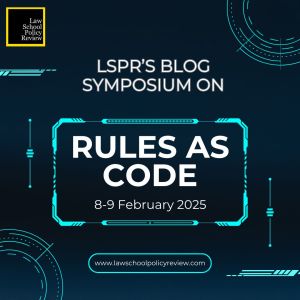
The Rules as Code (‘RaC’) refers to a growing movement around the world where governments and organizations are experimenting with coding prescriptive rules in legislation. There are various advantages to publishing laws in machine-readable versions. It has the potential to revolutionize the tech sector as it would make it easier for companies to comply with various regulatory requirements by reducing compliance costs. Further, it holds immense possibilities for the public sector as well as it would ensure better accessibility as legal provisions are often not readable to people outside the legal profession. Thus, publishing laws in a machine-readable version would help increase the accessibility of laws as we can build systems and services to make them easier to understand and apply. An excellent example of a real-life application of it is the French government coding its entire taxation rules to build ‘simulators’ to help taxpayers understand how tax laws apply to them
However, automating legal decision-making through programming the law brings forth its own challenges. Our modern legal system contains complex and dynamic laws that are constantly changing with new judgements and legislations. In this context, it is important to discuss the question of the feasibility of programming the law. Further, the advent of Artificial Intelligence (‘AI’) and Large Language Models (‘LLMs’) raises new questions about the scalability and explainability of RaC systems through LLMs.
As a platform dedicated to promoting discussions surrounding law and policy, the Law School Policy Review seeks to bring together professionals, academics, law students, and other voices. This symposium seeks to engage with these voices around the world to spark discussions on the benefits and drawbacks of RaC, its feasibility, and policy considerations. This symposium is intended to ignite discussions surrounding RaC in India. We believe that the movement would be of immense importance in the Indian context as it can make the legal system more accessible and affordable.
Follow us on Facebook, Instagram, Twitter or Linkedin .
Click here for a glimpse into the successful symposium we hosted last year – Freer & Fairer: LSPR’s Conference on Electoral Reforms in India
Categories: LSPR's Blog Symposium on “Rules as Code”
 Law School Policy Review