
Kopal Mital*
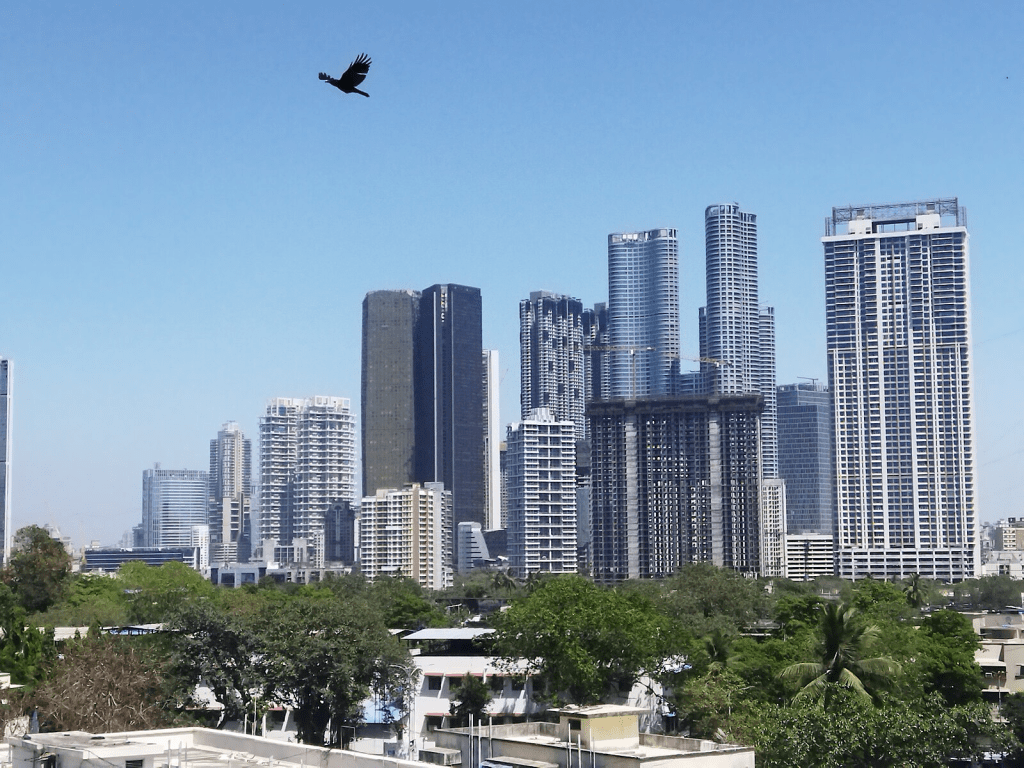
Source : WikiMedia Commons
In recent times, there have been a slew of cases where the Indian Insolvency and Bankruptcy Code, 2016 (‘IBC’) has been used to deal with delays in delivery by real estate promoters. This paper studies the relationship between the Indian Real Estate (Regulation and Development) Act, 2016 (‘RERA’) and the IBC. It argues that the RERA is better-suited than the IBC to offer welcome respite to wary homebuyers from the binds of delays that plague the Indian real estate sector. It makes this argument by relying on orders passed under Section 8 of RERA by the Real Estate Regulatory Authority of two Indian states, Uttar Pradesh, and Maharashtra. The key contribution of this paper is the in-depth analysis of Section 8 orders to understand how this section has been operationalised in these two Indian states. In this manner, it seeks to close the gap in the existing literature on this subject.
Introduction
A recent estimate shows that 4,12,000 residential units valued at ₹4.08 trillion have been affected by promoter’s inability to complete construction work within the promised time. The National Capital Region has the most stalled units followed by Mumbai, Pune, and Bengaluru. Eager to get possession of their homes, allottees have started using the Insolvency and Bankruptcy Code 2016 (‘IBC’).
This article argues that Section 8 of Real Estate (Regulation and Development) Act, 2016 (‘RERA’) offers a more streamlined, consumer-friendly, and expert driven remedy than the IBC in dealing with delivery delays. It offers a robust way to pull stalled projects out of their rut which is currently a major pain point of the residential real estate sector. Resolution of this issue could further boost the status of this sector as the “most resilient and reliable choices for investors.”
The article begins with delving into the way IBC has been used to deal with cases of delay. It briefly discusses the drawbacks of the current approach. It then introduces the RERA and Section 8. RERA commentaries have limited their discussion to Section 8’s bare text.[1] However, this section goes a step further as it explains the way Section 8 has been operationalised by Uttar Pradesh Real Estate Regulatory Authority (‘U.P. RERA’). The details have been drawn from a detailed study of U.P. RERA’s Section 8 orders. In this background, it is shown that the process under Section 8 is more consumer-friendly and expert driven than that under the IBC.
Though the Consumer Protection Act 2019 is also being used by homebuyers, this article has limited its focus to the interface between IBC and RERA.
IBC and Real Estate Sector
A 2022 report noted that the real estate sector has the highest share of corporate insolvency resolution process (‘CIRP’) cases at 54%. Perhaps due to the high number of cases, several real estate sector-specific amendments were introduced to the IBC. Allottees have now been granted the status of financial creditors under Section 5(8)(f)[2] which allows them to initiate CIRP against the promoter.[3] By virtue of their status as financial creditors, allottees could also be represented in the Committee of Creditors (‘CoC’).[4] The constitutionality of this amendment to Section 5(8)(f) was challenged in Pioneer Urban and Infrastructure Limited and Another v. Union of India and others (‘Pioneer’).
In Pioneer, SC decided that on a harmonious reading of the laws, RERA and IBC must exist side-by-side.[5] However, in case the two laws conflict, IBC would prevail over RERA.[6] A few remarks made by the court after this analysis merit a closer look. SC noted that IBC and RERA occupied separate fields in operation. It suggested that the allottees could take benefit of both these legislations. RERA could be used to ensure allottees get timely possession of their properties or get compensation and interest for delay.[7] However, if the allottees wished to remove the “corporate debtor’s management,” IBC could be used.[8] In giving its decision, the SC completely ignored the practical issues arising out of the allottees being considered as financial creditors. While ordinary financial creditors readily take reduced repayments, allottees prefer taking possession of the property.[9] Therefore, there is a fundamental mismatch in the incentives of the allottees with that of other financial creditors. This leads to further tension in the CoC.[10] Further, the allottees do not have the expertise to assess the financial feasibility of the resolution plan which is the key task of the CoC.[11]
Since the SC did not address any of these practical concerns, the mantle fell on subsequent adjudicating authorities and courts deciding CIRP applications in the real estate sector. To balance the operation of IBC with the allottees’ concerns, these authorities evolved ‘reverse CIRP’ and ‘project-wise resolution.’
Cases to which reverse CIRP and project-wise resolution have been applied show that cases courts do not order constitution of CoC for the company.[12] Since this is not done, CIRP does not move into the advanced stages of calling for resolution plans. Instead, the application is admitted and the interim insolvency resolution professional (‘IRP’) is instructed to ensure that the residuary development work is completed.[13] At this point, one maybe compelled to ask whether the IRP is the best authority to undertake this task. The next section answers this question in the negative. It shows that Section 8 of the Act and Real Estate Regulatory Authority (‘Authority’) offer a much better alternative to the IBC process.
RERA and Section 8
Enacted in 2016,[14] the purpose of the RERA has been to streamline the real estate sector in India by bringing provisions which increased transparency and safeguarded homebuyer’s interests.[15] It also instituted the Authority as a regulatory body to ensure compliance with the RERA in each state.[16] One of the key functions of the Authority is to ensure that promoters register their projects as per Section 4.[17] This section requires the promoter to file information about the project’s details including an undertaking about the time by which the real estate project[18] (as a whole or each phase) would be finished.[19] The time mentioned in this declaration is the taken as the period till which the project is validly registered.[20]
If the promoter is unable to complete construction in the time mentioned,[21] the Authority has two options. First, keeping the allottees’ concerns in mind,[22] the Authority can continue the registration after setting new conditions for the promoter to abide by. Second, it can use Section 8. This section empowers the Authority to consult the appropriate government and decide on a plan to complete the remainder of the construction and development work.[23] It is to be noted that this order becomes effective only after the time given for appeal exhausts.[24] Therefore, Section 8 does not automatically apply on expiry or cancellation of registration.[25] The specific guidelines for operationalising Section 8 have been laid down by the Authority of individual states.
Though the Maharashtra RERA has been active, the U.P. RERA has been the most proactive in taking over projects under section 8. In August 2022, U.P. RERA reported the completion of Jaypee Greens Kalypso Court making it India’s first project to be successful under Section 8. The registration for this project had lapsed on 30 June 2018. The project consisted of 15 towers out of which the development of 4 towers had not been completed by the end of registration date. The development of the project grinded to a halt as allottees refused to deposit installments after extreme delays by the promoter. The AoA Progressive Welfare Society requested the U.P. RERA to supervise the project so allottees could get possession.[26] After protracted consultation between the promoter and AoA, the promoter agreed to complete the project under U.P. RERA’s supervision. Therefore, its approach shows promise.
The next section discussions the conditions under which project can be taken over, models for takeover, and general guidelines to be followed post-takeover.
U.P. RERA’s Approach to Section 8
Conditions
There are two conditions under which the Authority is empowered to assume control of a project’s development. One of these is where the project’s construction is pending but registration of a project has lapsed with no possibility of extension.[27] This is characteristic of all delayed projects. In such a case, the U.P. guidelines allow the Association of Allottees (‘AoA’) and promoter to work together to ensure the completion of the project. Such collaboration can only take place if more than 50% of the allottees consent.[28] Oversight over the work is kept by the ‘Project Advisory & Monitoring Committee’ (‘PAMC’) appointed by the U.P. RERA. A study of the orders passed reveals that this condition occurs more frequently than the other condition where the registration of the project has been revoked under section 7.[29]
Models
There are three models which can be followed to complete the remaining work. First, under model 1, the AoA develops and hands over possession of the remaining units to the allottees under the Authority’s supervision. The role of the promoter is reduced to ensuring registration of the completed units. Once the veracity of the allottees’ consent is verified, U.P. RERA appoints an independent construction consultant to corroborate the practicality of the AoA plan.[30] Where the necessary conditions for model 1 are not met, model 2 allows an authority appointed by the U.P. RERA to take over the project’s development. The role of this authority is the same as that of the AoA in model 1. In model 3, the development is undertaken by the AoA and promoter jointly. They are required to make a proposal which is assessed by the Project Management Division (‘PMD’).[31] The PMD is tasked with analysing the financial and operational feasibility of these projects. It also acts as a liaison between the U.P. RERA, promoters, and the AoA.[32] The PMD report covers details about the number of sold and unsold units, amount of money with the promoter, estimated completion cost, project’s cash flow status, and completion timeline.[33] At times, the Technical Division also weighs in its with its view of the project’s status and timeline.[34] Unlike models 1 and 2, the promoter is tasked with ensuring the project’s completion and handing over possession to the allottees.
Once it is decided which model is to be followed, the Authority lays down certain guidelines which the promoter needs to abide by. Though the circumstance of each case may differ, there are certain commonalities emerge across all orders.
Guidelines
First, the AoA is required to submit the explicit consent of 50% of all the allottees agreeing to allow the promoter to complete the pending work.[35] Second, the promoter is required to provide an affidavit giving the assurance that it will finish the pending work and finance it within a specified period. U.P. RERA imposes an obligation upon the promoter to adhere to the terms of the agreement of sale. It is also obligated to complete the remainder of the work by abiding to the law and regulatory requirements.[36] Third, U.P. RERA constitutes a ‘Project Advisory and Monitoring Committee’ (‘PAMC’) consisting of U.P. RERA’s Financial Controller, Technical Advisor, the PMD, Auditor, a Bank and AoA members.[37] It is required to monitor the project monthly.[38] Fourth, the promoter could be required to file a quarterly report for U.P. RERA’s assessment. The report would be uploaded on the website. The project shall also be moved to a ‘special category’ on the website.[39] Fifth, the promoter is required to open an account with a scheduled bank.[40] It must deposit all the money received for the project in this account. The money in this account cannot be used for any other purpose. The promoter is required to obtain an audit report of this account and upload it to the website.[41] Sixth, the promoter is required to approach the appropriate authority for requisite permissions to continue work or to complete possession formalities.[42] Seventh, the promoter is free to hire professionals to complete the work. However, it must follow a tender process which will be audited by the Concurrent Auditor.[43] Eighth, on conclusion of construction, it is the promoter’s duty to handover possession after applying for an occupancy certification as per the relevant laws. In case any of the above guidelines are violated, the U.P. RERA is allowed to act against the promoter.[44] In cases of ‘capital infusion’ by the promoter, the Authority sets a timeline of 3 months. In case the promoter fails, the Authority can revoke the Section 8 order and take appropriate action as per the Act.[45]
Using the foundation laid above, the next section discusses the consumer-friendly and expert-driven nature of Section 8. These features make this Section a much better choice than IBC when dealing with cases of delayed construction or possession.
Consumer- Friendly
The homebuyer’s interests and concerns are kept front and center throughout the rehabilitation process. As seen through the conditions, models, and guidelines above, no action is taken without majority expression of explicit consent. This ensures that the voice and concerns of the allottees are heard and addressed. Keeping allottees as the primary focus is essential as they are the key stakeholders. The delays places significant financial burden on the allottees as many of them take loans or invest all of their savings to finance their purchase. Such focus is absent when allottees participate in the CoC as their interests need to be balanced with other FCs.
Expert Driven
Authorities are much better suited to supervise project construction than the IRPs. There are two issues with NCLAT and SC making the IRP responsible for completing the project’s construction. First, completion of construction does not squarely fall within the IRP’s responsibility under Section 18, IBC. IRP is tasked with gathering the CD’s financial information which includes details about its properties, liabilities, pending payments and functioning.[46] They also take charge of the CD’s assets for management until the next step in the CIRP begins.[47] IRP must act to bring stability into the CD’s operation to ensure it continues to operate as a normally as possible accounting for the constraints place by CIRP.[48] The CD’s personnel is required to work under the IRP to ensure the CD continues to operate in a stable manner.[49] The instructions of the NCLAT and SC also seem to be directed at the personnel to co-operate with the IRP to complete construction. However, it seems unclear whether the IRP would be able to participate in decision-making relating to construction given their limited training and exposure to real estate. This brings us to the second issue of whether IRPs have the required expertise to complete this task. This can be discerned from the qualifications required to be a RP. To be registered as an RP, one needs to clear the Limited Insolvency Examination, pass the National Insolvency Programme, and have an experience of 10-15 years of experience in law, management, chartered accountant, company secretary or cost accountant.[50] The syllabus for the examination covers corporate law, NCLT/NCLAT case law, and few provisions of non-corporate laws. This criteria does not provide the impression that the RPs would have sufficient know-how to supervise the construction of real estate projects. They are trained to focus on the corporate law and accountancy issues facing the CD. It may only be in exceptional cases that the IRP has practical knowledge of real estate functioning and is able to play an active role with the personnel to ensure completion of construction. An example of this is the IRP appointed in Flat Buyers Association Winter Hills-77, Gurgaon v. Umang Realtech Private Ltd (15).[51] He was well versed with real estate projects and was able to devise a phase-wise timeline for conclusion of the project.[52] The issue may get compounded in cases where the promoter is not directly involved in completion of construction like in Supertech. All these issues do not arise in case an Authority is using its powers under Section 8. This is supported by the thorough nature of the U.P. RERA guidelines. Every single aspect of construction is thought of, from finance to construction till possession. At every step of the way, there are experts to assess and assist the promoter to achieve the end goal of completing construction and handing over possession to the allottees. Particularly in U.P. RERA, a balance has been struck between support and oversight in operational and financial aspects of the project.
While RERA and Authorities have their merits, problems persist, two of which are discussed below.
Problems with RERA and Section 8’s Operation
While the positive aspects have been highlighted above, RERA and Section 8 are not without its faults. Two problems have been flagged here. First, while homebuyers are content with RERA, they seem to be extremely unhappy with the timelines of dispute resolution within RERA. Second, there seems to be a lack of co-ordination between NCLT and state RERA authorities. Perhaps taking the first step towards streamlining the operation of IBC and RERA, UP RERA’s website has a separate tab titled ‘NCLT projects.’ Orders have been uploaded of those promoters and projects where the NCLT has ordered admission of the insolvency application filed.[53] In inching a step closer towards co-ordination, U.P. RERA website also has a tab titled ‘NCLT Projects under Section 8.’ However, no orders have been uploaded yet.
Conclusion
The article has shown that the RERA should be the first authority that homebuyers should approach rather than using IBC. The approach under Section 8 combined with a sustainable approach to financing the last-mile requirements of stalled projects could clear this dark cloud hanging over this sector. With construction pending in big projects of known builders (like Supertech and Amrapali) there is an opportunity for the state Authorities to work with the developers and allottees to achieve the same success as it did in Jaypee Greens Kalypso Court.
[1] See, Ajar Rab, Real Estate (Regulation and Development) Act 2016 (1st edn, EBC 2019), Anand G Srinivas, Law Relating to RERA in Maharashtra (2nd edn, New Delhi Taxmann Allied Services 2017), Bhoumick Vaidya, Commentary on the Real Estate (Regulation and Development) Act, 2016 along with Maharashtra Rules and Regulations, 2017 (Snow White, June 2017).
[2] IBC, s 5(8), RERA 2016, s 2(d).
[3] Pioneer Urban and Infrastructure Limited and Another v. Union of India and others (‘Pioneer’) (2019) 8 SCC 416, [16].
[4] Pioneer (n 16).
[5] ibid, [29]
[6] ibid, [26-27].
[7] ibid.
[8] ibid, [30].
[9] Ministry of Corporate Affairs (‘MCA’), ‘Invitation of comments from the public on changes being considered to the Insolvency and Bankruptcy Code, 2016’ (File No. 30/38/2021-Insolvency, 18 January 2023) 8-9 <https://www.mca.gov.in/content/dam/mca/pdf/IBC-2016-20230118.pdf> accessed on 20 July 2023
[10] ibid.
[11] Flat Buyers Association Winter Hills-77, Gurgaon v. Umang Realtech Private Ltd (‘Umang Realtech’) 2020 SCC OnLine NCLAT 1199 [9].
[12] Indiabulls Asset Reconstruction Company Limited v. Ram Kishore Arora and Others 2023 SCC OnLine SC 612, [21].
[13] Ram Kishor Arora Suspended Director of M/s. Supertech Ltd. v Union Bank of India & Anr. Company Appeal (AT) (Insolvency) No. 406 of 2022 [20] (‘Supertech’); Aditya Dev, ‘Builder Agrees to Finish Housing Project, Insolvency Relief for Now’ The Times of India (Noida, 31 July 2023) <https://timesofindia.indiatimes.com/city/noida/builder-agrees-to-finish-housing-project-insolvency-relief-for-now/articleshow/102259719.cms?from=mdr> accessed 10 September 2023
[14] RERA, ‘Act Details’ <https://www.indiacode.nic.in/handle/123456789/2158?sam_handle=123456789/1362> accessed 12 September 2023
[15] RERA, Long Title.
[16] ibid, s 20, 34, 37 and s 2(zj).
[17] ibid, s 34.
[18] ibid, s 2(zn).
[19] ibid, s 4(2)(l)(C).
[20] ibid, s 5(3).
[21] RERA, s 7(1).
[22] ibid, s 7(3).
[23] ibid, s 8
[24] ibid, s 8 first proviso.
[25] Neelkamal Realtors Suburban Pvt. Ltd. and Anr. v. Union of India and Ors 2017 SCC OnLine Bom 9302 [113].
[26] Bibliography, Section 8 orders, ‘Japyee Kalyso.’
[27] Section 8 orders, ‘La Casa’ [4]; ‘Jaypee Greens Knight Court’ [2-3]; ‘Apple7’ [3]; ‘La Palacia’ [4]; ‘Vasundhara Grand’ [4].
[28] U.P. RERA Performance Report 2020 (n 77), 33.
[29] Section 8 orders.
[30] ibid, 34.
[31] Section 8 orders ‘Jaypee Kalypso’ [10], ‘Apple7’ [7-8], ‘Casa Grande’ [10], ‘Jaypee Greens Knight Court’ [9], ‘La Palacia’ [8], ‘Novena Green’ [5], ‘Unibera Towers’ [8], ‘Vasundhara Grand’ [7], ‘Utopia Estate’ [8], ‘Spring View Heights’ [8], ‘Le Garden Phase-3’ [10], Antriksh Sanskriti 2.
[32] ibid.
[33] Section 8 orders.
[34] ibid, ‘Apple7’ [9], La Casa [9].
[35] Section 8 orders.
[36] ibid.
[37] ibid.
[38] ibid.
[39] ibid.
[40] ibid.
[41] ibid.
[42] ibid.
[43] Section 8 orders.
[44] ibid, ‘Utopia Estate’ [12].
[45] ibid, ‘Le Garden Phase’ [14], ‘M/s Elegant Infracon’ [13 g].
[46] IBC, s 18(a).
[47] IBC, s 18(f).
[48] ibid, s 19(1) and 20(2)(d).
[49] ibid.
[50] Insolvency and Bankruptcy Board of India (‘IBBI’) (Insolvency Professional) Regulations 2016, r 5.
[51] 2020 SCC OnLine NCLAT 1199
[52] ibid, [18].
[53] see M/s Gagan Ferrotech Limited v. M/s Manju J Homes India Limited Company Petition No. IB- 1058/ND/2018 [18]; Ample Infrastructure v. M/s Intellicity Business Part Pvt. Ltd. IB-17/ND/2019 [4]; M/s Experts Realty Professionals Pvt. Ltd. v. M/s Logix Infrastructure Pvt Ltd. IB-237(ND)/2023 [5.i]; Nimble Credit Cooperative Society Ltd v. Bulland Realtors Private Limited (IB)-296(PB)/2023 [i]; Chirag Jain & Ors. v. Imperia Structures Ltd. IB-525/PB/2022 [31].
* Kopal Mital is an alumna of the National Law School of India University. All views expressed by the author are their own.
 Law School Policy Review