
Keerthi Sathvika Tammineedi*
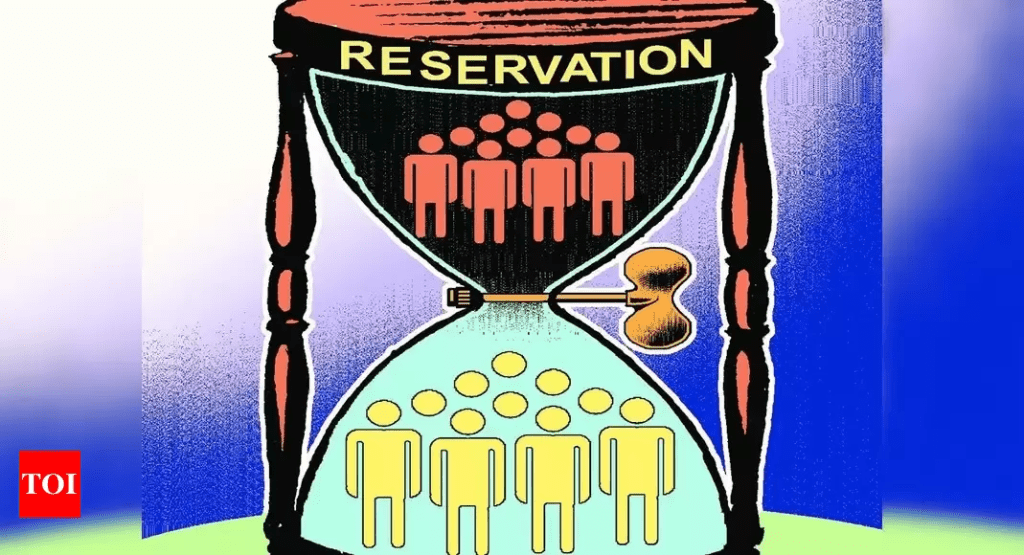
Source : TOI
In this piece, I argue that “the exclusion of the creamy layer is neither the right approach nor the only path towards building an inclusive society.” This argument was prompted by J. Gavai’s opinion in Davinder Singh regarding the exclusion of the creamy layer from SC/ST reservations. While existing scholarship focuses on the state’s limitations in implementing such exclusions, I take a different stance, arguing that even if the state is assumed to have the legislative power to exclude the creamy layer, under the present circumstances, such an action would violate the right to equality under Article 14 of the Constitution.
Recently, the Supreme Court, in State of Punjab v. Davinder Singh, addressed the validity of sub-classification within Scheduled Castes (SC) and Scheduled Tribes (ST) for the purposes of reservation. The obiter dictum also examined the application of the creamy layer principle in the context of SC, ST reservations. While the government clarified that this was merely an observation of the judges and not intended to apply to the SC and ST quotas, it is nonetheless important to understand the implications of excluding the creamy layer from the Scheduled Castes and Scheduled Tribes for the purpose of reservation.
This article, unlike the judgement, does not assess the state’s competence or its authority to introduce the creamy layer principle for the said category. Instead, it focuses on arguing why the state should refrain from doing so. Implementing this principle, as I further argue, would violate Article 14 by treating unequals equally. Because the unaddressed corollary of excluding the creamy layer is their forced integration to compete with the current unreserved castes without a parallel social inclusion.
Asking the Article 14 question(s)
Equal protection of law under Article 14 has two aspects, equal treatment of equals and unequal treatment of unequals. Excluding the creamy layer from a given class, essentially involves creating a distinction. Such distinction is valid if there are intelligible differentia which separate a group within that class from the rest and the ground of distinction has a reasonable nexus with the objective sought to be achieved.
One could argue that the exclusion of creamy layer creates a clear distinction, between the members of the community who have met a certain, social, educational, and economic threshold and those who have not, making it an intelligible differentia. This also has a reasonable nexus with the objective of ensuring that the benefits of reservations percolate to the bottom strata of the reserved communities.
However, it must be understood that the exclusion of the creamy layer is premised on the assumption that members of these communities, upon meeting a certain threshold, have overcome their social disabilities and are now on par with members of unreserved communities that have not faced similar exclusion. The two-prong test, although necessary, is not sufficient when dealing with such assumptions. The court should look beyond that, subject it to strict scrutiny, and ask more questions that lead to a more substantive understanding of equality, rather than a mere procedural one. Such questions might include examining the impact of the legislation beyond the legislature’s intent and the existence of less restrictive measures, among other considerations.
What Snaps the Thread? Unpacking the Basis of Distinction
The rationale behind the creamy layer principle is that when individuals of a class reach a certain threshold of social, economic, or educational advancement, the “connecting thread between them snaps,” making them misfits in their own class. While distinctions can be made to treat unequals unequally, a complete formulation of this principle renders it incompatible with any form of human society, since no two individuals are equal in all aspects. Hence, it is important to ask: equals and unequals in what context? Is the distinction substantial enough to justify differential treatment? In other words, is it strong enough to snap the thread?
To understand what distinctions, snap the thread, it is essential to first comprehend what that connecting thread looks like. The reservations provided to the SC, ST communities aim at the inclusion and advancement of the group, seeking to undo historical wrongs—a buy-in for the historical injustices.
These are group rights; individualizing them undermines their purpose. The focus should be on the collective progress of the group, not on individual gains. Reservations are meant to ensure adequate representation. Therefore, the question of the success of reservations is not about who is at the table but about the representation they carry.
The creamy layer principle, which aims to exclude the “not so backward” sections of the community from the benefit of reservations, may not be applicable to the SCs and STs, in the same way it applies to the Other Backward Classes (OBC). This distinction arises because the threads connecting these groups are fundamentally different. The objective behind OBC reservations is to reach the backward sections of society. The thread that binds the members of this category is backwardness; hence, backwardness, not caste, is the basis for such reservations. Caste, in this case, is merely an indicator, i.e., a tool for measuring social, educational, and economic backwardness. The SC and ST communities, on the other hand, share a historical thread of exclusion that is rooted in systemic discrimination and stigma. Reservations for SC and ST groups focus on including those who have been historically marginalized. Here, caste is not merely an indicator of such exclusion but is the very basis of it!
When applying the creamy layer concept to OBCs, crossing a threshold of social or economic status might be acceptable since it severs the underlying thread of backwardness. However, this does not hold for SC and ST reservations. For these groups, the connecting thread has many more layers than mere backwardness; historical exclusion, for example, remains a persistent thread, and crossing the threshold does not sever the collective stigma and discrimination. The realities of everyday discrimination—subtle stereotyping, exclusion, stigma, fear, and prejudice—remain deeply ingrained. The grave challenges arising from caste status, thousands of years of exclusion cannot be resolved simply through one generation of education or public employment. By reducing the issue to mere backwardness, one denies the existence of oppression and distorts the lived realities of disadvantaged castes and Dalits, reflecting an anti-historical perspective that dismisses the relevance of their experiences.
Intent v. Impact: When Justification Falls Short
Even if were to assume that the distinction made is valid, the primary intent behind creating such a distinction is to treat unequal members of the same caste differently—essentially, to address the needs of the unequals. While this intent is justified, the impact is not. The contention here extends beyond the exclusion of the creamy layer from reservations; it involves their assimilation with the unreserved, historically privileged castes. As raised by J. Chinnappa Reddy in Vasanth Kumar v. State of Karnataka, stating,
“If reservation was concerned with the more backward classes and no reservation was made for the slightly more advanced backward classes, the most advanced classes would walk away with all the seats available for the general category, leaving none for the backward.”
As discussed in earlier sections, everyday discrimination persists, and those from marginalized castes despite economic and educational advancement do not have the same opportunities as those in the general category. While the intent behind excluding them from SC and ST reservations is that their socio-economic advancement makes them ‘misfits’ in the community, the impact is that they remain misfits, even after such exclusion—this time competing with the historically privileged groups.
Exploring Alternatives: Is this the Least Restrictive Measure?
While the specific action taken might not be justified by the concern, the issue is nonetheless valid. This includes the lack of percolation of the benefits of affirmative action beyond relatively advanced members of the group and its inability to address issues of intersectionality.
The state not only has the power to take affirmative action to address this but also has a responsibility to do so, as giving equal opportunity to unequal people perpetuates existing inequalities. While the problem is valid, the solution is not. Terms like “special provision for advancement” and “the state’s power for affirmative action” are broad; they include reservations but are not limited to them.
Reservations play a crucial role in promoting social inclusion, but they are not a panacea for centuries of intersectional oppression. To truly address these deep-rooted issues, we must explore a range of strategies, such as providing the more disadvantaged members of the community with adequate training to enable them to compete effectively. Other assistive measures, like financial aid, scholarships, concessions, and increased accessibility, are equally important.
Advocating for exclusionary practices that violate the right to equality, rather than exploring alternative solutions, does not align with the principle of the least restrictive measure. Our focus should prioritize inclusion, shifting away from framing this as a conflict of rights. This includes avoiding claims that those from backward classes who are slightly more advanced may secure all the seats or suggesting that opposing the adoption of this principle puts them in the shoes of those who oppressed them.
While it’s true that some reserved seats for backward classes may be claimed by more privileged individuals within those groups, this does not negate the necessity of reservations for them. In our competitive society, the elite dominate even in the unreserved positions, allowing the privileged to seize opportunities from both reserved and unreserved categories. However, the judicial anxiety surrounding the identification of the “most deserving” individual, or group reflects a benevolent bias that doesn’t apply universally. This search for the “perfect beneficiary” can hinder the very progress that affirmative action seeks to achieve.
Conclusion
The challenges faced by these communities extend beyond economic and educational barriers; stigma, stereotypes, and social exclusion continue to manifest, even for those who achieve upward mobility. This underscores that SC, ST individuals still face significant disparities compared to those in the general category and are distinct from those that arise from mere socio-economic backwardness.
Hence, excluding the relatively advanced individuals within these communities from the SC, ST category because they are deemed “unequal” creates a troubling paradox: it results in equal treatment among unequals—between the excluded few of the SCs, STs and the cream of the crop of the general category—thus leading to the very problem that it is attempting to solve.
While the exclusion of the creamy layer may initially fulfill parameters of the reasonable classification test, incorporating additional filters—such as impact studies and least restrictive measures—reveals deeper substantive inequalities.
Having established that, the intersectionality of class, caste and other indicators and percolation of benefits to all the rungs of the community is indeed an important consideration. However, the ‘exclusion’ of creamy layer is neither the right way to address it nor the only route towards an ‘inclusive’ society.
*The author is a third-year law student at NALSAR University of Law, Hyderabad.
 Law School Policy Review