
Aman Yuvraj Choudhary and Aditi Verma*
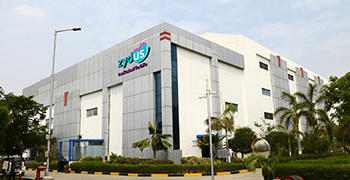
Source : Zydus
Similar Biologics (biosimilars) are developed as an alternative to biologics so as to make critical treatment more accessible to the public for chronic conditions like multiple sclerosis, rheumatoid arthritis, and cancer inter alia. The Guidelines on Similar Biologic: Regulatory Requirements for Marketing Authorisation in India 2016 was were introduced to provide a regulatory pathway for marketing authorisation of biosimilars. Lately, reports surfaced that Zydus, an Indian firm, was in the process to get market authorisation for its biosimilars based on the biologic–Pertuzumab which is a treatment for HER2 positive breast cancer patients. Roche, the developer of Pertuzumab, made representations before the Drugs Controller contending that the reference product used by Zydus for clinical trials (to establish bio-similarity) was compromised. In addition, Roche has attained injunctive relief against the marketing authorisation granted to Zydus on grounds of patent infringement inter alia which has prevented Zydus’s affordable biosimilars from reaching the public. In light of this controversy, this article seeks to first, analyse the systemic gaps in India’s biosimilar approval process. Second, the article highlights the stranger-like position of the innovator in the biosimilar approval process. Third, the article compares India’s approach with the United States and demonstrate the stark differences in regulatory mechanisms and finally, this article concludes with the proposition of three critical policy interventions–advance notice, patent dance and pre-authorisation objections mechanism–which aim to streamline dispute resolution, protect innovative interests, and ultimately ensure patient access to affordable biological treatments.
Introduction
Biologics are medical products made from a variety of natural sources (human, animal or micro-organism) which are intended to prevent, diagnose or treat diseases and medical conditions. Biologics have been proven effective against conditions such as multiple sclerosis, rheumatoid arthritis, and cancer. A reference biologic is the drug of which a similar biologic (biosimilar) is to be developed. A biosimilar product is that which is similar in terms of “safety, efficacy and quality” to a reference biologic. Biosimilars are known to reduce costs and make treatment accessible to more patients.
Pertuzumab is a biologic drug developed by F. Hoffmann-La Roche Ltd. (Roche) and is marketed as ‘Perjeta’. It is critical for the treatment of HER2 positive breast cancer patients. Its biosimilar has been reportedly developed by Zydus Research Centre using Perjeta as a reference biologic. In June, pharmaceutical majors Zydus Lifesciences (Zydus) and Dr Reddy’s Laboratories announced an agreement to co-market the Pertuzumab biosimilar as ‘Sigrima’ and ‘Womab’ respectively in India. However, the biosimilar developed by Zydus is not free of controversy.
In the first half of 2024, Roche made representations before the Drugs Controller General of India (DCGI) alleging that Zydus may have flouted rules while conducting its clinical trial for developing a biosimilar of Pertuzumab, a drug originally developed by Roche (innovator/sponsor). According to Roche, Zydus imported 500 vials of Perjeta from Germany in August-September 2022 for their clinical trials, outside of Roche’s official supply chain. This allegation strikes at the integrity of the clinical trial and biosimilar development processes. Roche contended that the reference drug used by Zydus in the starting phase of the clinical trial was procured from an unauthorised source and might be of questionable quality or compromised or spurious.
A curious case before the Delhi High Court
On June 27, 2024, Zydus received the regulatory approval from the Central Drugs Standard Control Organization (CDSCO) for marketing of its biosimilar. On July 09, 2024, an application for interim relief was allowed by the Delhi High Court (DHC) restraining Zydus from marketing its biosimilar in a patent infringement suit relating to biosimilars of Pertuzumab in F-Hoffmann-La Roche & Anr. v. Zydus Lifesciences Ltd. The infringement suit and related interim applications were filed inter alia anticipating that the similar biologic developed by Zydus would infringe Roche’s patents. The Supreme Court recently ordered the DHC to “expeditiously” decide the issue.
The implications of this dispute extend far beyond these two companies. It raises critical questions about: the standards (or lack thereof) for reference product sourcing in clinical trials for biosimilar development; the lack of patent negotiation provisions and the lack of pre-approval objections mechanism in the biosimilar approval framework.
In light of the same, this article will: provide a regulatory overview of biosimilar approval in India; analyse the regulatory framework surrounding reference product sourcing in clinical trials; examine the involvement of the innovator of the reference biologic in the biosimilar approval procedure in India; discuss biosimilar approval in the US and their provisions for advance notice, pre-authorisation negotiation of patent disputes, and objections-mechanism; and conclude with policy suggestions as to how biosimilar approval in India can be improved so as to limit pre-and-post-approval litigation and provide clarity to all parties concerned and involved.
Biosimilars and Regulatory Overview
The underlying idea of biosimilars is that the biosimilar must yield the same results as the reference biologic. The demonstration of similarity using extensive quality characterisation as against the reference biologic is critical to marketing authorisation. In other words, similarity is the benchmark and must be proved through clinical trials and bioequivalence studies inter alia.
The Guidelines on Similar Biologic: Regulatory Requirements for Marketing Authorisation in India 2016 (Biosimilar Guidelines) was introduced to address the lack of a clear regulatory pathway for marketing authorisation of biosimilars. The Biosimilar Guidelines assist the workings of The New Drugs and Clinical Trial Rules, 2019 (New Drugs Rules) which is applicable in respect of “new drugs and investigational new drugs for human use” by virtue of Section 122D AA of the Drugs and Cosmetics Rules, 1945 (DCR,).
Under the New Drugs Rules, the Drugs Controller is the Central Licensing Authority and is responsible for approvals for biosimilar development since Biosimilars are classified as “new drug” as per the Rule 2(w)(v), as it is a recombinant Deoxyribonucleic Acid (r-DNA) derived product. Under Rule 53, permission to manufacture new drugs for clinical trial or bioequivalence study inter alia is granted by the Central Licensing Authority and, under Rule 56, a license to manufacture the same is granted in accordance with the DCR. Grant of licence for importing a new drug for clinical trial or bioequivalence study inter alia is provided for under Rule 67 of the New Drugs Rules.
Regulatory framework concerning reference product sourcing in India
Given that establishing similarity is the benchmark for marketing authorisation for biosimilars, it becomes important that the reference biologic must not be compromised in any manner and cannot be changed during the clinical trial process. The sourcing of the reference biologic requires procurement of the product through legal supply channels. Variables at play during reference biologic sourcing are temperature control, secure packaging, traceability, regulatory compliance inter alia. The underlying idea is that the reference biologic being procured must not be of compromised quality so as to not compromise the clinical trials.
For the import of any patented or proprietary drugs, Section 10(d) of the of the Drugs and Cosmetics Act, 1940 (DCA) requires proper display of the true formula or list of active ingredients contained in it in a prescribed format. Section 9A(b) deems a drug stored in insanitary conditions (that may lead to contamination) to be “adulterated” and import of such drugs is thus not allowed under Section 10(bb). Albeit, the requirements under Section 10 of DCA do not apply when drugs are imported in “small quantities” for examination, testing or analysis [Proviso to Section 10 of the DCA and Rule 33 of the Drugs and Cosmetics Rules, 1945 (DCR)].
The Biosimilar Guidelines do address the sourcing of reference biologics but only as a compliance measure and not to an extent to be construed sufficiently regulated. The Biosimilar Guidelines provide that a reference biologic “can be imported” for biosimilar development for quality, pre-clinical and clinical comparability. The guidelines require that the biosimilar manufacturing process must be “validated and demonstrated to be highly consistent and robust”. This is only possible when the reference biologic is not compromised. The guidelines state that the reference biologic should be licensed or approved in in India and if not available in India, it should be licensed and widely marketed for at least 4 years in a country with a well-established regulatory framework (like USA, EU, Japan, Canada, Australia).
The Biosimilar Guidelines lists “Application Forms” which enlists various application forms to be submitted to regulatory agencies. Therein, an application for an import licence for examination, test or analysis must be made to the CDSCO at the zonal level under Form 12 in line with Rule 34 of the DCR, 1945. Form 12, in itself, requires the disclosure of the specification (name and quantity) of the drugs to be imported, from whom and where the import is being made and the place for the examination, test or analysis. Beyond this, Form 12 does not require anything else with respect to the source of obtaining the reference biologic.
Appendix V of the Good Clinical Practice Guidelines lists essential documents for conduct of clinical trials. It enlists that the following must be filed with concerned officials before the clinical phase: handling instructions and shipping records of investigational products and trial-related materials and a certificate of analysis of the material shipped (points 14, 15 and 16 of Appendix V).
It is important to note that while the guidelines provide this framework, it does not dive into specifics about the procurement process or supply chain verification for reference biologics. This lack of detailed guidance on sourcing is part of what has led to the controversy between Roche and Zydus. The guidelines focus more on ensuring that the reference biologic is appropriate for comparison and that its use is consistent throughout the development process, rather than on the specifics of how it should be procured. This aspect of the guidelines might be an area for potential future clarification or expansion by regulatory authorities, especially in light of controversies like the one between Roche and Zydus.
Can innovators of reference biologics raise concerns about biosimilar development? And before whom?
The Biosimilar Guidelines 2016 is concerned merely with establishing legal, biological and pharmacological similarity between a reference biologic and a biosimilar. For all intents and purposes, an innovator of a reference product is a stranger to the proceedings of biosimilar approval. The Biosimilar Guidelines 2016 do not contain any provision to put the innovator under reasonable notice of the application for biosimilar approval before the licensing authority nor any provision affording an opportunity to the innovator to make representations (or raise concerns) before the licensing authority.
Before the introduction of the New Drugs Rules, biosimilar approval was granted under Part XA of the DCR which deals with import or manufacture of new drugs for clinical trials or marketing since biosimilars fell within the ambit of “new drug” under the explanation of Rule 122-E of the DCR. Rule 122DC of the DCR provides for an appeal before the Central Government by “any person aggrieved” against an order of the Licensing Authority under Part XA. While this is undoubtedly an appeal-provision, the question arises as to whether the innovator of a reference biologic can appeal, as a person aggrieved, against an order of the licensing authority under Rule 122DC. Or, must the innovator file a civil suit against the approval granted by the licensing authority?
In Genentech INC v. Drugs Controller General of India, the DHC while dealing maintainability of a suit vis-a-vis Rule 122DC, observed that Rule 122DC does not empower a third party to challenge an approval order of the licensing authority and that the appeal provision under the Rule is only available to the applicant before the licencing authority– “person who is immediately and directly aggrieved by an order of the licensing authority”.
The New Drugs Rules provide for an appeal by “an applicant” against the order of the licensing authorityand not by “any person aggrieved.” Under the New Drugs Rules, the remedy of appeal is expressly confined to the applicant before the licensing authority and is not available to others. On grounds of lack of an appeals provision or remedy under the DCR or the New Drugs Rules, the Delhi High Court in Roche Products (India) (P) Ltd. v. Cadila Healthcare Ltd, allowed a civil suit by Roche assailing inconsistencies in biosimilar development against Cadilla to be maintained. The Court noted that introduction of the New Drugs Rules obviates the debate as to whether a third party can appeal the order of the licensing authority by explicitly specifying that only the “applicant” may file an appeal against the decision of the Central Licensing Authority under Rules 53(4) and 68(3).
These decisions, among others, of the Delhi High Court suggest that the appeals provision against the order of the licensing authority–by inference, before the introduction of the New Drugs Rules, and by explicit specification through the New Drugs Rules–is only available to the applicant-party before the Licensing Authority and not to a third-party. Therefore, for all intents and purposes, the innovator of the reference biologic is a stranger to the process of biosimilar approval. The innovator of the reference biologic is provided with no remedy under the New Drugs Rules, the DCR, the DCA or the Biosimilar Guidelines. This is the reason why the Delhi High Court has allowed civil suits to be maintained in this regard.
The Case of the Missing Advance Notice, Patent dance and Pre-Authorisation Dispute Provisions.
The ‘patent dance’ is the statutory framework for the exchange of patent information between the biosimilar applicant and the reference product sponsor (or innovator) so as to streamline resolution of patent disputes in biosimilar approval.
In the United States (US), the Biologics Price Competition and Innovation Act of 2009 (BPCIA) provides an abbreviated approval pathway for biosimilars and provides for a robust patent dance mechanism to nip patent disputes in the bud and obviate a metaphorical “race to the court”. Section 262(l)(2)(A) requires the biosimilar applicant to supply a copy of the application along with description of process used to manufacture the biosimilar to the reference product sponsor (disclosure of biosimilar application to sponsor/innovator). Sections 262(l)(3) and Section 262(1)(4) provide for a mechanism for the parties to reach an agreement as to which patent claims would be actionable (patent dance). Depending on whether the parties agree on a list of actionable patents, the BPCIA provides for immediate patent infringement action by the sponsor under Section 262(l)(6) (immediate patent infringement action). Section 262(l)(8)(A), for an advance notice by the biosimilar-applicant to the sponsor of the reference biologic (innovator) product 180-days before the first commercial marketing of the biosimilar (advance notice). This provision for advance notice allows the sponsor to seek injunctive relief before the first commercial marketing of the biosimilar.
In India, the regulations surrounding biosimilars do not have provisions requiringdisclosure of biosimilar application to innovators, patent dance, immediate infringement action or advance notice. This puts the innovator on the backfoot as concerns like patent infringement or inconsistencies in clinical trials inter alia can neither be raised as an appeal under Rule 122DC (DCR) nor there is any other statutory mechanism to resolve such disputes before the final authorisation is given to the biosimilar applicant. At best a concerned party has to institute a civil suit. But, in most cases, the concerned party or the innovator has to proceed based on anticipation as the biosimilar approval process is not statutorily required to be disclosed to the innovator. There is an abject lack of involvement of the innovator in the biosimilar approval process.
Need for Overhaul
India’s biosimilar regulatory framework was supposed to harmonise innovation and patient access to medicine but, as it stands today, it compromises on both: innovation and patient access. Critical stakeholders—particularly the innovators of reference biologics—are systematically excluded from meaningful participation in the approval process. This absence of transparent, collaborative mechanisms not only increases litigation risks but fundamentally undermines the intended purpose of biosimilar regulations: to make advanced biological treatments more accessible and affordable while maintaining rigorous scientific standards. To address these challenges, three key areas require immediate policy and regulatory intervention.
Reasonable advance notice. It is imperative to state the importance of reasonable and advance notice to the reference biologic sponsor/innovator. Putting the innovator under reasonable notice would allow objections and disputes to be streamlined and concluded before the biosimilar approval may be granted as opposed to the current practice wherein objections and disputes are raised at forums other than the licensing authority and are based on anticipation.
Patent Dance and Negotiation. A pre-emptive patent dance and negotiation provision is very important for biosimilar approval. When a drug is claimed to be a biosimilar of a reference biologic, the applicant admits that on all important parameters, the biosimilar is identical (or highly similar) to the reference biologic. This claim of identicality or similarity gives rise to a ready-made patent dispute. In addition, since the method employed to make the biosimilar is also not disclosed, apprehension can be raised that the process followed is also identical giving rise to infringement of process patents as well. In other words, trying to prove bio-similarity opens up doors for patent litigation. In line with this understanding, Roche filed before the Delhi High Court for interim relief for preventing the release of Zydus’s Biosimilar.
A question may be raised as to why civil suits are not an appropriate recourse in such a case. This is due to the fact that the licensing authority that undertakes biosimilar approval is better equipped to assess objections and claims of the innovator in relation to the biosimilar application and can effectively consider such objections before finally granting the biosimilar approval as opposed to a civil court the role of which begins after the biosimilar approval is granted. The idea is to resolve any possible and impending objection/dispute before the marketing authorisation is granted to the biosimilar applicant so as to not impede patients’ access to medicine. To be clear, the authors are not advocating that the licensing authority must have the power to adjudicate patent disputes. Rather, the license authority must be encumbered with a mere fact-checking responsibility with regards to patent claims and facilitate patent negotiations so as to ensure that at the time of grant of marketing authorisation, the biosimilar is free from impending disputes. Even in the US, the licensing authority-equivalents under the BPCIA does not adjudicate patent claims, rather it only facilitates negotiation.
Pre-authorisation Objections Mechanism. A provision for pre-authorisation objections apart from a patent dance provision is also important for the Indian biosimilar approval framework, since it will allow innovators to raise objections, other than patent claims, regarding inconsistencies in studies or clinical trials conducted by the biosimilar applicant, possibility of sourcing reference biologic from spurious sources inter alia. This mechanism will obviate the need for overtly difficult compliance measures to be incorporated in the drugs and cosmetics framework and objections can be resolved on a case-to-case basis by the licensing authority.
Denouement
As discussed, the innovator of the reference biologic is a stranger to the biosimilar approval process. The innovator’s stranger-position forces them to “run to the court” and institute injunctive proceedings against biosimilar applicants. This ties up the biosimilar product in litigation and prevents the biosimilar from being effectively marketed and thereby, defeats the purpose of our biosimilar framework which is to make biologics more accessible. A practical example of the same is the injunctive action that has tied up Zydus’s biosimilar of Pertuzumab from reaching the market as of yet.
It is arguable that since market authorisation of a biosimilar strikes at exclusivity of the reference biologic in the market, an innovator would try to block authorisation in any manner possible. But this assumption is not sufficient reason to keep the innovator guessing (and unaware) about the pending biosimilar application. Rather, by keeping the innovator under reasonable notice about the biosimilar application, patent disputes and disputes regarding inconsistencies in clinical trial (and studies inter alia) can be nipped in the bud with appropriate negotiation and dispute resolution mechanisms.
*The authors are students at National University of Study and Research in Law, Ranchi
 Law School Policy Review