
Dr. Max Steuer*
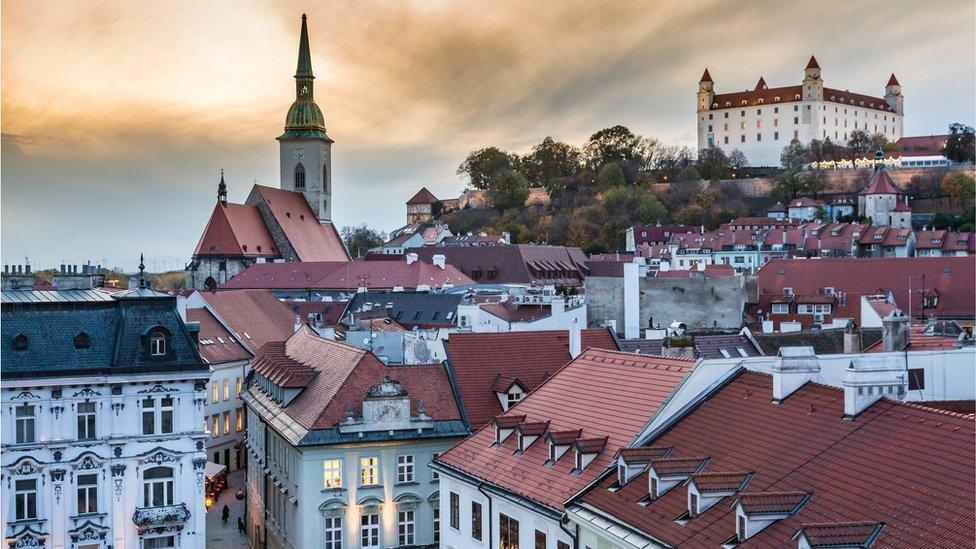
Source : BBC
This contribution offers introductory reflections on the tentative impacts of the jurisdiction’s size on constitutional court performance in the context of de-democratisation. To do so, it uses the case of Slovakia, a small and relatively less frequently scrutinised European Union member state with a formally powerful centralised constitutional court, where de-democratisation has amplified since 2023. With the help of anecdotal evidence concerning the Slovak Constitutional Court, the piece argues for more attention towards how the degree of closure of local doctrinal legal academia vis-à-vis global scholarly discourses complicates the capacity of the respective constitutional court to uphold and advance democracy amidst attempts at undermining it.
Editorial Comment
This blog post’s exploration of constitutional court performance amidst democratic erosion is both timely and significant, particularly for India. As one of the world’s largest democracies, India’s judiciary has historically been regarded as a vital custodian of constitutional principles. However, recent developments highlight increasing concerns about its ability to counterbalance rising authoritarian tendencies effectively. The Slovak Constitutional Court’s challenges resonate with India’s ongoing struggles, showing the global relevance of robust judicial independence in safeguarding democratic values.
India has witnessed growing critiques of its judiciary’s perceived inability to resist executive overreach and assert its constitutional authority. The Supreme Court’s responses—or lack thereof—to contentious issues like the abrogation of Article 370 in Jammu and Kashmir, the prolonged delays in adjudicating challenges to the CAA, and the non-transparent application of the doctrine of basic structure highlight the tension between judicial independence and partisan influence. Indian scholars have pointed to the judiciary’s inconsistent approach in matters of civil liberties and institutional accountability, raising questions about its capacity to uphold democratic norms in the face of executive dominance.
This reflection compels readers to examine the judiciary’s role in not only safeguarding constitutionalism but actively resisting authoritarian encroachments. As with Slovakia, the erosion of democratic values in India is not inevitable—but reversing this trend requires concerted efforts from courts, scholars, and civil society alike. By drawing these global comparisons, the blog post reminds us of the judiciary’s indispensable role as the last line of defence against democratic decay in the Indian context.
-Saksham Agrawal
(Editor, Law School Policy Review)
Introduction
How do constitutional courts perform when facing the erosion of democratic regime? This question is gaining interest as we observe a global wave of autocratisation, the reversal of the post-WWII tendency for the growing number of democracies—and the proportion of the world’s population living in democracies.
The question is tied to the rationale of constitutional courts – including supreme courts entrusted with constitutional review – that rests on democracy. Constitutional courts (‘CCs’), by their very existence, are to ensure that power is not concentrated in the hands of a single leader or a narrow partisan elite, but remains dispersed and subject to periodic rotation of office-holders, who, regardless of the degree of temporary popular support, are not permitted to obfuscate the mechanisms that check their performance and allow their decisions and even positions to be challenged. If you are now wondering: yes, the above specification is included in democracy as well, rather than amounting to constitutionalism in some sort of tension with democracy. The ‘tension’ thesis rests on virtually unrestrained majoritarianism presented as democracy that tells only a very limited story.
To probe constitutional court performance, empirical research is needed, but this remains in scarce supply in some jurisdictions. The de-democratising state institutions’ vested interests run against encouraging—at times even tolerating—such research. Moreover, legal and social science education tends to provide insufficient incentives to pursue research puzzles that might yield unsettling findings. This contribution uses the example of Slovakia, a small de-democratising jurisdiction within the European Union, to illustrate these tendencies, by zooming in on the performance of the Slovak Constitutional Court (‘SCC’). After introductory remarks on the role of the jurisdiction’s side in the context of the erosion of democracy, it summarises selected current contextual factors in Slovakia that are important for studying the role of the SCC. Subsequently, it highlights how the relative isolation of Slovakia as a small jurisdiction with a considerable gap between the domestic doctrinal debate and globally accessible scholarship on the role of constitutional courts complicates the position for the SCC to respond to de-democratising tendencies of Slovakia’s political regime, amplified since 2023. The contribution concludes by underscoring the need for the study of the performance of the legal academia as important for the (democratic) performance of constitutional courts.
The plights of small, eroding democracies
The performance of CCs vis-à-vis de-democratisation is influenced by many factors, well beyond only the formal powers of the CC. Certainly, if CCs are to engage in a more robust, principled reading of its jurisdiction’s constitution to even claim competence for any more wide-ranging decision, it means that the formal statutory context weakens its impact potential. Nevertheless, the self-perceptions of its judges (notably the recognition of whether the CC ought to play a role in halting de-democratisation) is arguably a significant factor.
Other (non-exhaustive) factors include the popular support and respect the CCs enjoy, the ‘human resources’ they have access to (expertise of the CC judges as well as qualified support staff), or the historical (especially democratic) legacy (including the legacy of previous case law, which matters even in civil law systems) that they can build on. The given jurisdiction’s embeddedness in relevant inter- and supranational organisations may also yield non-negligible impacts. In particular, for European Union member states such as Slovakia, the EU’s institutions and policies may complicate (though, as seen in neighbouring Hungary, not eliminate) the spread of de-democratising tendencies. In other words, these mechanisms can act as an ‘anchor’ of at least some democratic foundations.
One understudied contextual factor pertains to the jurisdiction’s size. How large is the constituency that falls back on the authority of the Court? To begin with, authoritarian regimes such as Russia or China do not work as comparators here; constitutional courts as defined above do not exist in outright authoritarian regimes, such as in Russia after the 2022 full-scale invasion of Ukraine; the institution there is a CC by formal title only. Even when discounting these odd cases, the relationship between the size and the CCs’ performance vis-à-vis de-democratisation remains hardly straightforward. Still, it is reasonable to assume that a large (albeit de-democratising) jurisdiction typically enjoys a more vibrant, multifaceted and robust constitutional discourse surrounding the Court than a small one. Furthermore, the size of the constituencies from among which judges of the Court are drawn is likely to be larger, which may (depending on the appointment system and its openness for qualification) increase the potential for a competitive selection of candidates. Not least, the outputs of the Court’s decisions have greater potential to be scrutinised more vividly, because there are more sizable epistemic communities. In other words, more people discuss, think and write about, reflect and critique the respective CC practice from within that jurisdiction.
In turn, this attention might combine with greater global interest in the jurisdiction, not only via diaspora scholars or observers trained in that jurisdiction who pursue their work outside of it, but also via individuals from abroad who, for various reasons, develop an interest in its development. The latter may also depend on the accessibility and popularity of the language in which such professional communication unfolds, with English being closest to the lingua franca supporting global access. Ultimately, this ‘virtuous circle’ may be enhanced by establishing specialised journals, news media or other platforms devoted to the study of that jurisdiction.
Turn the page to comparatively much smaller jurisdictions: they face significantly greater hurdles in reproducing the ‘virtuous circle’, particularly if the domestic discourse unfolds mainly in an official language hardly understood and spoken globally. These jurisdictions’ CCs are rarely subject to greater global interest (unless they catch attention due to some unique curiosity), resulting in a lower degree of scrutiny. The pool of qualified individuals to pick judges from is comparatively smaller, as is the number of ‘producers’ and ‘consumers’ of the domestic constitutional (both expert and more popular) discourse surrounding the CC. These factors might not only reduce CCs’ performance vis-à-vis de-democratisation, but ease de-democratising tendencies altogether—at least in so far as they reduce the overall robustness and diversity of the scrutiny of the CCs’ practice.
The suffering of the Constitutional Court?
Slovakia, a small country (population below 5.5 million) established, in its current constitutional form, in 1993, is an example of these ‘plights of smallness’. Its post-1993 political regime context has a turbulent history, when, back in 1994, a semi-authoritarian parliamentary majority tried to cement its position even at the expense of sustaining democratic foundations. Yet, this majority was defeated by a large margin four years later, and the country embarked on the road towards European Union membership, which it attained in 2004.
So far so good. Yet, despite what might seem like a legacy of successful suppression of authoritarian tendencies, these continued to surface in the subsequent decades, and have come back in full swing in the 2023 general elections, which gave rise to an illiberal majority eager to undermine fundamental rights and capture independent institutions.
The Slovak Constitutional Court (‘SCC’) is one of the latter. The Slovak Constitution (Art. 124) pronounces it to be the supreme guardian of constitutionalism in Slovakia. Although the Constitution is among the more flexible ones, with a three-fifths majority of a unicameral legislature capable of changing its text, it is difficult to imagine for this general position to be modified. Even if it was, the Court could respond via the unconstitutional constitutional amendment doctrine, which it pronounced in 2019 and sustained, albeit in a narrow manner, even after a 2020 constitutional amendment in which the partisan actors aimed at stripping the Court of this competence. This position alone grants the Court considerable leeway to exercise democracy-conducive roles. Furthermore, the Court has an extensive set of competences, including ex-post constitutional review of legislation, abstract constitutional interpretation and adjudication of individual complaints on rights violations.
However, as argued above, formal powers paint only a rudimentary and incomplete picture. Beyond those, the SCC appears to be caught in the plight of small jurisdictions: critical public engagement with its decision-making is limited, with a gap between the domestic commentary which is inaccessible to a global audience, and works intended to be accessible for a global audience, which typically receives little reflection within Slovakia (and are rather rarely engaged with by the Court itself).
Moreover, the process of appointing judges does not include safeguards against disadvantaging the most qualified candidates. Firstly, the appointment process remains in the hands of the parliamentary majority, followed by the head of state (president) performing a final selection round from a double number of nominees approved by the National Council (Slovak parliament). This is unchanged even after some revisions in 2020, which introduced, inter alia, mandatory hearing of the nominees by the Constitutional Affairs Committee of the National Council. If both the parliamentary majority and the head of state favour particular partisan candidates, qualified jurists do not have a chance to pass the selection. In fact, following the resignation of one of the sitting SCC judges just before the 2023 general elections, the new parliamentary majority has been unable to successfully nominate two jurists for consideration by the president, despite several election rounds. Although the Court experienced greater strain than its 13-judge bench missing one member in the past, narrow majorities have not been unparalleled in its history.
Secondly, the educational requirements have so far been read as requiring a qualifying law degree in Slovakia, instead of international qualifications; as such, in a narrow reading and unlike in several other democratic jurisdictions, they exclude potentially qualified candidates with a non-Slovak or more interdisciplinary educational background. The past SCC judges included several constitutional and international law professors, including some who undertook research stays abroad and built international academic networks. The first two SCC Presidents were academics as well, the latter, Ján Mazák, subsequently continuing to attain an important position (Advocate General) in the Court of Justice of the European Union. While the role and impact of ‘academic judges’ with global scholarly work (including contributions accessible in English) on courts needs further scrutiny, their absence in the post-2019 composition of the SCC is hardly to be celebrated.
Thirdly, the appointment process has so far always resulted in a glaring gender inequality in the Court’s composition, with, in 2024, only one mandate occupied by a non-male judge. While the disproportionality may be traced also at the candidate level, it is hardly aided by all appointments so far having been done in collaboration between a male-dominated parliamentary majority and a male head of state.
The plights have manifested at the outset of the post-2023 de-democratisation as well, notably when the Court largely endorsed the executive in its hastily enacted reform of criminal law that, under the guise of embracing restorative justice, created chaos in criminal legal proceedings and prevented the continuation of proceedings against some high-profile corruption suspects whom investigative journalists associate with being tied to the governing parties. Since this decision, the Court has kept a low profile, which is likely to change as it progresses with the adjudication of further post-2023 legislative changes. Yet, it has no time frame for deciding these cases, and, although their complexity requires time for thorough scrutiny, the absence of a decision keeps cementing the (de-democratising) status quo.
Scholarly responsibility for judicial performance
It would be easy to blame the SCC for struggling to provide a more robust constitutional vision for the political community and for not protecting constitutional values more decisively. However, particularly from an academic standpoint, doing that alone would carry more than a germ of unfairness. Indeed, the relatively greater isolation (compared to larger or language-wise more accessible jurisdictions) of the Slovak legal system increases the challenges for the judges, trained dominantly if not exclusively in that system, with ‘escaping’ the prevalent domestic constitutional discourses.
If these discourses perpetuate particular representations of the Court’s optimal role in a democracy (and during de-democratisation) and become close to hegemonic, it may require considerable ‘heroism’ to ‘break out’ of the spider’s web and fulfil the potential offered by judicial agency. A spider’s web may be useful in certain narrow circumstances, as it also allows discourses conductive to democracy to ‘stick’ even under hostile conditions. Yet, it stifles innovation and adaptation to novel strategies of authoritarian leaders that aim at exploiting the weaknesses of the hegemonic discourses.
To improve constitutional court performance vis-à-vis de-democratisation, starting from within the academia is just as important as critically scrutinising the constitutional courts themselves.
*Max Steuer is an Associate Professor at O.P. Jindal Global University (Jindal Global Law School), Principal Investigator at Comenius University in Bratislava (Department of Political Science) and a 2024—2025 re:constitution fellow. This text is part of the HARVEST project supported by the Recovery and Resilience Plan as part of Next Generation EU (excellent researcher support scheme, project No. 09I03-03-V04-00240).
Categories: Legislation and Government Policy
 Law School Policy Review