
Akshat Agarwal and Aditya Bhargava*
Source : LBB
In this piece, we explore the legality of busking in India. We argue that busking is a legitimate use of city space as common property. To establish this, first, we argue that the city space can be classified as common property. For this, we rely on Jeremy Waldron’s work. We also rely on the nascent RTTC to argue that people have a right over the city space to fulfill their livelihood. Second, we argue that anti-beggary laws lead to an unfair allocation of city space as a common property resource. We argue that such laws are inconsistent with Elinor Ostrom’s principles of governing common property. Third, we establish how busking can be considered a constitutionally protected vocation.
I. INTRODUCTION
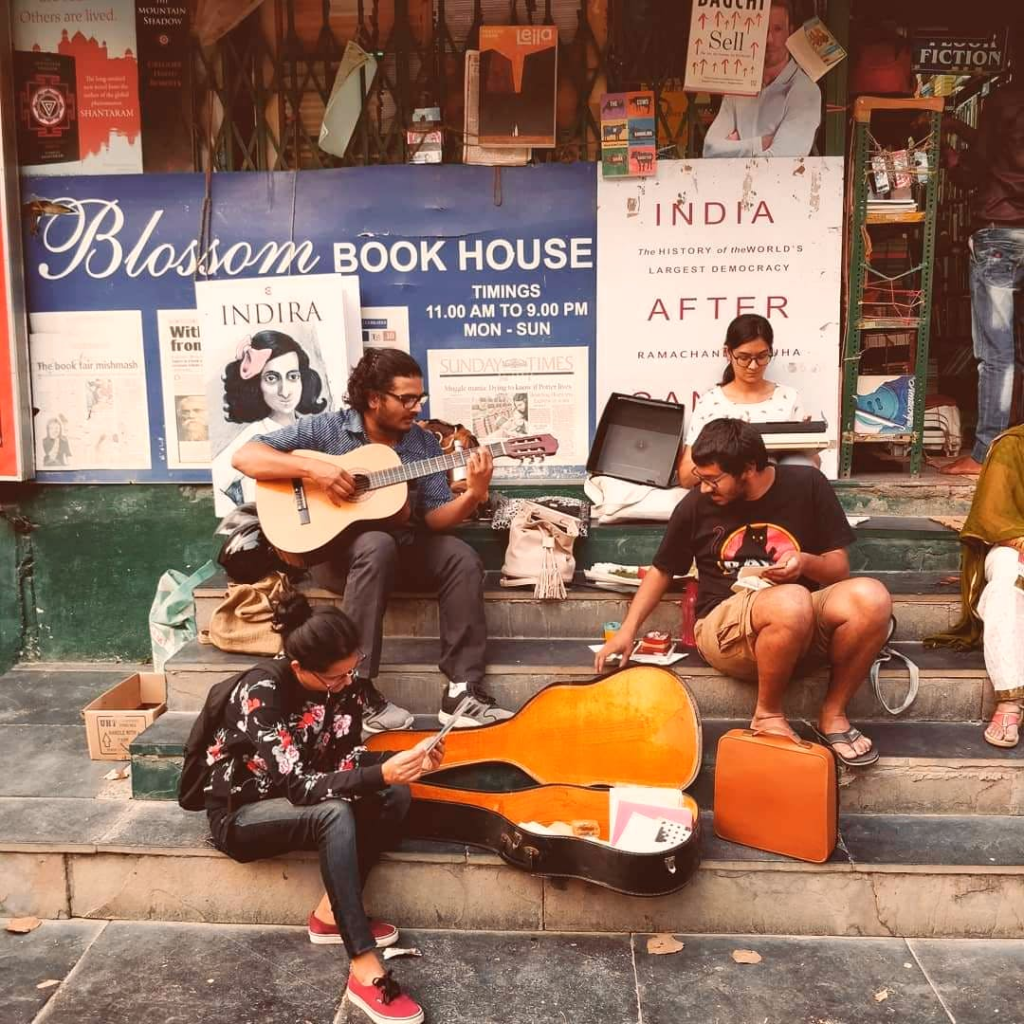
In January 2023, a Delhi police officer manhandled and interrupted a street performer in Delhi’s Connaught Place. A similar incident happened in April when another street performer was interrupted by the cops. The activity that these street performers engage in is called busking. Busking is a means to earn a livelihood by playing music or performing in a public space for money. The public space or the city space (such as the Connaught Place) is freely accessible to all. These incidents hint towards a deeper inquiry: can city spaces be legally used to earn a livelihood through busking? Were these buskers creating public nuisance in public spaces such as the Connaught Place? Furthermore, were the actions of the police officers legally justified, or were they an overreach of authority?
India is not a stranger to laws that prohibit the use of city space for earning one’s livelihood. Many Indian states have enacted anti-beggary laws such as the Bombay Prevention of Begging Act 1959, Karnataka Prohibition of Beggary Act 1975 and Uttar Pradesh Prohibition of Beggary Act 1975 that criminalise soliciting alms by singing or dancing in a public place. At the same time, constitutional protection is guaranteed to a means of earning a livelihood. The legal scenario is further complicated by the ‘right to the city’ (‘RTTC’) that the Delhi High Court recognised as an extension of the right to life under Article 21. As argued Professor Upendra Baxi, the RTTC secures a city dweller’s right to use the urban space and enjoy the city equitably. Thus, there is a conflict between the anti-beggary laws that restrict the use of city space and the RTTC. This blurs the legal status of busking as a means to earn a livelihood.
In this piece, we explore the legality of busking in India. We argue that busking is a legitimate use of city space as common property. To establish this, first, we argue that the city space can be classified as common property. For this, we rely on Jeremy Waldron’s work. We also rely on the nascent RTTC to argue that people have a right over the city space to fulfill their livelihood. Second, we argue that anti-beggary laws lead to an unfair allocation of city space as a common property resource. We argue that such laws are inconsistent with Elinor Ostrom’s principles of governing common property. Third, we establish how busking can be considered a constitutionally protected vocation.
II. CITY SPACE AS A COMMON SPACE
In modern capitalist society, the urban space itself has become a commodity with people pushing to establish their private control. his commodification manifests in various forms, such as the privatization of public spaces, the gentrification of neighbourhoods, and the allocation of prime urban land for commercial projects. However, the city space is a resource that is accessible to all. Buskers need this public space to earn a living. A busker will not have access to a large audience in a private space where only a few people can enter. Thus for those whose livelihood depends on performing in public spaces to reach a diverse audience, these spaces are indispensable.
Given that the city space is essential for people to earn their livelihood, it can be considered a common resource. Waldron defines common property as a resource over which no individual has a privileged ownership and no one can be excluded from using the common property. In principle, this means that the common property resources are available for all persons alike (pp 329). Consider the example of a public park. A park, much like a city square or a pedestrian street, is a space that no individual can claim ownership over. It is a space where people can gather, interact, relax, or engage in activities such as sports, picnics, or performances. The park’s value lies in its accessibility and its ability to cater to diverse uses, reflecting the needs and desires of the community it serves. Similarly, city spaces, such as streets and squares, serve as platforms for various forms of social, cultural, and economic interaction, including busking.
Accessibility to the city space is important to one’s notion of what constitutes living in a shared space. As per Baxi, this is because many social, cultural, economic, and political rights are contingent on one’s access to the city space. For buskers, their right to earn a livelihood is contingent on their access to the city space. Because of the indispensable need to access the city space, the Delhi High Court declared the city to be a ‘common good’ while recognising the RTTC. Further, the Andhra Pradesh High Court followed suit and recognised the RTTC in 2022. Though a relatively nascent concept in Indian jurisprudence, the RTTC holds significant implications for the governance and regulation of urban spaces. Originating from the works of French philosopher Henri Lefebvre, and later expanded by scholars like David Harvey, the RTTC calls for democratic access to urban resources and greater participation in urban life. By performing in public spaces, buskers also contribute to the cultural vibrancy of the city, leading to a more dynamic and inclusive environment.
This does not mean that the state has no interest in governing how the city space is used. Waldron also argues that because common property resources are finite (in this case, the city space is a finite resource), state intervention is required to ensure a fair allocation (pp 329) of such resources to satisfy individual wants. Just as buskers require the city space for their livelihood, entrepreneurs require space for building shopping malls, multiplexes, industrial activities, etc. However, the state tends to prioritize the interests of capitalists and entrepreneurs at the expense of the marginalized sections of the city. Recall the Nandigram incident of 2007, when the West Bengal government acquired land for setting up a Special Economic Zone at the expense of agricultural producers and villagers. In this process of urban transformation, the fair use of city space by underprivileged persons such as beggars, buskers, street-vendors, agriculturalists, etc. is sacrificed. Moreover, a busker’s access to city space is restricted by anti-beggary laws which prohibit them from earning their livelihood. If city space is a common property, then it becomes relevant to assess the validity of anti-beggary laws in governing the use of this common property.
III. MIS-GOVERNING THE CITY SPACE THROUGH ANTI – BEGGARY LAWS
The governance of common resources has been subject to much scrutiny from scholars and policy-makers. Elinor Ostrom has contributed to the discourse by designing eight principles of governing a common property. Ostrom’s work challenges the traditional notion of the “tragedy of the commons,” which posits that common property resources are inherently prone to overuse and degradation due to individual self-interest. Ostrom’s principles ensure that the common property system is maintained and used fairly and equitably. We restrict this analysis to two principles enumerated by Ostrom that are most important for regulating the use of common property. The first principle states that rules governing a common property should fit the local circumstances and lived realities of people. The second principle states that sanctions for misusing the common property should be graduated i.e., they should not be out of proportion. We argue that anti-beggary laws fail these two principles and unfairly restrict a busker’s use of the city space.
- Incongruence of Anti-Beggary Laws with Local Conditions of the City Space
Ostrom argues that the rules regulating the use of common property resources should be tailored to suit the local conditions of that place. This means that any law that regulates the use of city space as a common resource must be consistent with the specific needs of the people living in that space. Anti-beggary laws however prevent people from using the city space for begging, busking, or doing any such activity to earn their livelihood. Busking itself is a common practice in various Indian cities and India has a rich history (pp 749) of street performances. Many people turn to busking because they are impoverished and do not have any other means to sustain themselves. The city space provides them a space of hope to earn a living and survive the socio-economic conditions that keep them impoverished. Anti-beggary laws, however, disregard the reality of the city space where people need to busk to survive.
Anti-begging laws also fail to acknowledge that spatial practices such as busking constitute an important part of the city space. The city space is not only a collection of urban infrastructure, buildings, shopping complexes, etc. It is also a cultural space that is inhabited by all (art 1(3)). Activities such as busking and street performances add to the cultural life of the city. This means that buskers help maintain the city as a common resource. According to Ostrom, such persons would then be the ‘producers’ of the city space. The effect of anti-beggary laws is then to obstruct the people who add value to the common property resource. This may destroy the cultural value of city space as a common property. As Ostrom argues, the objective of governing a common property is to ensure its sustenance and not lead to its destruction. Anti-beggary laws thus fail this objective.
Moreover, anti-beggary laws often reflect a narrow and elitist view of urban spaces, one that prioritizes cleanliness, order, and aesthetics over the needs and rights of marginalized individuals. This perspective is evident in the way that public spaces in many Indian cities are increasingly being “sanitized” to appeal to middle-class and affluent residents and tourists. This process often involves the removal of street vendors, beggars, and buskers from public spaces, in the name of maintaining public order and enhancing the city’s image.
For instance, in preparation for the Commonwealth Games held in Delhi in 2010, the city undertook a massive “beautification” drive that involved the eviction of thousands of slum dwellers, street vendors, and beggars from public spaces. This drive was justified on the grounds of creating a “world-class” city, but it came at the expense of the livelihoods and rights of the urban poor. Such actions highlight the disconnect between the law and the lived realities of those who rely on public spaces for their survival. Something similar occurred when tall green walls began to be erected around the slum in Delhi during the G20 summit last year. While the Lutyens Delhi was celebrating the all new Central Vista, these slum dwellers were being invisiblised in their own city.
But for the sake of argument, even if we concede that busking is an illegitimate use of the city space, anti-beggary laws still fail the principles of governing common property. This is because such laws sanction a disproportionate response to busking by criminalising the activity.
B. The Disproportionality of Anti-Beggary Laws towards Busking
For many people performing on the streets for alms is not a choice. Urban impoverishment is a result of socio-economic factors that keep the people poor and the process of urbanisation has little regard for such people. Consider that eradication of busking is a legitimate aim. Even then, anti-beggary laws are disproportionate because they enable state officials to arrest such buskers without a warrant and imprison them. Such laws do not address the structural problems that compel people to busk.
If the state wants to prohibit the use of city space for busking, the state should facilitate the rehabilitation of buskers and ensure better employment opportunities so that they do not have to busk for survival. But anti-beggary laws sanction imprisonment for beggars and buskers. Ostrom argues that people who violate the rules of using common property should be given graduated sanctions. This means that violations should be penalised taking into account the seriousness and context of that violation. Therefore, even if busking is considered a violation of legitimate use of city space, it cannot be disproportionately penalised by imprisonment when the correct remedy would be to rehabilitate buskers.
To illustrate the disproportionality of anti-beggary laws, analogise it with traffic violations. In most legal systems, traffic violations are subject to graduated sanctions, depending on the severity of the offense. For instance, a minor traffic violation, such as parking in a no-parking zone, may result in a small fine, whereas a more serious violation, such as drunk driving, may result in license suspension or even imprisonment. This graduated approach ensures that the penalty is proportional to the offense, taking into account the context and circumstances of the violation.
While deciding upon the constitutional validity of the Bombay Prevention of Begging Act, 1959, (‘the Bombay Act’) the Delhi High Court acknowledged how the Act makes beggars invisible by criminalising them. The Court acknowledged that the Bombay Act does not solve the structural problems that produce poverty. This means that, in principle, anti-beggary laws impose excessive sanctions on those who use the city space for earning a livelihood through street performances. The Delhi High Court acknowledged this and declared the Bombay Act, which extended to Delhi as well, unconstitutional. This means that the Delhi police’s act of interrupting buskers in Connaught Place does not have any statutory support. But the Delhi High Court has declared only one unconstitutional anti-beggary law out of many. In this context, we explore whether busking is protected by the Indian Constitution of India and whether it can be saved from anti-beggary laws in general.
IV. THE CONSTITUTIONALITY OF BUSKING
In the previous section, we argued how the restrictions placed on busking through anti-beggary laws are inconsistent with Ostrom’s principles of governing a common property. In this section, we establish that busking is a constitutionally protected use of the common city space. To that effect, we establish two things: first, that busking amounts to constitutionally protected speech (art 19(1)(a)) under the right to speech and expression. Second, we argue that the RTTC, which is an extension of Article 21 of the Constitution, secures the use of city space through busking. This is not to say that busking, and by extension, the RTTC, are absolute rights that exist in a vacuum. Busking would also have to be balanced against other fundamental rights and reasonable restrictions may be placed on the same. For instance, since we argue that the right to busk is derived from Article 19(1)(a), naturally the reasonable restrictions under Article 19(2) would apply. However, the exact nature of such balancing is beyond the scope of this piece.
- Busking as a Constitutionally Protected Speech
While deciding upon the constitutionality of the Bombay Act in Harsh Mander v Union of India, the Delhi High Court viewed the act of begging as an expression of one’s impoverishment. The Court relied on Ram Lakhan v State to establish that by begging, beggars are informing another economically fortunate person that they need alms. Therefore, begging through words or actions is constitutionally protected speech under Article 19(1)(a). We argue that busking can also be viewed through a similar lens. A busker is communicating their need for alms through a street performance. The Court in Ram Lakhan drew an analogy between begging and advertising a product to justify that begging is constitutionally protected speech. Just as an advertisement is a form of communication, a busker is also advertising their talent. Thus, busking is an expression of one’s impoverishment and talent simultaneously.
To further strengthen this, consider Street art. It includes graffiti, murals, and performances and is widely recognized as a legitimate form of artistic expression. In cities like New York, London, and Berlin, street art has become an integral part of the urban landscape, celebrated for its ability to challenge social norms, inspire public discourse, and reflect the experiences of marginalized communities.
However, the right to speech and expression is subject to reasonable restrictions. In Harsh Mander, the Court also examined whether anti-beggary laws impose a reasonable restriction on begging. The Court held that it is reasonable to restrict forced beggary through legislation. But the state has no legitimate interest in criminalising people who beg because they have no other means to sustain themselves. This implies that if busking is viewed as constitutionally protected speech, restricting busking through anti-beggary laws will be an unreasonable restriction.
B. Exercising the RTTC through Busking
In this piece, we have discussed how the RTTC is important to legitimize various practices through which people make use of the city space. In Ajay Maken v Union of India, the Delhi High Court gave constitutional status to the RTTC under Article 21. The Court relied on the RTTC to prevent the eviction of slum dwellers. Slum dwellers make use of the city space and construct jhuggies (informal housing settlements) to enjoy the comforts of housing. The RTTC gives constitutional protection to such practices through which disadvantaged groups of Indian cities make use of the city space as a common resource.
In Rajadhani Rythu Parirakshnana Samithi v State of A.P., the Andhra Pradesh High Court elaborated on the practices through which the RTTC can be exercised. Activities such as street vending and squatting on public land are ways through which people exercise their RTTC. Such practices enable the person to exercise other fundamental rights. Constructing jhuggies allows a person to secure their right to shelter while street vending enables the vendor to exercise their right to livelihood. Like street vending, busking enables a person to access the city space for earning their livelihood (pp 20).
Furthermore, the exercise of the RTTC through busking can be seen as part of a broader movement toward democratizing urban spaces. Urban spaces, particularly in rapidly growing cities like Delhi and Mumbai, are often subject to competing claims by different social groups. The wealthy and powerful frequently dominate these spaces, while the poor and marginalized are pushed to the peripheries. The RTTC challenges this exclusionary dynamic by asserting that all city dwellers have a right to access and participate in the life of the city.
By protecting busking as a legitimate exercise of the RTTC, the courts would not only safeguard the rights of buskers but also promote a more inclusive and equitable urban environment. This recognition would send a powerful message that public spaces belong to all citizens, regardless of their socio-economic status, and that the cultural and economic contributions of marginalized groups are valuable and worthy of protection. Therefore, we argue that busking would be a legitimate exercise of the RTTC.
V. CONCLUSION
In this piece, we have argued that busking is a legitimate use of the city space. Our analysis shows that busking can be considered a constitutionally protected practice. It also shows how anti-beggary laws do not ensure a fair allocation of city space as a common resource. Thus, anti-beggary laws should not be used as a legal sanction to prevent people from busking.
While the anti-beggary law applicable in Delhi has been declared unconstitutional, many states continue to enforce the provisions of anti-beggary laws. Therefore, buskers are under constant threat of police abuse. This is where the recognition of the RTTC becomes necessary. The RTTC legitimizes a person’s claim over the city space for earning their livelihood. This piece has demonstrated how busking can be located within the legal framework of India. However, legitimising a busker’s use of the city space will require further policy interventions from the state to ensure that they are not subject to police abuses.
*The authors are third-year undergraduate students at the National Law School of India University, Bengaluru.
 Law School Policy Review