
Shaharyaar Shahardar*
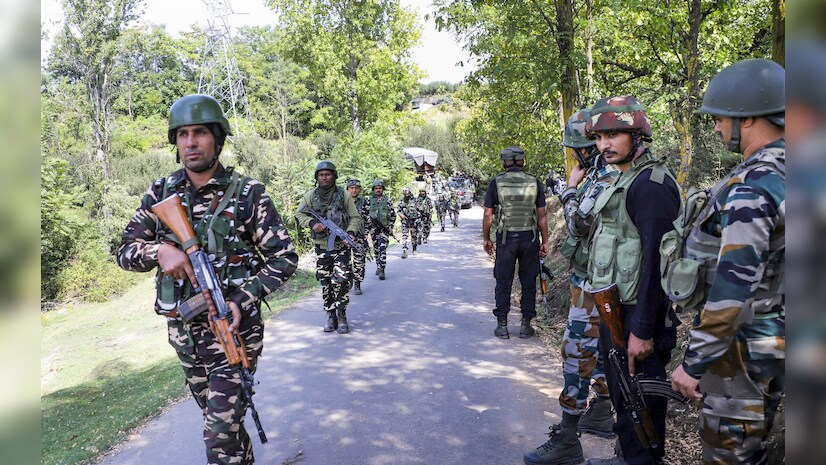
Source : Business Standard
The Jammu and Kashmir Enemy Agents Ordinance, originally enacted to strengthen national security and counter espionage activities in Kashmir, remains in effect despite its dated origins. The Act authorizes disproportionate measures and provides unchecked powers, raising significant concerns regarding its compatibility with contemporary legal and human rights norms. The piece critiques its vague provisions and lack of procedural safeguards, juxtaposing these shortcomings against the standards recognized by the ICCPR. The author calls for urgent reforms to the Act underscoring the pressing need to reconcile security imperatives with global human rights standards.
In one of my recent articles (here), I explored how the Indian Government’s policy toward Jammu and Kashmir imposes substantial restrictions on the right to freedom of speech and expression, with far-reaching implications for India’s international obligations. This analysis included a brief reference to the Jammu and Kashmir Enemy Agents Ordinance (hereinafter “Ordinance” or “Act”). In this article, I undertake a comprehensive critical examination of how this Act departs from the standards prescribed by the International Covenant on Civil and Political Rights (“ICCPR” or “Convention”), to which India is a party. The structure of this article is as follows: First, it presents a detailed historical background of the Act’s enactment [A]. Then it offers a comprehensive examination of the Act, highlighting its severe procedural and penal aspects [B]. Following this, the article subjects the Act to scrutiny under the ICCPR’s standards [C], providing five distinct arguments that illustrate how the Act falls short of meeting the Convention’s benchmarks. At last, the article concludes with a call to revisit and amend the Act to bring it in sync with international human rights standards [D].
A. Background
The Jammu and Kashmir Enemy Agents Ordinance is a purported ‘national security legislation’ which was enacted in 1917. The Act is applicable in the erstwhile State of Jammu and Kashmir (“Kashmir” or “Valley”), which presently falls under the effective administrative control of India. The history of the Act dates back to the Dogra rule of Kashmir. Later, it was modified to prosecute individuals involved in the 1947 invasion of Kashmir and those who provided them with assistance. After Kashmir acceded to India in 1947, the Act was constituted within the Indian legal framework and continued to be operational. In fact, it is one of the primary legislations used for prosecuting individuals who supported the Pashtun invasionof Kashmir in the autumn of 1947. It even survived the recent extensive reorganization, which followed as an aftermath of the unilateral abrogation of Article 370 of the Indian Constitution (“Constitution”) by the Indian Parliament. Thus far, the Act has rarely been used to prosecute civilians in Kashmir; however, the recent remarks made by the Director General of Police have raised apprehensions regarding its potential invocation for prosecuting ordinary residents of the Valley.
The procedural and penal aspect provided under the Act is even more stringent than the likes of the Unlawful Activities Prevention Act 1967 (“UAPA”) and the Public Safety Act 1978 (“PSA”), legislations which have faced serious criticism for their inherent arbitrary nature. The Indian government’s move to invoke the Act in Kashmir increases this benchmark to a different standard altogether. By reading the preamble of the Act it becomes apparent that the objective for which it was originally brought into effect does not serve any purpose, thus making its existence in itself obsolete.Furthermore, the substance of this legislation brazenly violates the most foundational human rights set forth by different international conventions including the International Covenant on Civil and Political Rights. Moreover, Article 51(c) of the Constitution requires the Government to “foster respect for international law and treaty obligations in the dealings of organised peoples with one another”. While India formally follows a dualist policy, the judiciary over the years has demonstrated monist tendencies through its interpretation.
Therefore, it is both in constitutional as well as broader international interest of India to amend this legislation and match the standards sought by the Constitution and that prescribed by Convention. In this article, I attempt at providing a stricto sensu analysis of the Ordinance from parameters of the ICCPR. The reasons for opting ICCPR for analysing this Act is two-fold. First, the ICCPR is one of the most exhaustive conventions recognizing the foundational human rights. Second, India having acceded to the ICCPR, must comply with the standards put forth by the Convention.
B. Understanding the Ordinance
The Act consists of nineteen provisions, which, according to Indian standards, are miniscule. However, its potency of impacting the lives of millions of Kashmiris is sensed to be profound. The Act is filled with ambiguity and vagueness from its ‘preamble’ until the very last provision. The preamble of the Act provides, “whereas an emergency has arisen as a result of wanton attack by outside raiders and enemies of the State which makes it necessary to provide for the trial and punishment of enemy agents and persons committing certain offences with intent to aid the enemy”. From a simple reading of this paragraph, many questions arise. One would be, what is the underlying ‘emergency’ that the preamble mentions? The reference might have been relevant when the tribals invaded the Valley, but does it still assert that relevance? The second question would be who an ‘enemy agent’ is for the purpose of the Act, but even before that, it is important to determine who an ‘enemy’ is. The Act sheds light on both these terms under Section 2. Yet both definitions are neither exhaustive nor apt enough to satisfy contemporary needs.
Section 2(a) defines ‘enemy’as “any person, directly or indirectly, participating or assisting in the campaign recently undertaken by raiders from outside in subverting the [Government of Union territory of Jammu and Kashmir] established by law in the [Union territory of Jammu and Kashmir].” To this extent, the definition of ‘enemy’ as provided under the aforesaid provision is inherently vague and obsolete. First, the usage of the word ‘recently’ in the definition raises questions as to ‘is the reference limited to the Pashtun invasion’or‘can the scope of the Act be broadened for its contemporary execution’. The reason for enacting the Act was to counter the tribal invasionof Kashmir, which occurred in 1947. Almost seventy-five years after this incident, the presence of the word ‘recently’ raises questions about the reasonableness of invocation of this Act as no such circumstance prevails in the Valley currently. Second, the term ‘raiders’ requires extensive clarity, although the term would have been used to refer to the Pashtun tribesmen who invaded the Valley; however, what would be the present-day connotation of the term remains uncertain. This would arbitrarily empower the government to invoke the Act against any individual without giving sufficient reasoning for the same.
Having delved into the discrepancy underlying the Act’s objective and preamble, let us now look into the very substance of this legislation. The Act is even more stringent than the notorious laws like that of the UAPA and the PSA. This is because of the procedural and the penal aspects of the law. The punishment available under the Act is restricted to ‘life imprisonment’ and ‘death sentence’ [Section 3]. This raises questions regarding the proportionality of measures that the government intends to take for legislation of such a vague nature.
Further, any person prosecuted under the Act is restrained from availing any legal assistance without the prior leave of the special court [Section 13]. This fundamentally goes against the idea of a free and fair trial, recognized as a basic human right. Moreover, the law incorporates a provision restricting information disclosure. What this does is that it restricts individuals from disclosing any information concerning any proceedings conducted under the Act [Section 17]. This provision will only facilitate passing such decisions, which lack reasonability and are inherently malafide.
C. Analyzing the Ordinance under ICCPR
This Act, therefore, must be critically examined in light of standards set forth by the ICCPR. It is pertinent to note that the primary objective of the ICCPR is to protect the inherent dignity and basic human rights of individuals. What the Act does is quite the opposite of it. The critique advanced in this analysis is categorized into five distinct arguments, each addressing different aspects of the Act’s divergence from the standards mandated by the ICCPR.
First and foremost, the ICCPR recognizes the inherent ‘right to life’ by prohibiting arbitrary deprivation of life under Article 6. An important element of this provision concerns its stance on capital punishment. While ICCPR does not oblige signatory states to abolish capital punishment, it mandates that its application be limited to the ‘most serious crimes’. The Human Rights Committee (“HRC”) has thought that the expression ‘most serious crimes’ must be read restrictively to mean that the death penalty should be a quite exceptional measure. It also confirmed that a vague offence related to internal and external security cannot be considered as ‘most serious crime’. Only intentional killings or attempted killings may attract the death penalty under Article 6(2). Given that the Act pertains to a vaguely defined offence concerning national security, it fails to meet the standards of ICCPR.
Second, Article 9(1) ICCPR provides that “no one shall be deprived of his liberty except on such grounds and in accordance with such procedure established by law”. Even though the Act in itself can be considered to be a procedure established by law, it has been held that the meaning of ‘law’ in such a phrase does not only refer to a piece of legislation in isolation but must be ‘just, fair, and reasonable’. Further, the Act also provides pathways for enforcing secret detentions behind the garb of attempting to achieve its objective. This may result in torture or ill-treatment for the direct victims as well as for their families. Therefore, first and foremost, the question of being a procedure established by law concerning the Act is itself under dispute, and second the legislation would promote secret detention therefore resulting in extra-judicial approach of the law enforcement agencies.
Third, the right to a fair trial has historically been regarded as a fundamental rule of law, also acknowledged by Article 14 ICCPR. The objective of this provision is to ensure the proper administration of justice. An inherent aspect of a fair trial is the nature of its conduct. It is well-known that a trial must be held in public. The publicity of hearings ensures the transparency of proceedings and thus provides an important safeguard for the interest of the individual and of society at large. Even in cases where the public is excluded from the trial, the judgment, including the essential findings, evidence and legal reasoning, must be made public. However, Section 17 Act puts stringent restrictions on disclosing any information concerning any proceedings conducted under the Act. The provision imposes a blanket restriction on anyone, barring them from sharing details about the trial process or its outcome. This suppression of information significantly impairs the transparency of the proceedings, obscuring both the conduct of the trial and the reasoning behind its judgment from public scrutiny. Such an overarching restriction violates the essence of Article 14, which mandates that judicial processes remain open and accountable.
Fourth, Article 14 ICCPR recognizes that an accused must have adequate legal representation. The HRC has repeatedly confirmed that detention incommunicado breaches Article 14(3)(b) ICCPR as it renders access to legal assistance impossible [Drescher Caldas v. Uruguay; Carballal v. Uruguay]. The right to communicate with counsel requires that the accused is granted prompt access to counsel. The HRC found a breach of Article 14(3)(b) and (d) where the court had appointed the author a defence counsel who was not a qualified lawyer. Therefore, the question isn’t just about the basic standard of providing an accused with ‘legal representation’, but the standard is that of an ‘adequate representation’. However, contrary to even basic standards, the Act leaves legal representation of an accused to the leave and mercy of the special court.
Last, the right to freedom of expression constitutes the foundation stone for every free and democratic society. This right is not a standalone right – rather, it forms a basis for the full enjoyment of a wide range of other human rights. Article 19(3) ICCPR mentions concerns regarding ‘national security’ as a valid ground for curtailing this right. However, extreme care must be taken by States parties to ensure that provisions relating to national security are crafted and applied in a manner that conforms to the strict requirements of paragraph 3. It is not compatible with paragraph 3, to invoke such laws to suppress or withhold from the public information of legitimate public interest or to prosecute journalists, human rights defenders, for having disseminated such information. Such offences should be clearly defined to ensure that they do not lead to unnecessary or disproportionate interference with freedom of expression. The Act does the quite opposite of this. The discriminatory procedural and disproportionate penal requirements prescribed under it will severely impact and deter people from freely expressing their opinions. Moreover, the ambiguity surrounding different provisions of the Act as discussed earlier result in a brazen violation of Article 19 ICCPR.
D. Conclusion
The Jammu and Kashmir Enemy Agents Act holds a contested place in India’s modern-day legal framework. Originally intended to address a specific historical crisis, its continued existence and potential application raise critical concerns about India’s international human rights and constitutional obligations. The stringent provisions, coupled with vague definitions, create a framework that can be misused against civilians, undermining principles of fairness and justice. When measured against the standards set by the ICCPR, the Act falls short, particularly in safeguarding the right to life, liberty, and a fair trial. Additionally, the limitations on legal representation and freedom of expression underscore the Act’s potential to suppress dissent. For India to comply with international human rights standards, revisiting and amending the Act to align with contemporary needs is both necessary and urgent. This would not only fulfil India’s obligations under international law but also contribute to fostering trust and stability in the region of Jammu and Kashmir.
*Shaharyaar Shahardar is a fourth-year law student at Gujarat National Law University, Gandhinagar. His research interests include constitutional law and public international law.
 Law School Policy Review