
Prakhar Ganguly*
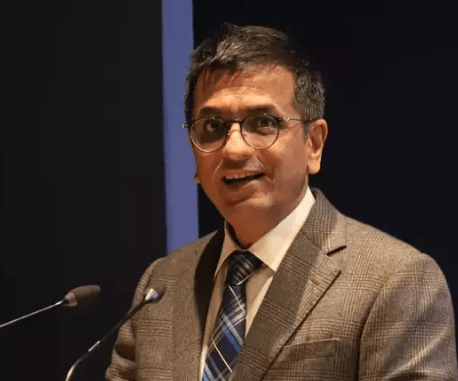
In this opinion piece, the author examines the recent controversy surrounding remarks by Chief Justice D.Y. Chandrachud on “divine intervention” in the Ram Janmabhoomi/Babri Masjid judgment. The author addresses criticisms regarding judicial impartiality, religious expression, and professional conduct. While agreeing that judges in a secular democracy should maintain religious neutrality in public, the author argues that faith did not impact the judgment’s reasoning. The commentary calls for acknowledging the human limitations of judges without diminishing their decisions or attributing them to divine influence.
Over the last couple of days, we have all been stormed with commentaries and op-eds on DYC’s remarks in his hometown about ‘divine’ intervention in the Ram Janmabhoomi/Babri Masjid Judgment. Some journalists have commented, perhaps naively, on the possible ‘case of bias’ since God ‘Himself’ was a party to this dispute. Some think-tank leaders have strongly criticized the judge’s remarks, deeming them ‘unbecoming of a judge’. This adds to the growing frustration from the liberal/left as the Chief’s term nears its end. Let’s dissect these arguments one by one to gain a clearer understanding. In a notable article, the author argues that a judge’s religious beliefs should remain ‘private’. He also suggests that with the upcoming Maharashtra elections and the Ram Mandir issue being used as a political tool, the Chief should have maintained his judicial impartiality.
I do not make any objections to the first point. A judge in a secular, democratic and republic should not have publicly professed their beliefs. But would I go to the extent of stating that it is a ‘travesty of justice’? No. He was making a speech in his hometown, and the tone and tenor of it seemed to be like a person who was ‘at home’.
Regarding the second point, the ‘Ram Mandir’ is not an election issue. We must remember that, during the Lok Sabha elections, all major online and offline newspapers repeatedly stated that the construction of the Temple was. If the issue was never one, to begin with in an election where it ‘ought’ to matter, I do not understand on what premise it becomes ‘the’ issue and how it will become one in state elections, which the same media houses report being on local and domestic issues.
Some have commented that the meticulous reasoning in the judgment employed by the Chief, if divinely ordained, is downgraded simply because of ‘It’. Let us apply this argument to other professions—does a doctor who prays before every surgery entrust the surgery to their God? Does an auto driver who prays daily before commencing their shift leave the driving to God? Does a Parliamentarian who takes their oath in the name of the Koran entrust the job of legislating to ‘Allah’?
The immediate counter-argument would be that the position of the Chief is not similar to any other profession. The swearing-in ceremony mandates secularising the person who can only abide by the Constitution. The Chief must uphold the sacred duty of judicial independence. But here, the Chief sought answers ‘figuratively’ and not literally. Assuming he ‘spoke’ with the deity exactly in the way he did, it seems that his people on the left believe that the deity responded back. The Chief merely stated that there was ‘divine inspiration’. If he had spoken to the deity to ask for directions, both parties in that conversation (ironically, the centre-left is granting identity and personhood to pagan Gods now) ‘knew’ that there would be no outcome. Since God never really does the judging for the judge, neither is the argument replaced by belief nor is reason replaced by faith.
Everyone seems to hold an ‘unreal’ conversation to the very real standards of ‘judicial professionalism’. Belief and faith of the judge, at least in this case, were peripheral to the decision-making process if not unrelated. It also seems that those who hold the Chief to higher standards are imagining a scene out of a 90s Bollywood classic—the Chief sits before the deity and asking for a ‘sign’. When the flower drops or when a sudden gust of wind blows away a lamp, the Chief knew that he had to hand over the disputed land to the Hindus and ask the Muslims to construct a mosque elsewhere. I do not think that the legal acumen of the Chief, be it any Chief, could be denigrated to this extent.
To citizens who wonder if their fellow citizens, whose daily existence is premised on ‘belief and faith’ far more than one can imagine, have time to contemplate questions like ‘Whose God? What did God say? How did God show the way?’ I say this “God is he from whom all living beings have emanated; God is he within whom all living beings are situated; God is he into whom all living beings shall unite.” To acknowledge the existence of human limitations makes us human. And, unlike the initial exuberance and expectation of the ‘camp’, the Chief is not a saviour, let alone a God. He is a judge. Finally, the judges did not sign it not because it was written by the ‘Hand of God’. Sometimes, some judgments are crucial to the extent that the text, the substance and the content become far more important than who wrote it. Perhaps, to cater to the epitaph of impartiality, the judges employed the markets’ ‘invisible hand’ approach.
*Prakhar Ganguly has been a doctoral scholar at the Max Planck Institute for Legal History and Legal Theory since 2023. His PhD thesis concerns the transfer of labour laws during colonisation to India and Australia. He was formerly a professor of labour laws at NALSAR University of Law (2019-2023). More can be found here: https://www.lhlt.mpg.de/ganguly/en.
Categories: Legislation and Government Policy
 Law School Policy Review