
Khushi Saraf* and Akshay Sriram**
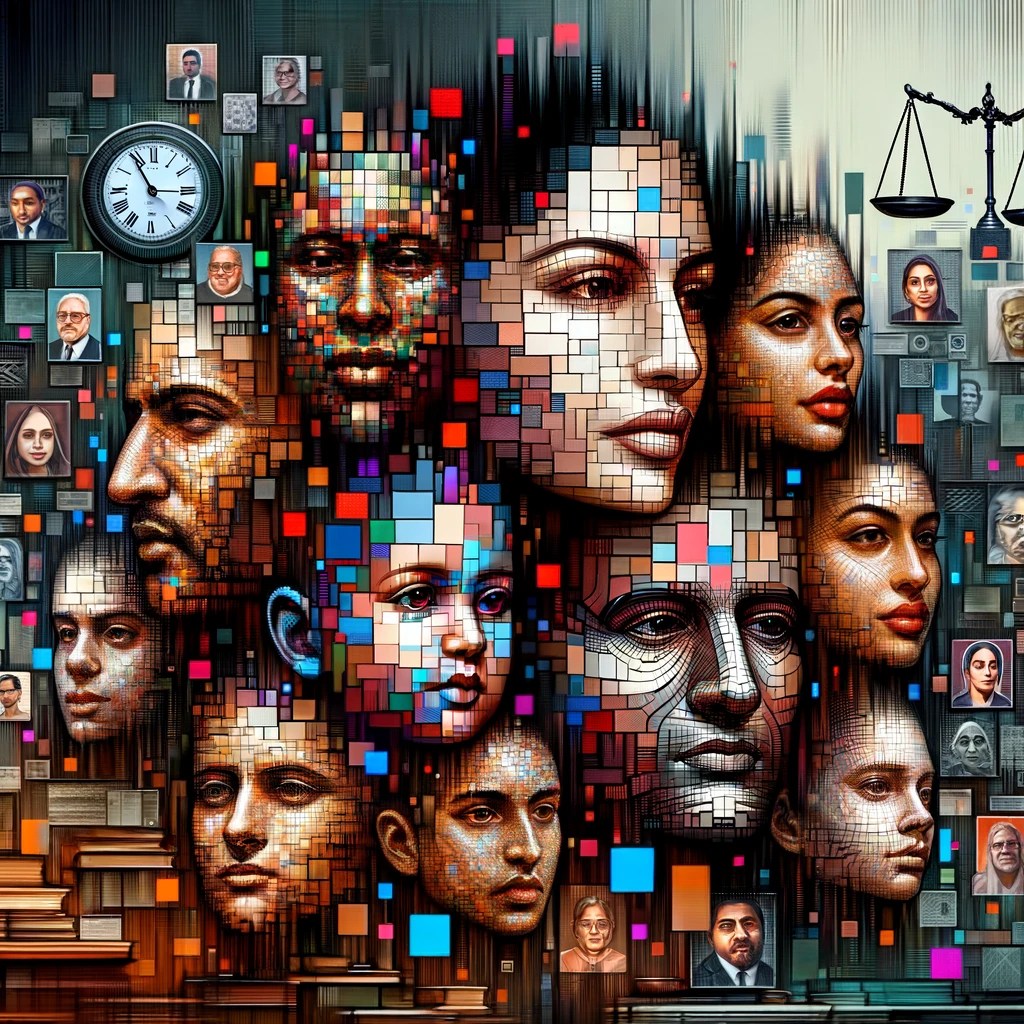
The newest amongst the dilemmas presented by Artificial intelligence has been the rising issue of deepfake technology. The increased accessibility of apps and software for the manipulation of photo and video material has proven to be a risk not only for celebrities, but also for the common man with an internet presence. The Indian copyright regime in its current form suffers from major limitations in solving a conundrum like this. The article explores the nuances of copyright infringement in India against the backdrop of deep fakes. It goes on to dissect the development of the Right to Personality within Indian jurisprudence as a potential solution and outlines the lacunae in its current form by invoking a cross-jurisdictional constitutional analysis.
INTRODUCTION
As we progress rapidly with the utilisation of Artificial Intelligence (“AI”) in everyday life, deepfakes have provided an additional puzzle in the legislative considerations around AI’s ethical dilemmas. Deepfakes are artificially generated images or videos made through a special kind of AI commonly known as Deep Learning. Recent events have seen these deepfake videos flooding the internet, like the digitally manipulated video of Rashmika Mandanna, which was superimposed on the original footage of British Influencer Zara Patel. This was not the Indian public’s only interaction with deepfakes, with its widespread utility even reaching the bounds of politics as ‘deepfaked’ clippings of the actor Amitabh Bachchan asking questions on regional politics found its way to devices of voters in Madhya Pradesh.
Union IT Minister Ashwini Vaishnav, along with assurances of a draft regulation to tackle deepfakes, termed this kind of technology as a ‘threat to democracy,’ as they affect the very fabric of the society. These ‘deepfaked’ content are targeted, and inflict psychological harm on individuals. It is being increasingly used in cyber kidnapping, revenge pornography and spreading misinformation. Even more concerning is the usage of AI to create “doppelgangers” wherein a 3D model of an individual can be created, making it look like a real-life video, creating false memories and disseminating wrong information. Alarmingly, this technology’s widespread accessibility has posed threats to cybersecurity due to its role in ‘revenge porn.’ The potential for misuse is intuitive, and the victim could be anyone, ranging from a hot-shot celebrity to an ordinary man. Moreover, it is unrealistic to demand regulations banning the usage of deepfakes since the technology has penetrated as a valuable tool in the media industry, improving special effects and broadening the scope for content. Hence, what one requires is the development of laws that not only protects one’s privacy, but also recognises an individual’s right to their personality.
Part II of the blog discusses the nuances of the intellectual property regime against the backdrop of deepfakes and goes on to explain the lacunae present in it. Part III argues for an expanded application of the right to personality by borrowing from comparative law and finding a way to create an airtight basis for protection of one’s image and identity as a whole.
THE NUANCES OF COPYRIGHT INFRINGEMENT OF DEEPFAKES
The IT Ministry’s promise of draft regulations on deepfakes within ten days in the last week of November 2023 remains unfulfilled, however the broad pillars of focus which range from detection of deepfakes to strengthening of reporting mechanism appear passive leaving responsibility to social media platforms. The laxed attitude of the government requires one to go back to the grassroots level and analyse the primary substantive laws that govern deepfakes in India- The Indian Copyright Act, 1957 (“ICA”) and The India Trade Marks Act, 1999 (“ITA”). Though these provisions regulate deepfakes, the problem emerges due to its restricted ambit in terms of protecting the victim’s rights.
§14 of ITA imposes restrictions on using personal names and representations. §52 of ICA lists down an exhaustive list of acts that are not deemed infringing works. Further, §57(1)(b) of ICA gives moral rights to the authors, namely, the right to integrity, in accordance with which authors of a literary work can claim damages or restraint the distortion, mutilation or modification of their work if it hampers their reputation. All these provisions only give the authors the ‘first ownership’ rights. Herein, it is essential to understand that there is a difference between ‘public figures’ and the ‘authors’ of the copyright. In Camlin Pvt Ltd. v. National Pencil Industries, an ‘author’ was defined as a person who has “expended his skill and labour upon it”. Generally, film producers come under the ambit of authors and hence, the owners of copyright as they have expended their skills and produced the movie. Similarly, when paparazzi click unauthorised photos of these public figures, they are the ‘author’ of the photo and possess copyright ownership. Hence, public figures who have been the victims of the deepfake content are not to seen as the owners of copyright of the original film or video that has been distorted to make the deepfake video. Hence, they cannot seek any remedy under copyright infringement. Thus, traditionally, only the owners of copyright (like film producers etc.) could sue. This position has increasingly changed with the incidence of ‘first owner of copyright’ where the Court in Titan Industries v. Ramkumar Jewellers established that a ‘celebrity’ has the right to control when, where and how their identity is used when such physical attributes are used without authorisation.
While these celebrities and owners of copyright have such a legal recourse, the rights of an ordinary individual are side-lined. Increasingly in a world of social media and digitisation, the worst affected stakeholders who neither have the social capital nor the legislative recourse as highlighted above, are ordinary individuals who fall victim to malicious content like revenge porn. Having established the limitations of the existing copyright framework, this blog looks towards a solution built on the basis of fundamental rights, on which the nascent right to personality is discussed and expanded upon in the next section.
RIGHT TO PERSONALITY AGAINST THE BACKDROP OF DEEPFAKES
To a large extent, existing statutory law provides for the establishment of copyright over a person’s attributes by way of agreement and intellectual property. However, the problem remains to be resolved in those cases where there is no clear case of copyright. This warrants the need for development of the right to personality.
This section of the blog develops upon the emerging idea of the right to personality in India by pitting it against the laws in other jurisdictions. Further, this section intends to provide a solution to aid ordinary people by acknowledging the importance of their right to personality, and advocating for a framework that expands the horizons of the traditional conception of this right.
Development of the right to personality in Indian jurisprudence
Personality rights essentially entail one’s name, signature, voice, or any other aspects that aid in identifying a person, and has been deeply discussed in the context of human dignity and privacy in constitutionalism It includes any other primary feature that distinguishes one person from another. Celebrities or famous figures in particular value this right as their personality attributes may be used for commercial purposes. The Right to Personality’s development in India, as is discussed below, can be broadly summarised into 2 aspects; first, privilege over commercial use, more popularly termed as the ‘right to publicity’ and second, right to privacy. Since deepfakes involve morphed images and voices, there is an automatic infringement of one’s privacy and personality rights. Unduly using one’s personality traits in creating deepfakes can lead to irretrievable damage to one’s reputation.
The right to personality is an emerging concept and is at the nascent stage of development in India and other legal jurisdictions worldwide. No law in India explicitly mentions an individual’s right to personality, hence, this right has developed through legal precedents. Recently, in September 2023, the Delhi High Court, in Anil Kapoor v. Simply Life India & Ors., recognised an individual’s right to personality and sought to protect Anil Kapoor’s personality traits from being misused via AI tools to create GIFs, emojis, ringtones and other manipulated content. This judgement was one of its kind, setting a precedent for preserving personality rights in the modern digital era. Herein 16 entities and the world at large was restricted from using utilizing Mr. Kapoor’s personality traits. Previously, in Amitabh Bachchan v. Rajat Negi & Ors. Mr. Bachchan was granted an interim injunction against the undue usage of his voice, name and image for commercial purposes. Both the above-mentioned judgments have practically given effect to the right to personality to public figures, giving them autonomy over the usage of their personality traits.
In terms of legislation, the right to personality can be deemed to fall under Article 21 of the Indian Constitution under the right to privacy and right to publicity. The right to publicity includes the right to prevent one’s personal features from being misused without permission or compensation. In KS Puttaswamy v. Union of India, the “informational privacy” of individuals was emphasised upon. Informational privacy translates into a person possessing control over divulging of their personal information and unduly disseminating such information may amount to infringement of privacy. The development of the right to personality as developed in India is not merely limited to an Intellectual Property issue, but is a constitutional intersection of rights such as privacy and human dignity under Article 21 within the broader aim of protecting an individual’s rights. However, this right in its present form suffers from some drawbacks, which are discussed in the next section.
Expanding the horizons of the Right to Personality in India
The Right to Personality in the Indian framework is indirect and incomplete on the basis of two broad reasons. First, its development has been in the context of public figures and celebrities. The Indian Copyright Act of 1957 inherently doesn’t categorise people into brackets, specifically terming a certain section as ‘public figures and the others as not. The courts however, have continuously read this distinction into the act in various judgments as has been elaborated in the previous section. Second and more importantly, it is derivative of an intersectional reading of the right to privacy and right to publicity within the scope of Article 21, as propounded in KS Puttaswamy. This creates a limited scope for expanding on statutory provisions in the protection of the right to personality since there is no distinct basis upon which it can be developed. A stronger constitutional and jurisprudential basis can be found distinctly in Germany and the USA. In Germany, the general right of personality has been recognised as a ‘basic right’. It is constitutionally guaranteed by Articles 1 and 2 of the Basic Law and at the same protected as a ‘other right’ under Section 823(1) in the German Civil Code or BGB, as was declared in 1954 in the Marlene Dietrich Case. Additionally, in the USA, an automatic ‘right of publicity’ was propounded in Haelan Labs Inc. v. Topps Chewing Gum Inc, according to which a person has an automatic exclusive privilege in controlling the publication and utilisation of his picture. The broader interpretation of this ratio is the first step to the idea that a person may automatically have an inherent right to control the usage of their identity.
Considering the above possibilities, it is suggested that there is a need to develop the right to personality in Indian jurisprudence to the extent of providing it as an expanded constitutional right. The mere fact that it is derivative of Article 21 opens it up to limitations. Presently, the government has considered tackling deepfakes from a statutory and regulatory framework, which has shown slow progress. This is exacerbated by the lacunae in the digital laws and the developing concept of privacy. Within the framework of the Indian Constitution, there exist a variety of fundamental rights such as the right to life under Article 21, the Right to Freedom of Speech and Expression under Article 19 as well as the broader categorisation termed as the Equality Code. In this collection of positive rights, there is nothing that protects the inherent identity of human beings with respect to their self-determination and conception which is highlighted by the varying physical features and attributes that every single person has.
Thus, the authors suggest that there is a need for a strict constitutional reading of the right to personality in consonance with aspects such the right to human dignity, privacy and publicity in order to unconditionally regulate the mala fide uses of not just deepfake technology, but other pernicious content which may endanger identity rights. Right topersonality should not be limited to commercial usage of one’s personality rights but also be expanded to non-commercial usage like revenge porn or other ill-intentioned activities. The ordinary public must be a benefactor of this right, moving beyond the restricted scope of just including celebrities in its ambit.
CONCLUSION
Deepfake content and malicious usage of AI calls for an urgent need to implement appropriate laws and plug the inherent gaps in the statutory framework. The authors suggest the expansion of the right to personality to include ordinary individuals and move beyond the limitation of commercial usage. The only way to ensure that the harms of deepfakes are mitigated while its benefits are preserved is finding a place in the Constitution which attaches not just importance to the preservation of one’s self, but also of one’s conception of identity by way of basic features such as that of physical characteristics which make individuals the distinct beings they are.
*Khushi Saraf is a 2nd year law student at NUJS, Kolkata. Her interest lies at the nexus of Constitutional law and themes of socio-legal research.
**Akshay Sriram is a 2nd year student from NUJS who is passionate about Constitutional and public law.
Categories: Law and Technology
 Law School Policy Review