
Merrin Muhammed Ashraf
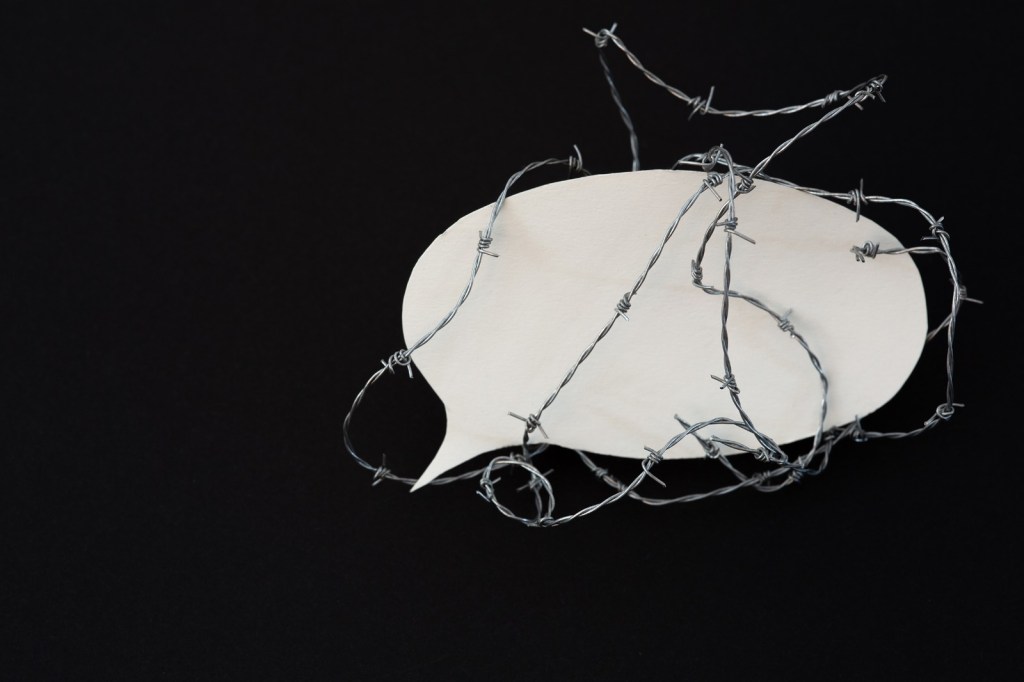
In this article, the author seeks to show how the Government has invoked a ‘state of exception’ in India’s digital public space, resembling the state created by emergency provisions, preventive detention, and anti-terrorism laws, wherein constitutional norms and procedural safeguards are suspended, and primacy is given to executive directions and fiats in the name of public interest, public order, and security of the state
The latest amendment to the Information Technology (Intermediary Guidelines and Digital Media Ethics Code) Rules, 2021(“IT Intermediary Rules, 2021”) empowers a government notified fact check unit to identify ‘fake’, ‘false’ or ‘misleading’ content related to the business of the Central Government. This has raised concerns from several quarters about its deleterious impact on freedom of speech online, particularly press freedom, and the right to receive information These concerns are fuelled by the overbroad powers given to the fact check unit to determine the authenticity of online content, and the lack of procedural safeguards and remedies against its decisions, which is in violation of natural justice principles.
The fact-checking amendment is the latest addition to the government’s arsenal of laws aimed at creating a predefined and controlled online public sphere that behaves in congruence with its interests. Laws relating to internet shutdown (Section 5(2) of the Telegraph Act and Telecom Suspension Rules, 2017), blocking of information from public access (Section 69A of Information Technology Act (“IT Act”) and allied Rules), and takedown of online content (Section 79 of IT Act and allied Rules) are part of this arsenal. In this article, I seek to show how through these laws, the Government has invoked a ‘state of exception’ in India’s digital public space, resembling the state created by emergency provisions, preventive detention, and anti-terrorism laws, wherein constitutional norms and procedural safeguards are suspended, and primacy is given to executive directions and fiats in the name of public interest, public order, and security of the state. I further aim to show how, unfortunately, the Supreme Court has also been complicit in the creation of this ‘digital state of exception’ by failing to uphold its civil rights jurisprudence in adjudicating the constitutional challenges against these laws. Before getting into the substance of my arguments, I briefly explain what a state of exception is how it is brought into being.
State of Exception: Forms and Characteristics in India
According to the Italian philosopher Giorgio Agamben, under a state of exception, the law/ norm is in force but is not applied (has no force), and on the other hand, acts that do not have the value of law acquire its force”. While in situations of normalcy, the law/norms govern actions, in a state of exception, individualist, particularist decisions become the primary form of political action. He explains that the justification for the state of exception is that it calls for a ‘suspension of the order that is in force in order to guarantee its existence’.
The Indian Constitution authorizes two instances of states of exception when the juridical order will be suspended – emergency and preventive detention. Although the Constitution provides for certain limitations and guardrails in the invocation of these states of exception, they are structurally prone to be overridden by executive diktats, as experience has shown.
Gautam Bhatia, in his book ‘The Transformative Constitution: A Radical Biography in Nine Acts’, identifies four features of a state of exception in India, and particularly that of Indian judiciary’s approach to civil rights claim under such a state: (i) executive supremacy, (ii) denial of remedies, (iii) jurisdiction of suspicion; and (iv) salus populi suprema lex.
Executive supremacy: Provisions relating to emergency and preventive detention laws produce a state of exception because it upends the normal rule that the executive has to justify its actions before the court of law. Instead, the executive is considered as the sole judge as to when a state of exception has to be invoked and what rights will be available to the citizens under such a state. What effectively cements this executive supremacy is, however, the acceptance of it by the judiciary who refuses to question the motives of the government in invoking the state of exception.
Denial of remedies: Under a state of exception, there is a practical denial of remedies against the violation of rights of citizens from executive excesses. Either the recourse to remedy is suspended or it is made incredibly difficult to pursue. The judiciary also acquiesces in the creation of this situation by refusing to interpret the law in favor of providing even the rudimentary remedy under it.
Jurisdiction of suspicion: Under a state of exception, ‘any requirement of proximity between the perceived threat and the actual instance of law-breaking’ is eschewed by the executive to take drastic measures involving the suspension of personal liberties of individuals. In other words, rather than norms, it is the subjective satisfaction of the executive that a person or situation may be a threat in the future, that guides political action. Here again, the courts are either incapacitated or are reluctant to scrutinize the factual foundation of the executive’s subjective satisfaction.
Salus Populi Suprema Lex: Finally, invocation of state of exception is generally justified by invoking ‘larger welfare or well-being of the people’. In other words, the order is suspended for its own sake. Experience of state of exception in India once again shows that the judiciary has been only too eager to accept salus populi suprema lex as the ultimate justification for the invocation of the state of exception.
Bhatia further observes that, together these features usher in a culture of authority, which is what marks a state of exception from the state of normalcy. Under a culture of authority, individuals lose their status as right-bearing citizens and become ‘subjects’ again to whom exercise of executive power is not justified. Bhatia further argues that this culture of authority has become a prevailing feature of the Indian legal system, as gradually, a permanent state of exception has been brought into force through laws such as the anti-terror statutes and the Armed Forces Special Powers Act (AFSPA), which display all of the above four features. But unlike emergency and preventive detention, the state of exception created by these laws are not provided or contemplated by the Constitution. Rather, it is a result of what Agamben sees as the state of exception slowly becoming the norm in the national security state. The digital space is not outlier to this paradigm.
Internet shutdowns, blocking/takedown of content, and fact-checking
The legal architecture for the invocation of a state of exception in the digital sphere has not been spelt out in the Constitution. Instead, like the anti-terror statues, it has been encoded within certain statutory provisions aimed to regulate communications over the internet, which were briefly referred to in the beginning. The legislative and judicial journey of these provisions eerily exhibits the four features of a state of exception enumerated by Bhatia.
The first provision is the internet suspension law, encapsulated by the Temporary Suspension of Telecom Services (Public Emergency or Public Safety) Rules, 2017 (‘Telecom Suspension Rules’), and Section 5(2) of the Telegraph Act, 1885. According to the Telecom Suspension Rules, internet shutdown can be imposed by the government only for reasons mentioned in Section 5(2) i.e. occurrence of public emergency or in the interest of public safety. However, neither of these terms are defined in the Rules or in the parent Act and are left to the subjective interpretation of the government. Further, though the Rules require internet suspension orders to be reviewed by a Review Committee, its members are drawn only from the executive branch, guaranteeing the least external scrutiny. Moreover, the internet suspension orders and minutes of the review committee meetings are published sparingly and sometimes even withheld when requested for.
In the landmark judgment in the case Anuradha Bhasin v. Union of India concerning internet shutdowns in the erstwhile Jammu and Kashmir, the Supreme Court had the opportunity to review the internet suspension powers of the Government. The Court ruled that complete internet shutdown is a drastic measure, and it should be considered by the court only if it is necessary and unavoidable, and the measure is proportional. Further, the court ruled that since internet shutdown infringes the rights guaranteed under Article 19(1)(a) and Article 19(1)(g), the orders for internet shutdown should be publicly available for the people to challenge them in court. However, despite laying down many principles/safeguards to be followed to issue suspension orders, unfortunately, the Court stopped itself from adjudicating on the validity of the internet shutdown in Jammu and Kashmir, and instead directed the Review Committee to decide on the necessity and validity of continued internet shutdown, thereby essentially abnegating its judicial responsibility and outsourcing it to the executive.
It is also important to note here the Draft Telecommunication Bill, 2022 that was notified by the government last year, which replaces the Telegraph Act, 1885. Despite the concerns raised around the extant internet shutdown regime, the draft Bill has heavily borrowed from it and continues to use the nebulous terms of ‘public emergency’ and ‘public safety’.. Such vague terms when coupled with the absence of sufficient guardrails against executive arbitrariness gives unrestricted power to the government to suspend the internet.
The second provision of concern is Section 69A of the IT Act. Itempowers the Union Government to issue directions for blocking of information from public access on the grounds of sovereignty and integrity of India, defence of India, security of the State, friendly relations with foreign States, public order or for preventing incitement to the commission of certain cognizable offence. The operative machinery of the section is provided by the Information Technology (Procedure and Safeguards for Blocking for Access of Information by Public) Rules, 2009 which empowers certain officers of the government to receive complaints about online content, and to issue blocking directions to the relevant internet intermediary if they find that the content is violative of any interests mentioned in S. 69A. The Rules do not make it mandatory for the aggrieved person to be heard before the blocking decision is made. Further, even though the Rules require reasons for the blocking to be recorded, its purpose is defeated by Rule 16 which requires blocking requests and the decision taken thereon to be kept confidential.
Section 69A and the Blocking Rules have been used several times in the recent past to block from public access online posts that were critical of the government actions, ostensibly under the grounds of security of the state and the public order. This reality belies the Supreme Court’s expectation in the Shreya Singhal case when the constitutionality of this section was challenged. In upholding the constitutionality of the Section, the Court had noted that since the blocking direction will be issued only on the satisfaction of the Union Government, and the grounds on which the blocking orders can be issued are correlative to the grounds on which speech can be restricted under Article 19(2) of the Constitution, that itself is enough safeguard to ensure that Section 69A and the allied Rules will not be used to unduly restrict the freedom of expression online. In other words, the Court unquestioningly trusted the benevolent intentions of the government, and did not deem it necessary to have any safeguards against government’s subjective satisfaction of conditions warranting the issue of blocking orders. While a blocking order under Section 69A, as a matter of law, is open to judicial review, as the Supreme Court in Anuradha Bhasin case observed in the context of internet shutdown orders, the means of judicial review will stand crippled if the order itself is un-notified or unpublished. Unfortunately, the Court in Shreya Singhal did not find any fault with confidentiality of blocking orders mandated by the Rules.
Similar to Section 69ASection 79(3)(b) of the IT Act. It requires internet intermediaries to remove content that is notified by the government as unlawful, failing which, they will lose their immunity against liability for hosting such content. The Section nor its allied Rules contained in the IT Intermediary Rules, 2021 requires the government to publish content takedown orders issued by them or to record reasons for such order. This unlimited power to issue takedown orders is being used quite frequently by the government in recent times to muzzle speech against government policies and action. In the Shreya Singhal case, this power of the government to issue takedown orders was affirmed by the Supreme Court and it did not deem it necessary to have any safeguards against governmental power over online speech.
I argue that the above-discussed provisions that provide the apparatus to the executive to control the digital public sphere exhibits the four features of a state of exception identified by Bhatia. First, in all these provisions, one can see broad and unbridled power being given to the executive to decide the existence of circumstances which in their subjective satisfaction warrants measures like internet shutdown or blocking of online content or issuing content takedown notices. There is no provision for involvement of independent or non-partisan members in the making or reviewing of these decisions (executive supremacy). While recourse to judicial review against this executive decision is available technically, recourse to them same is difficult by either non-publication of relevant orders or non-recording of reasons. Further, today there is growing conversation on the limits of relying on the judiciary alone to defend our democracy, and why we need to institute additional hedges against assault from a powerful political executive.
Second, the grounds to exercise their power are not clearly defined, and either vague terms such as public safety, public emergency, national security etc. are used or the grounds mentioned in Article 19(2) are replicated without any further guidance as to its exercise. This gives wide elbow room for the executive to interpret any circumstance that poses a remote threat to its interests as sufficient to take drastic measures. Internet shutdowns during protests and during exams to prevent cheating; blocking or takedown orders issued against social media posts about India’s Covid-19 situation, farmers’ protest and cow vigilantism show how this nebulous framing of grounds enable the government to act on mere suspicion without establishing a proximate link between the ‘perceived threat and actual instance of law-breaking’ (jurisdiction of suspicion).
Third, an absence of statutory requirement to disclose reasons for the executive decisions or to publish its orders, effectively deny affected parties their right to know the reason behind the decision and to challenge it before the Court or any other appropriate authority. It can also be observed that the Supreme Court has been reluctant so far to circumscribe or review the exercise of power by the executive under all these provisions, in a manner eerily similar to its approach in cases related to Emergency, preventive detention laws, and in many cases of anti-terrorism laws. (denial of remedies
Fourth, all these provisions justify the imposition of drastic measures as being necessary in the larger public interest; to safeguard the public order or security of state or sovereignty and integrity of India. (salus populi suprema lex).
The recently notified fact-checking amendment joins the above-discussed provisions to extend a state of exception and culture of authority in the digital space. The amendment requires internet intermediaries like social media to remove and cause users not to publish any information respecting the business of the Central Government that is determined as fake/false/misleading by a fact-check unit notified by the government. Pursuant to Rule 3(1)(d) of the IT Intermediary Rules, 2021, the government also has the power to issue orders to the intermediaries to remove such information identified as fake/misleading, and the intermediary is required to comply with the same. This Amendment makes the government the sole arbiter of truth regarding its own matters, as it neither provides for independence of the fact-check unit nor impartial review of its decisions. Further, there is no guiding parameter on when an information will be considered as fake, false or misleading by the fact-check unit. In short, the amendment is framed to allow exceptional powers to the government to decide what information related to it is available to the public by bypassing even the rudimentary procedural safeguards under Section 69A and blocking orders. This poses a grave threat to freedom of speech and free flow of ideas and information online.
Conclusion
As Giorgio Agamben notes, ‘declaration of states of exception has gradually been replaced by an unprecedented generalization of the paradigm of security as the normal technique of government.’ Identifying the patterns of this generalization is the essential first step in working against it. This article aimed to bring out those patterns in some of the laws that govern the digital public sphere of India. Laws relating to internet shutdown, blocking or takedown of content, and the latest fact-checking amendment, by giving primacy to executive discretion and eschewing procedural safeguards, strike at the idea of autonomous citizens and instead treat us as ‘digital subjects’ who can speak and hear only what the State deems fit. This works towards creating a carefully monitored digital public sphere that increasingly has receding space for ideas and views unpalatable to those in power. Unfortunately, the track record of the judiciary in thwarting this gradual extension of state of exception in the digital space has also been bleak so far. It is high time that the judiciary, particularly the Supreme Court, realize that in the digital space one must guard against not only private censorship, but also against co-option by the state of privately owned infrastructure to surveil, police, and control speakers indirectly. As the amendment is currently under challenge before the Bombay High Court, this is a chance for the judiciary to break the culture of authority in the digital public sphere and reclaim it as a crucial space for democratic discourse free of unwarranted and unconstitutional political interference.
Merrin Muhammed Ashraf is a lawyer by training, and researcher working in the areas of digital rights, social media regulation, and intermediary liability.
Categories: Law and Technology
 Law School Policy Review